
Security Affairs
Two Barracuda ESG Flaws Could Be Combined for Full Root Access; Patches Released|Cyberattack Hits French Blood Banks as Hackers Target Refrigeration Systems Across Europe|CVE-2026-58868: Critical Android Bug Could Let Attackers Run Remote Code|U.S. CISA adds WordPress flaw to its Known Exploited Vulnerabilities catalog|Binance Hack: How Fake Job Interviews and AI Abuse Led to a $6.34 Billion Attack|Synology Warns of Ransomware Attacks Targeting NAS Devices Running Outdated DSM Versions|Inside XCPE, the botnet that turned 1.3M set-top boxes into proxy servers|NIS2 Makes Board Members Personally Liable for Access Control Decisions|Apple’s spyware notifications reach the Bundestag: what the BSI says to do now|VOLTA, the infostealer that asks an AI which victims are worth the effort|New wave of fridge cyberattacks hits European supermarkets, this time in Belgium, Luxembourg, Sweden and Estonia|Hackers Send Fake Nuclear Threat Alerts to Ukrainian and Russian Citizens|Two Barracuda ESG Flaws Could Be Combined for Full Root Access; Patches Released|Cyberattack Hits French Blood Banks as Hackers Target Refrigeration Systems Across Europe|CVE-2026-58868: Critical Android Bug Could Let Attackers Run Remote Code|U.S. CISA adds WordPress flaw to its Known Exploited Vulnerabilities catalog|Binance Hack: How Fake Job Interviews and AI Abuse Led to a $6.34 Billion Attack|Synology Warns of Ransomware Attacks Targeting NAS Devices Running Outdated DSM Versions|Inside XCPE, the botnet that turned 1.3M set-top boxes into proxy servers|NIS2 Makes Board Members Personally Liable for Access Control Decisions|Apple’s spyware notifications reach the Bundestag: what the BSI says to do now|VOLTA, the infostealer that asks an AI which victims are worth the effort|New wave of fridge cyberattacks hits European supermarkets, this time in Belgium, Luxembourg, Sweden and Estonia|Hackers Send Fake Nuclear Threat Alerts to Ukrainian and Russian Citizens|
Advertisement

Ad Placeholder

Full Width × 90

Breaking News

Around 3.3 million POP3 and IMAP mail servers lack TLS encryption

Over 3 million POP3 and IMAP mail servers lack TLS encryption, exposing them to network sniffing attacks. ShadowServer researchers reported that around 3.3 million POP3 and IMAP mail servers lack TLS encryption, exposing them to network sniffing attacks. POP3 (Post Office Protocol 3) and IMAP (Internet Message Access Protocol) are two protocols used to retrieve […]

POP3

Over 3 million POP3 and IMAP mail servers lack TLS encryption, exposing them to network sniffing attacks.

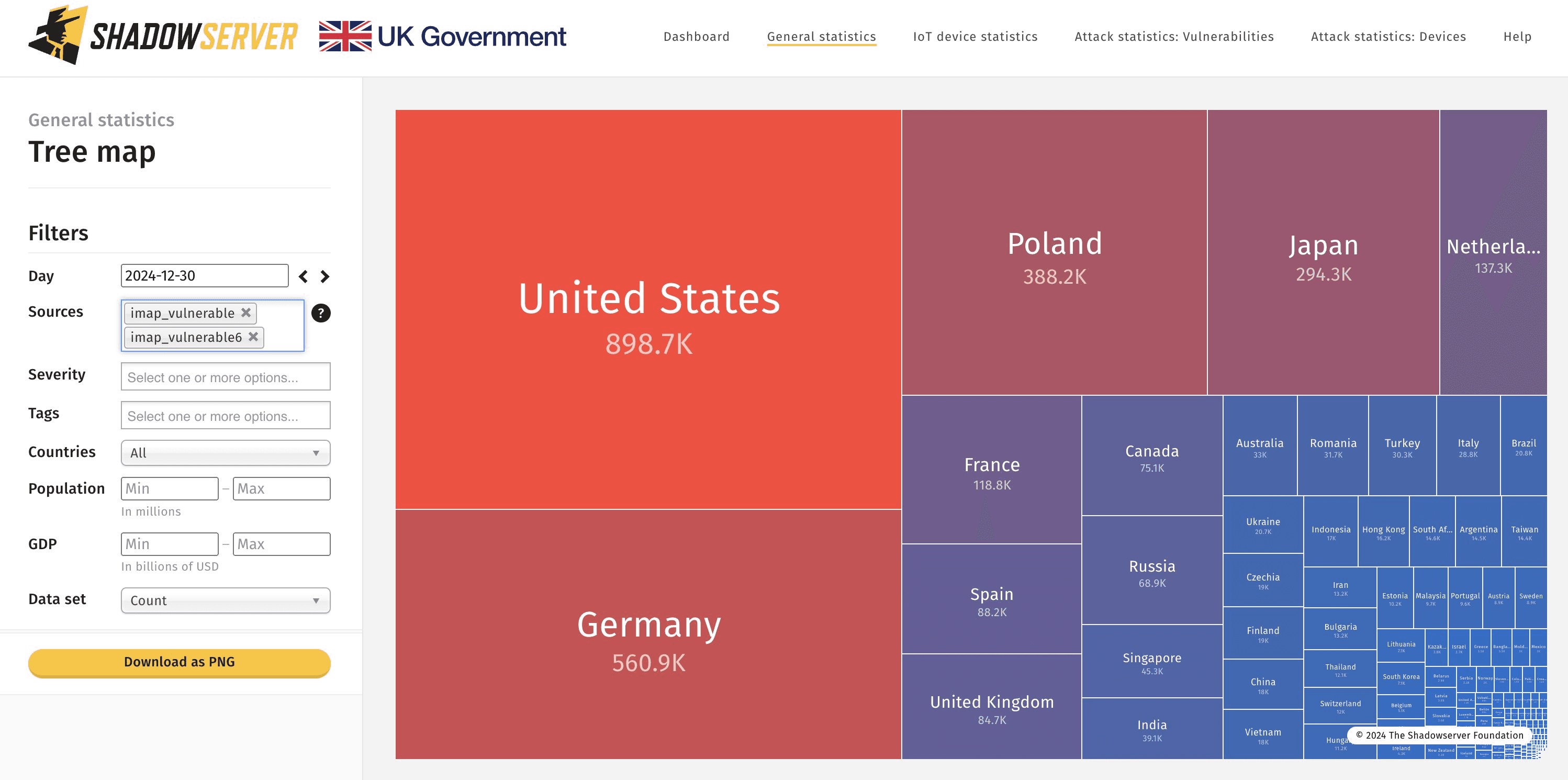
ShadowServer researchers reported that around 3.3 million POP3 and IMAP mail servers lack TLS encryption, exposing them to network sniffing attacks.

POP3 (Post Office Protocol 3) and IMAP (Internet Message Access Protocol) are two protocols used to retrieve and manage emails from mail servers.

With POP3, the e-mails are downloaded to the local device and often deleted from the server. With IMAP, emails remain on the server, with synchronized access across devices.

TLS (Transport Layer Security) is a cryptographic protocol designed to provide secure communication over a computer network. It is widely used to secure data transmitted over the internet, such as emails, web browsing, instant messaging, and file transfers.

ShadowServer scanned the internet for hosts running a POP3 service on port 110/TCP or 995/TCP without TLS support. Passwords for mail access could be intercepted, and exposed services may allow password guessing attacks on the server.

“This means that passwords used for mail access may be intercepted. Additionally, service exposure may enable password guessing attacks against the server.” reads the post published by ShadowServer. “If you receive this report from us, please enable TLS support for POP3 as well as consider whether the service needs to be enabled at all or moved behind a VPN.”

Most of the hosts running POP3/IMAP services without TLS enabled are in the United States, followed by Germany and Poland.

“Note that regardless whether TLS is enabled or not service exposure may enable password guessing attacks against the server.” reported ShadowServer.

Follow me on Twitter: @securityaffairs and Facebook and Mastodon

Pierluigi Paganini

(SecurityAffairs – hacking, POP3)


