
Security Affairs
Two Barracuda ESG Flaws Could Be Combined for Full Root Access; Patches Released|Cyberattack Hits French Blood Banks as Hackers Target Refrigeration Systems Across Europe|CVE-2026-58868: Critical Android Bug Could Let Attackers Run Remote Code|U.S. CISA adds WordPress flaw to its Known Exploited Vulnerabilities catalog|Binance Hack: How Fake Job Interviews and AI Abuse Led to a $6.34 Billion Attack|Synology Warns of Ransomware Attacks Targeting NAS Devices Running Outdated DSM Versions|Inside XCPE, the botnet that turned 1.3M set-top boxes into proxy servers|NIS2 Makes Board Members Personally Liable for Access Control Decisions|Apple’s spyware notifications reach the Bundestag: what the BSI says to do now|VOLTA, the infostealer that asks an AI which victims are worth the effort|New wave of fridge cyberattacks hits European supermarkets, this time in Belgium, Luxembourg, Sweden and Estonia|Hackers Send Fake Nuclear Threat Alerts to Ukrainian and Russian Citizens|Two Barracuda ESG Flaws Could Be Combined for Full Root Access; Patches Released|Cyberattack Hits French Blood Banks as Hackers Target Refrigeration Systems Across Europe|CVE-2026-58868: Critical Android Bug Could Let Attackers Run Remote Code|U.S. CISA adds WordPress flaw to its Known Exploited Vulnerabilities catalog|Binance Hack: How Fake Job Interviews and AI Abuse Led to a $6.34 Billion Attack|Synology Warns of Ransomware Attacks Targeting NAS Devices Running Outdated DSM Versions|Inside XCPE, the botnet that turned 1.3M set-top boxes into proxy servers|NIS2 Makes Board Members Personally Liable for Access Control Decisions|Apple’s spyware notifications reach the Bundestag: what the BSI says to do now|VOLTA, the infostealer that asks an AI which victims are worth the effort|New wave of fridge cyberattacks hits European supermarkets, this time in Belgium, Luxembourg, Sweden and Estonia|Hackers Send Fake Nuclear Threat Alerts to Ukrainian and Russian Citizens|
Advertisement

Ad Placeholder

Full Width × 90

Breaking News

Akira ransomware gang spotted targeting Cisco VPN products to hack organizations

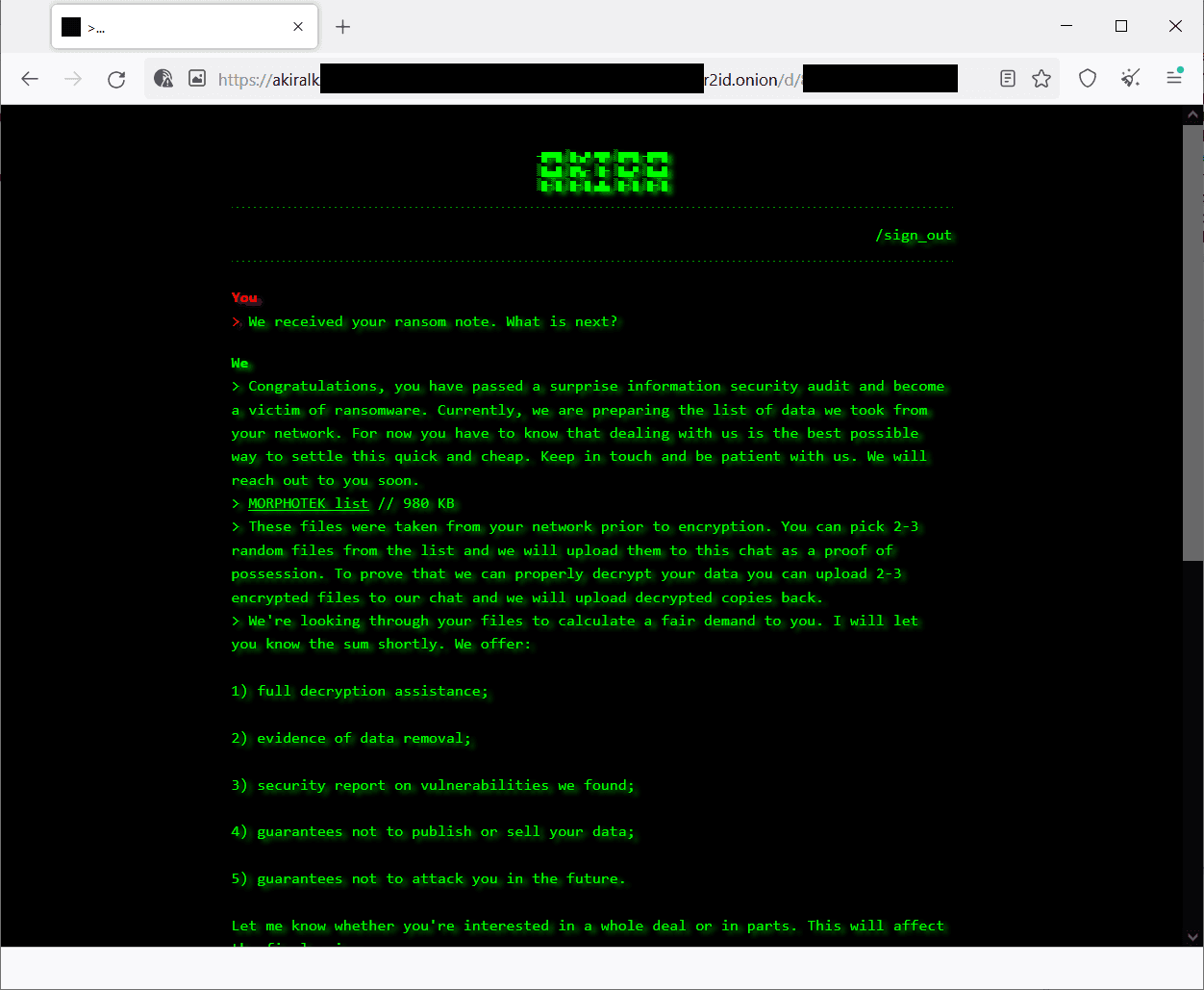
The Akira ransomware gang targets Cisco VPN products to gain initial access to corporate networks and steal their data. The Akira ransomware has been active since March 2023, the threat actors behind the malware claim to have already hacked multiple organizations in multiple industries, including education, finance, and real estate. Like other ransomware gangs, the […]

Akira Ransomware bypasses MFA on SonicWall VPNs Akira ransomware

The Akira ransomware gang targets Cisco VPN products to gain initial access to corporate networks and steal their data.

The Akira ransomware has been active since March 2023, the threat actors behind the malware claim to have already hacked multiple organizations in multiple industries, including education, finance, and real estate. Like other ransomware gangs, the group has developed a Linux encryptor to target VMware ESXi servers.

The group now is targeting Cisco VPN products to gain initial access to corporate networks.

Sophos researchers observed in May the threat actor using compromised Cisco VPN accounts to breach target networks.

Bleeping Computer reported that information shared by the incident responder that goes as ‘Aura’ on Twitter. Aura confirmed that threat actors targeted organizations using CISCO VPN appliances without MFA enabled.

BleepingComputer also reported that SentinelOne is investigating the possibility that the Akira ransomware group is exploiting an unknown vulnerability in the Cisco VPN software. The experts speculate that this issue might allow threat actors to bypass authentication in the absence of MFA and that the group launched an ongoing campaign against Cisco VPN appliances.

SentinelOne researchers also observed Akira operators using the legitimate RustDesk open-source remote access tool to maintain access to compromised networks.

In June, cybersecurity firm Avast released a free decryptor for the Akira ransomware that can allow victims to recover their data without paying the ransom.

The threat actors responded by patching their encryptors, making it impossible for victims use them to recover data encrypted by newer versions.

Follow me on Twitter: @securityaffairs and Facebook and Mastodon

Pierluigi Paganini

(SecurityAffairs – hacking, Akira ransomware)


