
Russia-linked cyberespionage group APT29 has been observed leveraging the CVE-2023-38831 vulnerability in WinRAR in recent attacks.
The Ukrainian National Security and Defense Council (NDSC) reported that APT29 (aka SVR group, Cozy Bear, Nobelium, Midnight Blizzard, and The Dukes) has been exploiting the CVE-2023-38831 vulnerability in WinRAR in recent attacks.
APT29 along with APT28 cyber espionage group was involved in the Democratic National Committee hack and the wave of attacks aimed at the 2016 US Presidential Elections.
The Russia-linked APT group was observed using a specially crafted ZIP archive that runs a script in the background to show a PDF lure while downloading PowerShell code to fetch and execute a payload.
The APT group targeted multiple European nations, including Azerbaijan, Greece, Romania, and Italy, with the primary goal of infiltrating embassy entities.
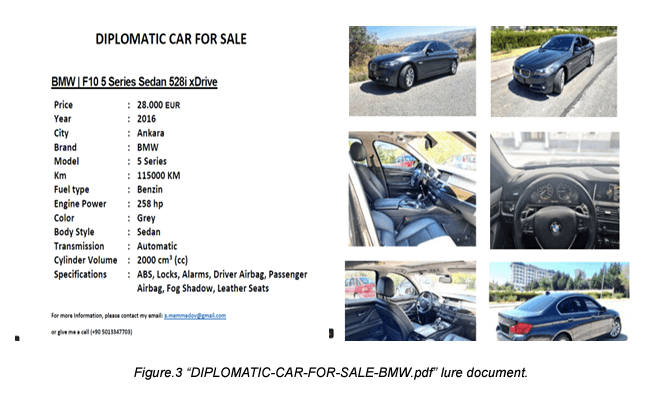
The threat actors used a lure document (“DIPLOMATIC-CAR-FOR-SALE-BMW.pdf”) containing images of a BMW car available for sale to diplomatic entities. The weaponized documents embedded malicious content that exploited the WinRAR vulnerability.

“In the context of this particular attack, a script is executed, generating a PDF file featuring the lure theme of a BMW car for sale. Simultaneously, in the background, a PowerShell script is downloaded and executed from the next-stage payload server.” reads the report published by NDSC. “Notably, the attackers introduced a novel technique for communicating with the malicious server, employing a Ngrok free static domain to access their server hosted on their Ngrok instance.”
In this attack scheme, Ngrok has been used to host their next-stage PowerShell payloads and establish covert communication channels.
Threat actors use the tool to obfuscate their communications with compromised systems and evade detection.
“What makes this campaign particularly noteworthy is the synthesis of old and new techniques. APT29 continues to employ the BMW car for sale lure theme, a tactic that’s been seen in the past. However, the deployment of the CVE-2023-38831 WinRAR vulnerability, a novel approach, reveals their adaptability to the evolving threat landscape. Additionally, their use of Ngrok services to establish covert communications emphasizes their determination to remain concealed.” concludes the NDSC that also published indicators of compromise (IoCs) for these attacks.
In April, Google observed Russia-linked FROZENBARENTS APT (aka SANDWORM) impersonates Ukrainian drone training school to deliver the Rhadamanthys infostealer.
The threat actors used a lure themed as an invitation to join the school, the email included a link to an anonymous file-sharing service, fex[.]net. The file-sharing service was used to deliver a benign decoy PDF document with a drone operator training curriculum and specially crafted ZIP archive (“Навчальна-програма-Оператори.zip” (Training program operators)) that exploits the flaw CVE-2023-38831.
In September, CERT-UA observed the FROZENLAKE group exploitingthe WinRAR flaw to deploy malware in attacks aimed at energy infrastructure.
Google TAG experts also observed the Russia-linked ATP28 group exploiting the flaw in attacks against Ukraine users. The state-sponsored hackers employed a malicious PowerShell script (IRONJAW) to steal browser login data and local state directories.
The China-linked APT40 group was observed exploiting the CVE-2023-38831 vulnerability in attacks against targets in Papua New Guinea.
Last week, researchers at cybersecurity firm NSFOCUS analyzed DarkCasino attack pattern exploiting the WinRAR zero-day vulnerability tracked as CVE-2023-38831. The economically motivated APT group used specially crafted archives in phishing attacks against forum users through online trading forum posts.
Follow me on Twitter: @securityaffairs and Facebook and Mastodon
(SecurityAffairs – hacking, APT29)


