
Security Affairs
Two Barracuda ESG Flaws Could Be Combined for Full Root Access; Patches Released|Cyberattack Hits French Blood Banks as Hackers Target Refrigeration Systems Across Europe|CVE-2026-58868: Critical Android Bug Could Let Attackers Run Remote Code|U.S. CISA adds WordPress flaw to its Known Exploited Vulnerabilities catalog|Binance Hack: How Fake Job Interviews and AI Abuse Led to a $6.34 Billion Attack|Synology Warns of Ransomware Attacks Targeting NAS Devices Running Outdated DSM Versions|Inside XCPE, the botnet that turned 1.3M set-top boxes into proxy servers|NIS2 Makes Board Members Personally Liable for Access Control Decisions|Apple’s spyware notifications reach the Bundestag: what the BSI says to do now|VOLTA, the infostealer that asks an AI which victims are worth the effort|New wave of fridge cyberattacks hits European supermarkets, this time in Belgium, Luxembourg, Sweden and Estonia|Hackers Send Fake Nuclear Threat Alerts to Ukrainian and Russian Citizens|Two Barracuda ESG Flaws Could Be Combined for Full Root Access; Patches Released|Cyberattack Hits French Blood Banks as Hackers Target Refrigeration Systems Across Europe|CVE-2026-58868: Critical Android Bug Could Let Attackers Run Remote Code|U.S. CISA adds WordPress flaw to its Known Exploited Vulnerabilities catalog|Binance Hack: How Fake Job Interviews and AI Abuse Led to a $6.34 Billion Attack|Synology Warns of Ransomware Attacks Targeting NAS Devices Running Outdated DSM Versions|Inside XCPE, the botnet that turned 1.3M set-top boxes into proxy servers|NIS2 Makes Board Members Personally Liable for Access Control Decisions|Apple’s spyware notifications reach the Bundestag: what the BSI says to do now|VOLTA, the infostealer that asks an AI which victims are worth the effort|New wave of fridge cyberattacks hits European supermarkets, this time in Belgium, Luxembourg, Sweden and Estonia|Hackers Send Fake Nuclear Threat Alerts to Ukrainian and Russian Citizens|
Advertisement

Ad Placeholder

Full Width × 90

Breaking News

Austria investigates DSIRF firm for allegedly developing Subzero spyware 

Austria is investigating a report that an Austrian firm DSIRF developed spyware targeting law firms, banks and consultancies. At the end of July, Microsoft Threat Intelligence Center (MSTIC) and the Microsoft Security Response Center (MSRC) researchers linked a threat group known as Knotweed to an Austrian surveillance firm named DSIRF, known for using multiple Windows […]

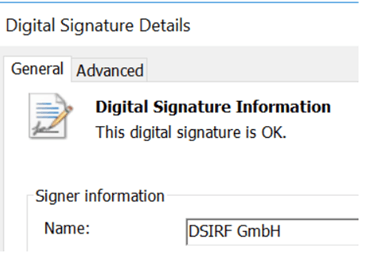
Subzero malware Fig1-Valid-digital-signature-from-DSIRF.

Austria is investigating a report that an Austrian firm DSIRF developed spyware targeting law firms, banks and consultancies.

At the end of July, Microsoft Threat Intelligence Center (MSTIC) and the Microsoft Security Response Center (MSRC) researchers linked a threat group known as Knotweed to an Austrian surveillance firm named DSIRF, known for using multiple Windows and Adobe zero-day exploits. The group targets entities in Europe and Central America with a surveillance tool dubbed Subzero.

Microsoft states that multiple news reports have linked the company to the Subzero malware toolset used to hack a broad range of devices, phones, computers, and network and internet-connected devices.

The researchers found evidence that links DSIRF to the Knotweed’s operation, including the C2 infrastructure used by Subzero, and code signing certificate issued to DSIRF that is used to sign an exploit.

Subzero malware Fig1-Valid-digital-signature-from-DSIRF.

Microsoft reported Subzero attacks against Microsoft customers in Austria, the United Kingdom, and Panama. The targeted entities are law firms, banks, and strategic consultancies.

Last week, Austria announced it is investigating the report that links DSIRF to spyware targeting entities in at least three countries.

Austria’s interior ministry said it is not aware of any incidents and has no business relationships with it

“Of course, DSN (the National Security and Intelligence Directorate) checks the allegations. So far, there is no proof of the use of spy software from the company mentioned,” reads a statement published by Austria’s interior ministry.

Austria’s Kurier newspaper confirmed that the DSIRF developed the Subzero surveillance software, but added that it had not been misused and was developed exclusively for use by authorities in EU states- The newspaper also added that the spyware was not commercially available.

Follow me on Twitter: @securityaffairs and Facebook

[adrotate banner=”9″][adrotate banner=”12″]

Pierluigi Paganini

(SecurityAffairs – hacking, DSIRF)

[adrotate banner=”5″]

[adrotate banner=”13″]


