
Security Affairs
Cyberattack Hits French Blood Banks as Hackers Target Refrigeration Systems Across Europe|CVE-2026-58868: Critical Android Bug Could Let Attackers Run Remote Code|U.S. CISA adds WordPress flaw to its Known Exploited Vulnerabilities catalog|Binance Hack: How Fake Job Interviews and AI Abuse Led to a $6.34 Billion Attack|Synology Warns of Ransomware Attacks Targeting NAS Devices Running Outdated DSM Versions|Inside XCPE, the botnet that turned 1.3M set-top boxes into proxy servers|NIS2 Makes Board Members Personally Liable for Access Control Decisions|Apple’s spyware notifications reach the Bundestag: what the BSI says to do now|VOLTA, the infostealer that asks an AI which victims are worth the effort|New wave of fridge cyberattacks hits European supermarkets, this time in Belgium, Luxembourg, Sweden and Estonia|Hackers Send Fake Nuclear Threat Alerts to Ukrainian and Russian Citizens|Chainalysis Investigates Security Incident Involving AI-Driven Attack Techniques|Cyberattack Hits French Blood Banks as Hackers Target Refrigeration Systems Across Europe|CVE-2026-58868: Critical Android Bug Could Let Attackers Run Remote Code|U.S. CISA adds WordPress flaw to its Known Exploited Vulnerabilities catalog|Binance Hack: How Fake Job Interviews and AI Abuse Led to a $6.34 Billion Attack|Synology Warns of Ransomware Attacks Targeting NAS Devices Running Outdated DSM Versions|Inside XCPE, the botnet that turned 1.3M set-top boxes into proxy servers|NIS2 Makes Board Members Personally Liable for Access Control Decisions|Apple’s spyware notifications reach the Bundestag: what the BSI says to do now|VOLTA, the infostealer that asks an AI which victims are worth the effort|New wave of fridge cyberattacks hits European supermarkets, this time in Belgium, Luxembourg, Sweden and Estonia|Hackers Send Fake Nuclear Threat Alerts to Ukrainian and Russian Citizens|Chainalysis Investigates Security Incident Involving AI-Driven Attack Techniques|
Advertisement

Ad Placeholder

Full Width × 90

Breaking News

A Russian man involved in the development and maintenance of Citadel was sentenced to five years in prison

The Russian hacker Mark Vartanyan was sentenced to five years in prison for his involvement in the development and maintenance of the Citadel botnets. It’s a terrific moment for cyber criminals, law enforcement worldwide continues their fight against illegal activities online and the recent shut down of AlphaBay and Hansa black markets demonstrate it. The news of […]

A Russian man involved in the development and maintenance of Citadel was sentenced to five years in prison

The Russian hacker Mark Vartanyan was sentenced to five years in prison for his involvement in the development and maintenance of the Citadel botnets.

It’s a terrific moment for cyber criminals, law enforcement worldwide continues their fight against illegal activities online and the recent shut down of AlphaBay and Hansa black markets demonstrate it.

The news of the day is that the Russian hacker Mark Vartanyan was sentenced to five years in prison for his involvement in the development and maintenance of the Citadel botnets.

Vartanyan, also known with the pseudonymous of “Kolypto” was arrested in Norway and extradited to the United States in December 2016.

Kolypto pleaded guilty in court in March 2017, he was charged with one count of computer fraud.

“Citadel caused vast amounts of harm to financial institutions and individuals around the world. Mark Vartanyan utilized his technical expertise to enable Citadel into becoming one of the most pernicious malware toolkits of its time, and for that, he will serve significant time in federal prison,” said US Attorney John Horn.

Citadel started being offered for sale in 2011 on invite-only, Russian cybercriminal forums, it is directly derived from the popular Zeus banking Trojan, in June 2013 Microsoft and the FBI carried out takedowns that eradicated more than 1,400 bots (nearly 88% of overall Citadel botnet) associated with this malware.

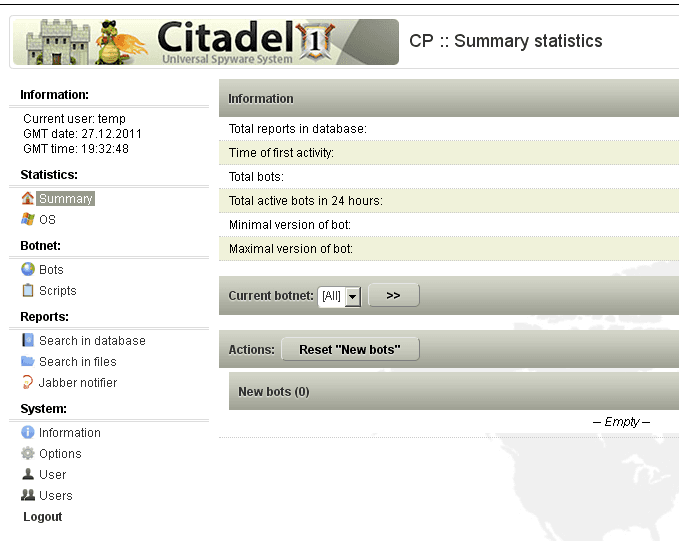
citadel panel

Experts estimated that the malware has been responsible for over $500 million in financial fraud.

Across the years, the Citadel malware affected more than 11 million computers globally, the most recent variant derived by Citadel is Atmos and it was spotted in April 2016 when he infected more than 1,000 bots.

The Vartanyan’s role was crucial for the malware distribution, the man was involved in the development and improving maintenance of Citadel. He was active from August 21, 2012 and January 9, 2013, while residing in Ukraine, and between on or about April 9, 2014 and June 2, 2014, while residing in Norway.

“Malicious software and botnets are rarely created by a single individual. Cybercrime is an organized team effort involving sophisticated, talented, and tech savvy individuals. Today’s sentencing of Mr. Vartanyan […] both removes a key resource from the cyber underworld and serves as a strong deterrent to others who may be contributing to the development of botnets and malware. The threat posed by cyber criminals in the U.S. and abroad is ever increasing,” David J. LeValley, Special Agent in Charge, FBI Atlanta Field Office, said.

[adrotate banner=”9″]

Pierluigi Paganini

(Security Affairs –  (Citadel botnet, hacking)

[adrotate banner=”13″]


