
Security Affairs
Two Barracuda ESG Flaws Could Be Combined for Full Root Access; Patches Released|Cyberattack Hits French Blood Banks as Hackers Target Refrigeration Systems Across Europe|CVE-2026-58868: Critical Android Bug Could Let Attackers Run Remote Code|U.S. CISA adds WordPress flaw to its Known Exploited Vulnerabilities catalog|Binance Hack: How Fake Job Interviews and AI Abuse Led to a $6.34 Billion Attack|Synology Warns of Ransomware Attacks Targeting NAS Devices Running Outdated DSM Versions|Inside XCPE, the botnet that turned 1.3M set-top boxes into proxy servers|NIS2 Makes Board Members Personally Liable for Access Control Decisions|Apple’s spyware notifications reach the Bundestag: what the BSI says to do now|VOLTA, the infostealer that asks an AI which victims are worth the effort|New wave of fridge cyberattacks hits European supermarkets, this time in Belgium, Luxembourg, Sweden and Estonia|Hackers Send Fake Nuclear Threat Alerts to Ukrainian and Russian Citizens|Two Barracuda ESG Flaws Could Be Combined for Full Root Access; Patches Released|Cyberattack Hits French Blood Banks as Hackers Target Refrigeration Systems Across Europe|CVE-2026-58868: Critical Android Bug Could Let Attackers Run Remote Code|U.S. CISA adds WordPress flaw to its Known Exploited Vulnerabilities catalog|Binance Hack: How Fake Job Interviews and AI Abuse Led to a $6.34 Billion Attack|Synology Warns of Ransomware Attacks Targeting NAS Devices Running Outdated DSM Versions|Inside XCPE, the botnet that turned 1.3M set-top boxes into proxy servers|NIS2 Makes Board Members Personally Liable for Access Control Decisions|Apple’s spyware notifications reach the Bundestag: what the BSI says to do now|VOLTA, the infostealer that asks an AI which victims are worth the effort|New wave of fridge cyberattacks hits European supermarkets, this time in Belgium, Luxembourg, Sweden and Estonia|Hackers Send Fake Nuclear Threat Alerts to Ukrainian and Russian Citizens|
Advertisement

Ad Placeholder

Full Width × 90

Breaking News

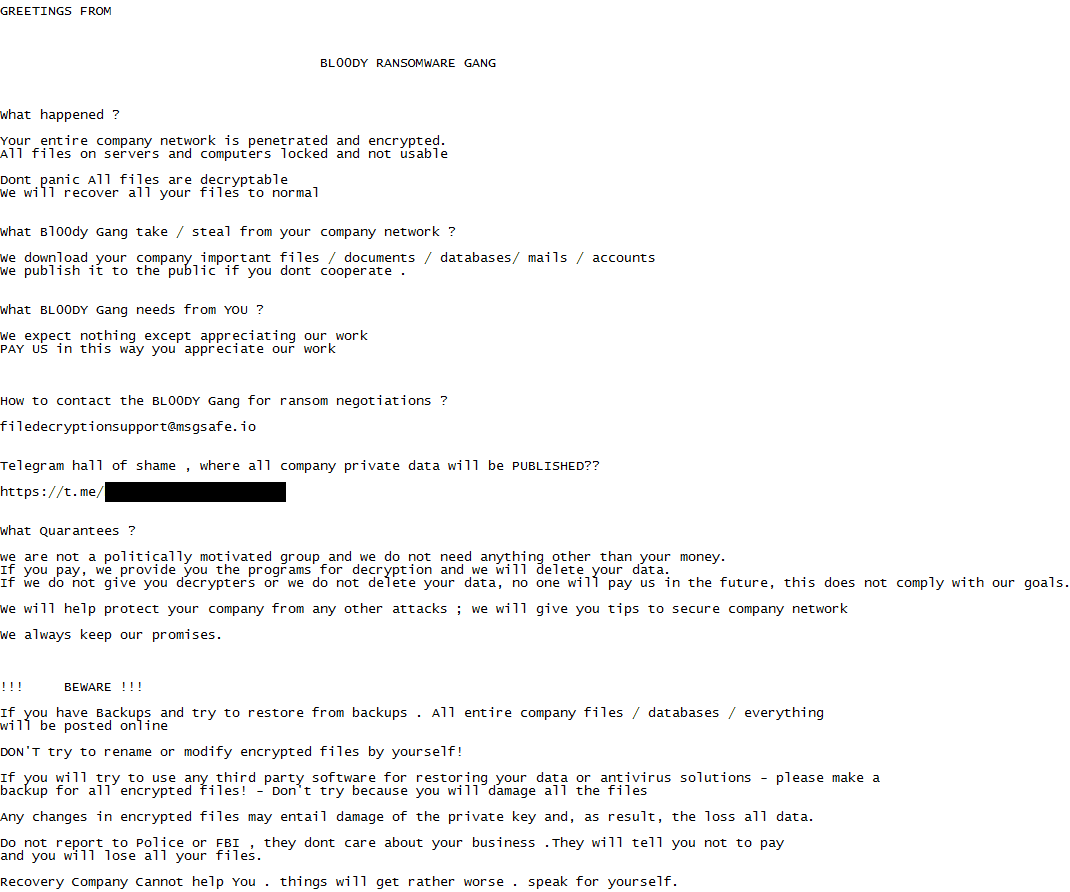
Bl00dy ransomware gang started using leaked LockBit 3.0 builder in attacks

The recently born Bl00Dy Ransomware gang has started using the recently leaked LockBit ransomware builder in attacks in the wild. The Bl00Dy Ransomware gang is the first group that started using the recently leaked LockBit ransomware builder in attacks in the wild. Last week, an alleged disgruntled developer leaked the builder for the latest encryptor […]

Bl00Dy Ransomware

The recently born Bl00Dy Ransomware gang has started using the recently leaked LockBit ransomware builder in attacks in the wild.

The Bl00Dy Ransomware gang is the first group that started using the recently leaked LockBit ransomware builder in attacks in the wild.

Last week, an alleged disgruntled developer leaked the builder for the latest encryptor of the LockBit ransomware gang.

The latest version of the encryptor, version 3.0, was released by the gang in June. According to the gang, LockBit 3.0 has important novelties such as a bug bounty program, Zcash payment, and new extortion tactics. The gang has been active since at least 2019 and today it is one of the most active ransomware gangs.

The code of the encryptor was leaked on Twitter by at least a couple of accounts, @ali_qushji and @protonleaks1.

The builder is contained in a password-protected 7z archive, “LockBit3Builder.7z,” containing:

  • Build.bat;
  • builder.exe;
  • config.json;
  • keygen.exe.

The availability of the builder could allow any threat actor to create its own version of the ransomware customizing it by modifying the configuration file.

Now BleepingComputer first reported that the Bl00Dy Ransomware group started using the Lockbit 3.0 builder to create its own ransomware.

The group in past attacks created its own malware by using leaked builders, such as Babuk and Conti.

Early this week, the researcher Vladislav Radetskiy reported the discovery of a new Bl00Dy Ransomware Gang encryptor that was employed in an attack on a Ukrainian organization. The researchers did not immediately identify the ransomware involved in the attack, it appeared as Conti or LockBit.

MalwareHunterTeam researchers confirmed that the encryptor used in the attack by the Bl00Dy Ransomware group was built using the leaked LockBit 3.0 builder.

BleepingComputer researchers, who tested the Bl00dy Ransomware Gang’s encrypter, confirmed that it was generated with the leaked LockBit 3.0. builder.

Follow me on Twitter: @securityaffairs and Facebook

[adrotate banner=”9″][adrotate banner=”12″]

Pierluigi Paganini

(SecurityAffairs – hacking, Bl00Dy Ransomware)

[adrotate banner=”5″]

[adrotate banner=”13″]


