
Security Affairs
Cyberattack Hits French Blood Banks as Hackers Target Refrigeration Systems Across Europe|CVE-2026-58868: Critical Android Bug Could Let Attackers Run Remote Code|U.S. CISA adds WordPress flaw to its Known Exploited Vulnerabilities catalog|Binance Hack: How Fake Job Interviews and AI Abuse Led to a $6.34 Billion Attack|Synology Warns of Ransomware Attacks Targeting NAS Devices Running Outdated DSM Versions|Inside XCPE, the botnet that turned 1.3M set-top boxes into proxy servers|NIS2 Makes Board Members Personally Liable for Access Control Decisions|Apple’s spyware notifications reach the Bundestag: what the BSI says to do now|VOLTA, the infostealer that asks an AI which victims are worth the effort|New wave of fridge cyberattacks hits European supermarkets, this time in Belgium, Luxembourg, Sweden and Estonia|Hackers Send Fake Nuclear Threat Alerts to Ukrainian and Russian Citizens|Chainalysis Investigates Security Incident Involving AI-Driven Attack Techniques|Cyberattack Hits French Blood Banks as Hackers Target Refrigeration Systems Across Europe|CVE-2026-58868: Critical Android Bug Could Let Attackers Run Remote Code|U.S. CISA adds WordPress flaw to its Known Exploited Vulnerabilities catalog|Binance Hack: How Fake Job Interviews and AI Abuse Led to a $6.34 Billion Attack|Synology Warns of Ransomware Attacks Targeting NAS Devices Running Outdated DSM Versions|Inside XCPE, the botnet that turned 1.3M set-top boxes into proxy servers|NIS2 Makes Board Members Personally Liable for Access Control Decisions|Apple’s spyware notifications reach the Bundestag: what the BSI says to do now|VOLTA, the infostealer that asks an AI which victims are worth the effort|New wave of fridge cyberattacks hits European supermarkets, this time in Belgium, Luxembourg, Sweden and Estonia|Hackers Send Fake Nuclear Threat Alerts to Ukrainian and Russian Citizens|Chainalysis Investigates Security Incident Involving AI-Driven Attack Techniques|
Advertisement

Ad Placeholder

Full Width × 90

APT

Canada blames Russia for cyber attacks against its structures

The Government of Canada blamed the GRU, the Russian military’s intelligence agency, for cyber attacks at the Montreal-based World Anti-Doping Agency. “The government of Canada assesses with high confidence that the Russian military’s intelligence arm, the GRU, was responsible” for these cyber attacks, the foreign ministry said in a statement. [cyber attacks are] “part of a broader […]

CSE

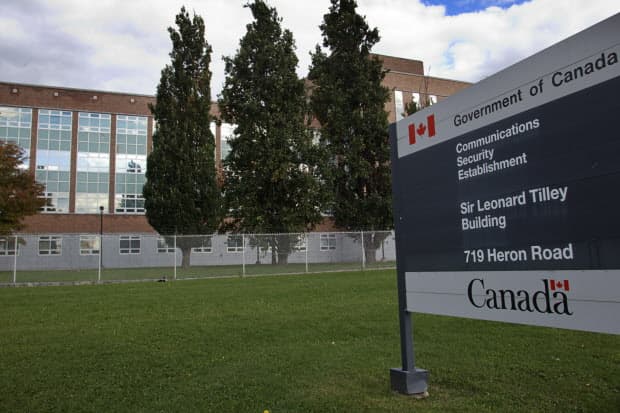
OTTAWA, ON: OCTOBER 8, 2012 : Communications Security Establishment Canada building on Heron Rd ( Chris Mikula / Ottawa Citizen) For NATIONAL story Assignment #110602

The Government of Canada blamed the GRU, the Russian military’s intelligence agency, for cyber attacks at the Montreal-based World Anti-Doping Agency.

“The government of Canada assesses with high confidence that the Russian military’s intelligence arm, the GRU, was responsible” for these cyber attacks, the foreign ministry said in a statement.

[cyber attacks are] “part of a broader pattern of activities by the Russian government that lie well outside the bounds of appropriate behavior, demonstrate a disregard for international law and undermine the rules-based international order.”

“all those who value this order to come together in its defence.”

Canada and its allies accused Russia of its aggressive cyber strategy that continuously attempts to interfere in the politic of foreign states. The allies

Allies blamed the Kremlin of being responsible for cyber attacks that an April aimed at the official networks of the Organisation for the Prohibition of Chemical Weapons (OPCW).

In September the Dutch-based NRC newspaper and Swiss daily Tages-Anzeiger reported the Dutch intelligence services arrested two alleged Russian spies working for Russia’s GRU military intelligence service on suspicion of planning to hack the Spiez laboratory near Bern.

The laboratory conducts investigations for a global chemical arms watchdog, the Organisation for the Prohibition of Chemical Weapons (OPCW), its researchers were investigating the poisoning of agent Sergei Skripal and his daughter in Salisbury.

The two agents carried equipment to hack into the network of the laboratory to spy on the activity of its researchers.

The Netherlands expelled four alleged agents, while the United States charged seven Russian agents with hacking the World Anti-Doping Agency (WADA) in 2016.

The foreign ministry added that in the same period the Canadian Centre for Ethics in Sport was “compromised by malware enabling unauthorized access to the Centre’s network,”

Britain and Australia also accused the Russian military intelligence of running a massive espionage campaign.

[adrotate banner=”9″] [adrotate banner=”12″]

Pierluigi Paganini

(Security Affairs – Canada, Russia)

[adrotate banner=”5″]

[adrotate banner=”13″]


