
Security Affairs
Two Barracuda ESG Flaws Could Be Combined for Full Root Access; Patches Released|Cyberattack Hits French Blood Banks as Hackers Target Refrigeration Systems Across Europe|CVE-2026-58868: Critical Android Bug Could Let Attackers Run Remote Code|U.S. CISA adds WordPress flaw to its Known Exploited Vulnerabilities catalog|Binance Hack: How Fake Job Interviews and AI Abuse Led to a $6.34 Billion Attack|Synology Warns of Ransomware Attacks Targeting NAS Devices Running Outdated DSM Versions|Inside XCPE, the botnet that turned 1.3M set-top boxes into proxy servers|NIS2 Makes Board Members Personally Liable for Access Control Decisions|Apple’s spyware notifications reach the Bundestag: what the BSI says to do now|VOLTA, the infostealer that asks an AI which victims are worth the effort|New wave of fridge cyberattacks hits European supermarkets, this time in Belgium, Luxembourg, Sweden and Estonia|Hackers Send Fake Nuclear Threat Alerts to Ukrainian and Russian Citizens|Two Barracuda ESG Flaws Could Be Combined for Full Root Access; Patches Released|Cyberattack Hits French Blood Banks as Hackers Target Refrigeration Systems Across Europe|CVE-2026-58868: Critical Android Bug Could Let Attackers Run Remote Code|U.S. CISA adds WordPress flaw to its Known Exploited Vulnerabilities catalog|Binance Hack: How Fake Job Interviews and AI Abuse Led to a $6.34 Billion Attack|Synology Warns of Ransomware Attacks Targeting NAS Devices Running Outdated DSM Versions|Inside XCPE, the botnet that turned 1.3M set-top boxes into proxy servers|NIS2 Makes Board Members Personally Liable for Access Control Decisions|Apple’s spyware notifications reach the Bundestag: what the BSI says to do now|VOLTA, the infostealer that asks an AI which victims are worth the effort|New wave of fridge cyberattacks hits European supermarkets, this time in Belgium, Luxembourg, Sweden and Estonia|Hackers Send Fake Nuclear Threat Alerts to Ukrainian and Russian Citizens|
Advertisement

Ad Placeholder

Full Width × 90

Breaking News

For the second time in two weeks CDOT shut down computers after a ransomware infection

For the second time in two weeks, the computers at the Colorado Department of Transportation Agency shut down 2,000 computers after a ransomware infection. For the second time in a few days, a variant of the dreaded SamSam ransomware paralyzed the CDOT. The second incident occurred while the agency was still in the process of recovering its […]

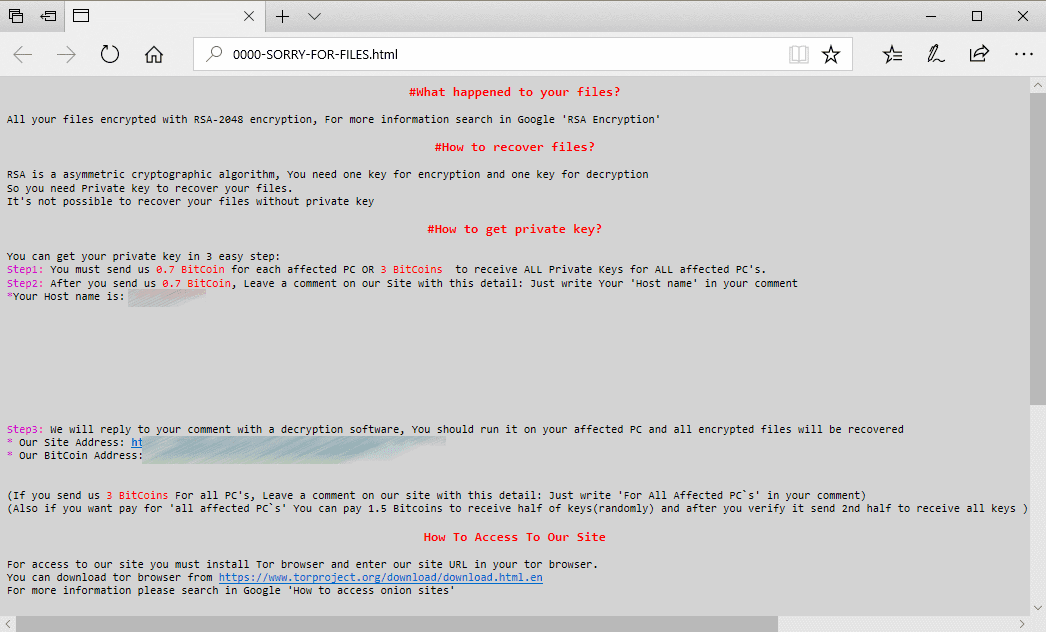
SamSam ransomware note

For the second time in two weeks, the computers at the Colorado Department of Transportation Agency shut down 2,000 computers after a ransomware infection.

For the second time in a few days, a variant of the dreaded SamSam ransomware paralyzed the CDOT.

The second incident occurred while the agency was still in the process of recovering its systems from the first attack.

Exactly two weeks ago, the SamSam ransomware made the headlines because it infected over 2,000 computers at the Colorado Department of Transportation (DOT).

The investigation on the first wave of infections revealed that the infected systems were running Windows OS and McAfee anti-virus software.

“Eight days into a ransomware attack, state information technology officials detected more malicious activity on the Colorado Department of Transportation computer systems Thursday.” reads the post published on the website 9news.com.

“A spokeswoman for the Governor’s Office of Information Technology says this is a variation of the same ransomware that hit computers last week, when criminals demanded a Bitcoin payment in exchange for freeing up the software.”

Approximately 20% of the machines infected by the first wave of attacks had been restored when a variation of the original Samsam ransomware hit the Colorado Department of Transportation for the second time. All the infected systems were taken down once again.

“The variant of SamSam ransomware just keeps changing. The tools we have in place didn’t work. It’s ahead of our tools.” Brandi Simmons, a spokeswoman for the state’s Office of Information Technology, told the Denver Post.

CDOT SamSam ransomware note

The attack forced CDOT employees to stop using computers and input data using pen and paper.

According to CDOT spokeswoman Amy Ford, the ransomware attack did not affect construction projects, signs, variable message boards and “critical traffic operations,”.

The Colorado National Guard and the FBI are working to restore normal operations.

“Employees have been ordered to shut off their computers until the source of the problem has been found. The network has been disconnected from the internet for now, and many employees are working on a pen and paper system.” continues the website.

At the time of writing, it is still impossible to evaluate the impact of the attack.

[adrotate banner=”9″] [adrotate banner=”12″]

Pierluigi Paganini

(Security Affairs – CDOT, SamSam ransomware)

[adrotate banner=”5″]

[adrotate banner=”13″]


