
Security Affairs
Two Barracuda ESG Flaws Could Be Combined for Full Root Access; Patches Released|Cyberattack Hits French Blood Banks as Hackers Target Refrigeration Systems Across Europe|CVE-2026-58868: Critical Android Bug Could Let Attackers Run Remote Code|U.S. CISA adds WordPress flaw to its Known Exploited Vulnerabilities catalog|Binance Hack: How Fake Job Interviews and AI Abuse Led to a $6.34 Billion Attack|Synology Warns of Ransomware Attacks Targeting NAS Devices Running Outdated DSM Versions|Inside XCPE, the botnet that turned 1.3M set-top boxes into proxy servers|NIS2 Makes Board Members Personally Liable for Access Control Decisions|Apple’s spyware notifications reach the Bundestag: what the BSI says to do now|VOLTA, the infostealer that asks an AI which victims are worth the effort|New wave of fridge cyberattacks hits European supermarkets, this time in Belgium, Luxembourg, Sweden and Estonia|Hackers Send Fake Nuclear Threat Alerts to Ukrainian and Russian Citizens|Two Barracuda ESG Flaws Could Be Combined for Full Root Access; Patches Released|Cyberattack Hits French Blood Banks as Hackers Target Refrigeration Systems Across Europe|CVE-2026-58868: Critical Android Bug Could Let Attackers Run Remote Code|U.S. CISA adds WordPress flaw to its Known Exploited Vulnerabilities catalog|Binance Hack: How Fake Job Interviews and AI Abuse Led to a $6.34 Billion Attack|Synology Warns of Ransomware Attacks Targeting NAS Devices Running Outdated DSM Versions|Inside XCPE, the botnet that turned 1.3M set-top boxes into proxy servers|NIS2 Makes Board Members Personally Liable for Access Control Decisions|Apple’s spyware notifications reach the Bundestag: what the BSI says to do now|VOLTA, the infostealer that asks an AI which victims are worth the effort|New wave of fridge cyberattacks hits European supermarkets, this time in Belgium, Luxembourg, Sweden and Estonia|Hackers Send Fake Nuclear Threat Alerts to Ukrainian and Russian Citizens|
Advertisement

Ad Placeholder

Full Width × 90

Breaking News

Exposed MongoDB revealed facial recognition abuse for tracking the Uyghur Muslim minority in China.

Security expert discovered an exposed MongoDB that reveals facial recognition abuse for tracking the Uyghur Muslim minority in China.Exposed MongoDB revealed facial recognition abuse for tracking the Uyghur Muslim minority in China. We have debated for a long time the surveillance campaigns conducted by the Chinese government, now the news of the day is the […]

facial recognition 2

Security expert discovered an exposed MongoDB that reveals facial recognition abuse for tracking the Uyghur Muslim minority in China.Exposed MongoDB revealed facial recognition abuse for tracking the Uyghur Muslim minority in China.

We have debated for a long time the surveillance campaigns conducted by the Chinese government, now the news of the day is the discovery of a misconfigured database containing data from facial recognition allegedly carried out by China.

The database was discovered by the popular Dutch security researcher
Victor Gevers, it contained details about surveillance activities conducted by the Chinese government and that was aimed at tracking people of the Uyghur Muslim minority in China.

The archive is a MongoDB operated by the Chinese firm SenseNets that also provides facial recognition solutions.

facial recognition

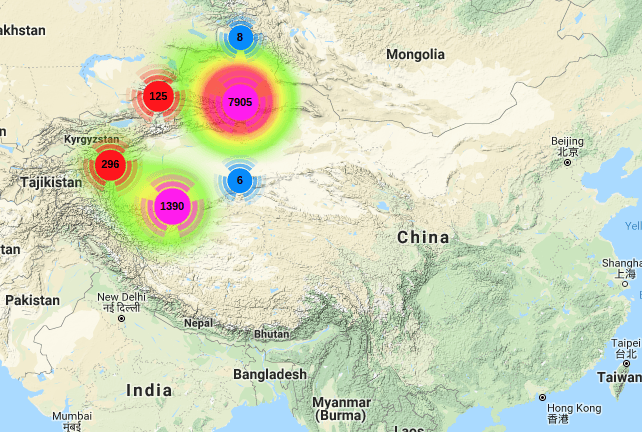
The government of Beijing Chinese is utilizing facial recognition databases for months to monitor Uyghur people in the Xinjiang region.

According to Gevers, the exposed archive contains data of about 2,565,724 users, including names, ID card numbers, sex, nationality, ID card’s issue and expiration dates, home addresses, photographs, date-of-birth, and employment information as well as GPS coordinates.

The expert also found GPS coordinates associated with the people under surveillance and a list of trackers for locations of public cameras from which the footages were obtained.

facial recognition 2

The surveillance cameras are located in public locations like mosque,
hotel, police station, internet café, and restaurant. Gevers also revealed that the database was regularly being updated, in 24-hours he noticed that 6.7 million GPS coordinates were added to the archive.

Gevers’s discovery confirmed the concerns about the abuse of facial recognition for surveillance purposes, even if Chinese authorities always denied the accusation for the violation of minority rights.

[adrotate banner=”9″] [adrotate banner=”12″]

Pierluigi Paganini

(SecurityAffairs – China, facial recognition)

[adrotate banner=”5″]

[adrotate banner=”13″]


