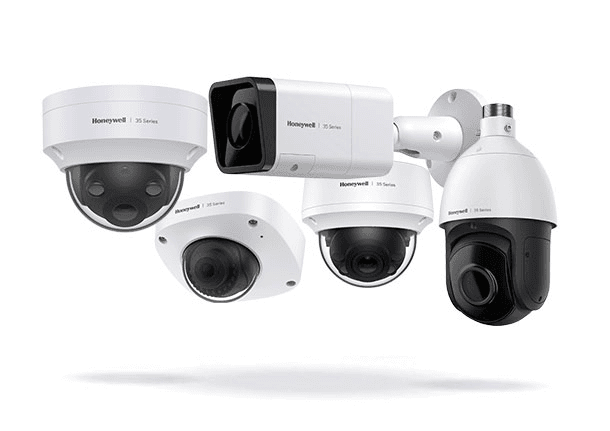
CISA warns Honeywell CCTVs are affected by a critical auth bypass flaw (CVE-2026-1670) allowing unauthorized access or account hijacking.
The U.S. Cybersecurity and Infrastructure Security Agency (CISA) warns that Honeywell CCTVs are affected by a critical authentication bypass flaw, tracked as CVE-2026-1670 (CVSS score of 9.8), that lets attackers change the recovery email without logging in. This vulnerability enables account takeovers and unauthorized access to camera feeds by exploiting an unauthenticated API endpoint for password recovery.
“Successful exploitation of this vulnerability could lead to account takeovers and unauthorized access to camera feeds; an unauthenticated attacker may change the recovery email address, potentially leading to further network compromise.” reads the alert published by CISA.
The vulnerability was discovered by cybersecurity researcher Souvik Kandar.
The vulnerability impacts the following Honeywell CCTVs models:
- I-HIB2PI-UL 2MP IP 6.1.22.1216 (CVE-2026-1670)
- SMB NDAA MVO-3 WDR_2MP_32M_PTZ_v2.0 (CVE-2026-1670)
- PTZ WDR 2MP 32M WDR_2MP_32M_PTZ_v2.0 (CVE-2026-1670)
- 25M IPC WDR_2MP_32M_PTZ_v2.0 (CVE-2026-1670)
A critical auth bypass flaw in Honeywell CCTV models could allow attackers to take over accounts, granting unauthorized access to live feeds. Many of these cameras are used in critical infrastructure, corporate sites, and government facilities worldwide. The flaw can be exploited remotely, risking sensitive surveillance data and enabling attackers to move laterally within networks, making it a severe threat to security, privacy, and operational integrity.
CISA advises organizations to reduce risk from this Honeywell CCTV flaw by isolating control system devices from the Internet, using firewalls, and placing remote devices behind secure networks. When remote access is needed, employ updated VPNs and ensure connected devices are secure. Organizations should perform risk assessments before deploying defenses, follow ICS security best practices from cisa.gov/ics, and report suspicious activity. Users should avoid phishing and unsolicited links; no active exploitation has been reported.
The US agency is not aware of attacks exploiting this flaw in the wild.
Follow me on Twitter: @securityaffairs and Facebook and Mastodon
(SecurityAffairs – hacking, CISA)