
Security Affairs
U.S. Charges Canadian Man in Alleged Hack of University Supercomputers|Two Barracuda ESG Flaws Could Be Combined for Full Root Access; Patches Released|Cyberattack Hits French Blood Banks as Hackers Target Refrigeration Systems Across Europe|CVE-2026-58868: Critical Android Bug Could Let Attackers Run Remote Code|U.S. CISA adds WordPress flaw to its Known Exploited Vulnerabilities catalog|Binance Hack: How Fake Job Interviews and AI Abuse Led to a $6.34 Billion Attack|Synology Warns of Ransomware Attacks Targeting NAS Devices Running Outdated DSM Versions|Inside XCPE, the botnet that turned 1.3M set-top boxes into proxy servers|NIS2 Makes Board Members Personally Liable for Access Control Decisions|Apple’s spyware notifications reach the Bundestag: what the BSI says to do now|VOLTA, the infostealer that asks an AI which victims are worth the effort|New wave of fridge cyberattacks hits European supermarkets, this time in Belgium, Luxembourg, Sweden and Estonia|U.S. Charges Canadian Man in Alleged Hack of University Supercomputers|Two Barracuda ESG Flaws Could Be Combined for Full Root Access; Patches Released|Cyberattack Hits French Blood Banks as Hackers Target Refrigeration Systems Across Europe|CVE-2026-58868: Critical Android Bug Could Let Attackers Run Remote Code|U.S. CISA adds WordPress flaw to its Known Exploited Vulnerabilities catalog|Binance Hack: How Fake Job Interviews and AI Abuse Led to a $6.34 Billion Attack|Synology Warns of Ransomware Attacks Targeting NAS Devices Running Outdated DSM Versions|Inside XCPE, the botnet that turned 1.3M set-top boxes into proxy servers|NIS2 Makes Board Members Personally Liable for Access Control Decisions|Apple’s spyware notifications reach the Bundestag: what the BSI says to do now|VOLTA, the infostealer that asks an AI which victims are worth the effort|New wave of fridge cyberattacks hits European supermarkets, this time in Belgium, Luxembourg, Sweden and Estonia|
Advertisement

Ad Placeholder

Full Width × 90

Breaking News

Cisco addressed CVE-2019-1663 RCE flaw in wireless routers

Cisco addressed CVE-2019-1663critical flaw in several wireless routers that could be exploited by attackers to remotely execute code on the impacted devices. Cisco released security updates to address a critical flaw (CVE-2019-1663) in several wireless routers that could be exploited by attackers to remotely execute code on the impacted devices. The CVE-2019-1663 flaw received a […]

Cisco CVE-2019-1663

Cisco addressed CVE-2019-1663critical flaw in several wireless routers that could be exploited by attackers to remotely execute code on the impacted devices.

Cisco released security updates to address a critical flaw (CVE-2019-1663) in several wireless routers that could be exploited by attackers to remotely execute code on the impacted devices.

The CVE-2019-1663 flaw received a CVSS score of 9.8, the issue resides in the web-based management interface of three router models and is caused by the improper validation of user-supplied data. The web-based management interface can be accessed either through a local LAN connection or via remote management, but experts noticed that the latter feature is disabled by default.

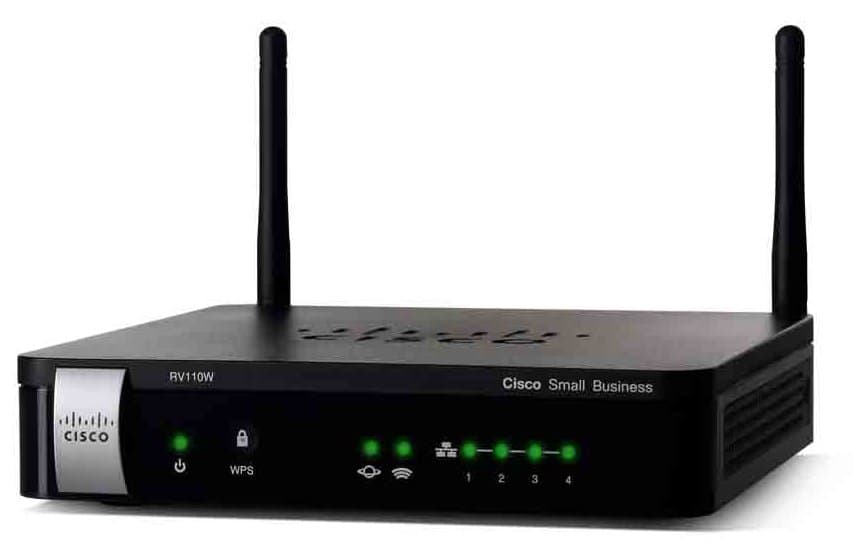
“A vulnerability in the web-based management interface of the Cisco RV110W Wireless-N VPN Firewall, Cisco RV130W Wireless-N Multifunction VPN Router, and Cisco RV215W Wireless-N VPN Router could allow an unauthenticated, remote attacker to execute arbitrary code on an affected device.” reads the advisory published by Cisco.

“An attacker could exploit this vulnerability by sending malicious HTTP requests to a targeted device. A successful exploit could allow the attacker to execute arbitrary code on the underlying operating system of the affected device as a high-privilege user,”

The flaw affects all releases of the following Cisco models:

  • RV110W Wireless-N VPN Firewall
  • RV130W Wireless-N Multifunction VPN Router
  • RV215W Wireless-N VPN Router

The tech giant fixed the issue in the following releases:

  • RV110W Wireless-N VPN Firewall: 1.2.2.1
  • RV130W Wireless-N Multifunction VPN Router: 1.0.3.45
  • RV215W Wireless-N VPN Router: 1.3.1.1
CVE-2019-1663

No workarounds are available for this flaw.

The vulnerabilities were revealed at the GeekPwn Shanghai conference in October 2018, but experts did not disclose technical details at the time. Cisco credited Yu Zhang and Haoliang Lu at the GeekPwn conference, and T. Shiomitsu of Pen Test Partners LLP for the discovery of the flaw.

[adrotate banner=”9″] [adrotate banner=”12″]

Pierluigi Paganini

(SecurityAffairs – CVE-2019-1663, Cisco wireless routers)

[adrotate banner=”5″]

[adrotate banner=”13″]


