
Security Affairs
Cyberattack Hits French Blood Banks as Hackers Target Refrigeration Systems Across Europe|CVE-2026-58868: Critical Android Bug Could Let Attackers Run Remote Code|U.S. CISA adds WordPress flaw to its Known Exploited Vulnerabilities catalog|Binance Hack: How Fake Job Interviews and AI Abuse Led to a $6.34 Billion Attack|Synology Warns of Ransomware Attacks Targeting NAS Devices Running Outdated DSM Versions|Inside XCPE, the botnet that turned 1.3M set-top boxes into proxy servers|NIS2 Makes Board Members Personally Liable for Access Control Decisions|Apple’s spyware notifications reach the Bundestag: what the BSI says to do now|VOLTA, the infostealer that asks an AI which victims are worth the effort|New wave of fridge cyberattacks hits European supermarkets, this time in Belgium, Luxembourg, Sweden and Estonia|Hackers Send Fake Nuclear Threat Alerts to Ukrainian and Russian Citizens|Chainalysis Investigates Security Incident Involving AI-Driven Attack Techniques|Cyberattack Hits French Blood Banks as Hackers Target Refrigeration Systems Across Europe|CVE-2026-58868: Critical Android Bug Could Let Attackers Run Remote Code|U.S. CISA adds WordPress flaw to its Known Exploited Vulnerabilities catalog|Binance Hack: How Fake Job Interviews and AI Abuse Led to a $6.34 Billion Attack|Synology Warns of Ransomware Attacks Targeting NAS Devices Running Outdated DSM Versions|Inside XCPE, the botnet that turned 1.3M set-top boxes into proxy servers|NIS2 Makes Board Members Personally Liable for Access Control Decisions|Apple’s spyware notifications reach the Bundestag: what the BSI says to do now|VOLTA, the infostealer that asks an AI which victims are worth the effort|New wave of fridge cyberattacks hits European supermarkets, this time in Belgium, Luxembourg, Sweden and Estonia|Hackers Send Fake Nuclear Threat Alerts to Ukrainian and Russian Citizens|Chainalysis Investigates Security Incident Involving AI-Driven Attack Techniques|
Advertisement

Ad Placeholder

Full Width × 90

Breaking News

Clop Ransomware gang claims to have stolen 2 million credit cards from E-Land

E-Land Retail suffered a ransomware attack, Clop ransomware operators claim to have stolen 2 million credit cards from the company. E-Land Retail is a South Korean conglomerate headquartered in Changjeon-dong Mapo-gu Seoul, South Korea. E-Land Group takes part in retail malls, restaurants, theme parks, hotels and construction businesses as well as its cornerstone, fashion apparel business. It has operations […]

E-Land Clop ransomware

E-Land Retail suffered a ransomware attack, Clop ransomware operators claim to have stolen 2 million credit cards from the company.

E-Land Retail is a South Korean conglomerate headquartered in Changjeon-dong Mapo-gu Seoul, South Korea. E-Land Group takes part in retail malls, restaurants, theme parks, hotels and construction businesses as well as its cornerstone, fashion apparel business. It has operations worldwide through its subsidiary E-Land World.

Clop ransomware is claiming to have stolen 2 million credit cards from E-Land Retail during the last 12 months.

Last month, the company was forced to shut down 23 NC Department Store and New Core locations after a CLOP ransomware infection.

The company said that customer was encrypted on a server that was not impacted, it also added to have notified relevant authorities.

“We are striving to quickly recover damage and normalize business. Most branches across the country have the first emergency measures Basic sales activities are possible.” reads the security breach notice.

“Although this ransomware attack caused some damage to the company’s network and systems, customer information and sensitive data are encrypted on a separate server. It is in a safe state because it is managed.”

Unfortunately, the situation could be quite different, as CLOP ransomware operators told Bleeping Computer. The ransomware gang claimed to have initially compromised E-Land a year ago and to have stolen credit card data using PoS malware.

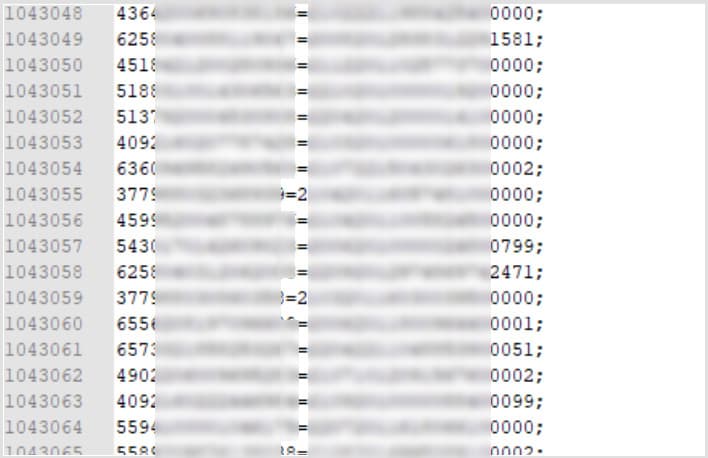
The hackers claim to have siphoned and deciphered, for 12 months, the credit card data (Track 2 data) without being discovered by the company.

CLOP told BleepingComputer that they stole data for 2 million credit cards.

E-Land Clop ransomware
Source Bleeping Computer

CLOP ransomware operators claim to have stolen credit card Track 2 data, which includes a credit card number, the expiration date, and other information. Credit cards CVV code is not included in Track 2 data. Track 1 data can only be used to clone credit cards and use them for in-store purchases.

[adrotate banner=”9″][adrotate banner=”12″]

Pierluigi Paganini

(SecurityAffairs – hacking, malware)

[adrotate banner=”5″]

[adrotate banner=”13″]


