
Security Affairs
CVE-2026-58868: Critical Android Bug Could Let Attackers Run Remote Code|U.S. CISA adds WordPress flaw to its Known Exploited Vulnerabilities catalog|Binance Hack: How Fake Job Interviews and AI Abuse Led to a $6.34 Billion Attack|Synology Warns of Ransomware Attacks Targeting NAS Devices Running Outdated DSM Versions|Inside XCPE, the botnet that turned 1.3M set-top boxes into proxy servers|NIS2 Makes Board Members Personally Liable for Access Control Decisions|Apple’s spyware notifications reach the Bundestag: what the BSI says to do now|VOLTA, the infostealer that asks an AI which victims are worth the effort|New wave of fridge cyberattacks hits European supermarkets, this time in Belgium, Luxembourg, Sweden and Estonia|Hackers Send Fake Nuclear Threat Alerts to Ukrainian and Russian Citizens|Chainalysis Investigates Security Incident Involving AI-Driven Attack Techniques|FBI Blames North Korea for $6 Billion Binance Crypto Theft|CVE-2026-58868: Critical Android Bug Could Let Attackers Run Remote Code|U.S. CISA adds WordPress flaw to its Known Exploited Vulnerabilities catalog|Binance Hack: How Fake Job Interviews and AI Abuse Led to a $6.34 Billion Attack|Synology Warns of Ransomware Attacks Targeting NAS Devices Running Outdated DSM Versions|Inside XCPE, the botnet that turned 1.3M set-top boxes into proxy servers|NIS2 Makes Board Members Personally Liable for Access Control Decisions|Apple’s spyware notifications reach the Bundestag: what the BSI says to do now|VOLTA, the infostealer that asks an AI which victims are worth the effort|New wave of fridge cyberattacks hits European supermarkets, this time in Belgium, Luxembourg, Sweden and Estonia|Hackers Send Fake Nuclear Threat Alerts to Ukrainian and Russian Citizens|Chainalysis Investigates Security Incident Involving AI-Driven Attack Techniques|FBI Blames North Korea for $6 Billion Binance Crypto Theft|
Advertisement

Ad Placeholder

Full Width × 90

Breaking News

Crooks target DeepSeek users with fake sponsored Google ads to deliver malware

Cybercriminals are exploiting the popularity of DeepSeek by using fake sponsored Google ads to distribute malware. While DeepSeek is rising in popularity, threat actors are attempting to exploit it by using fake sponsored Google ads to distribute malware, Malwarebytes researchers warn. Crooks are using DeepSeek as a lure to trap unsuspecting Google searchers. “Unfortunately, we […]

Deepseek fake Google ads

Cybercriminals are exploiting the popularity of DeepSeek by using fake sponsored Google ads to distribute malware.

While DeepSeek is rising in popularity, threat actors are attempting to exploit it by using fake sponsored Google ads to distribute malware, Malwarebytes researchers warn.

Crooks are using DeepSeek as a lure to trap unsuspecting Google searchers.

“Unfortunately, we are getting so used to sponsored Google search results being abused by criminals that we advise people not to click on them.” reads the alert published by Malwarebytes. “So, it was to be expected that DeepSeek would show up in our monitoring of fake Google ads.”

Deepseek fake Google ads

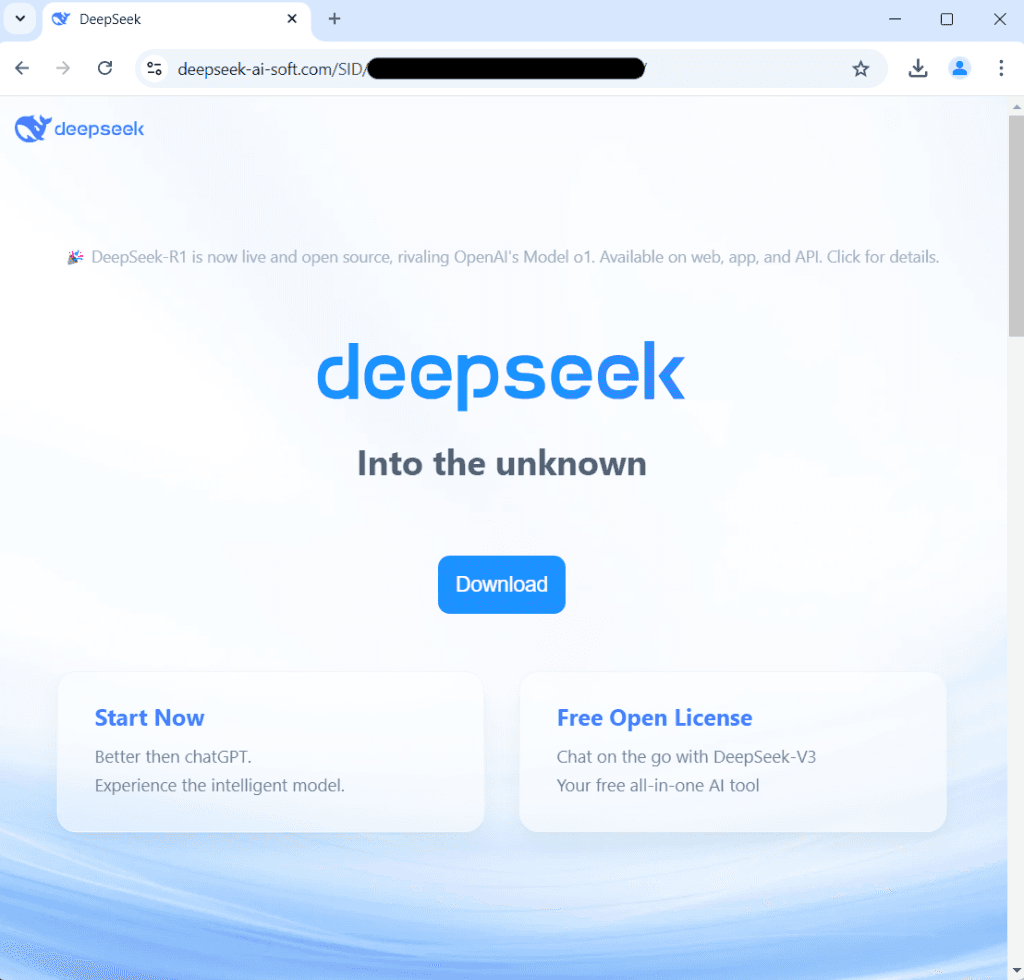
The researchers observed that cybercriminals created a convincing fake DeepSeek website linked to malicious Google ads. Clicking the download button delivers an MSIL-based Trojan, detected as Malware.AI.1323738514.

Deepseek fake Google ads

Crooks can bypass Google controls that prevent fake ads, outbidding legitimate brands and rank higher in sponsored search results.

The researchers recommend avoiding clicking on sponsored search results and always verifying the advertiser by checking the details behind the URL to ensure it’s the legitimate brand owner.

The researchers also observed other fake sponsored Google ads written in different languages, such as Hebrew.

“If you don’t want to see sponsored ads at all then it’s worth considering installing an ad-blocker that will make sure you go straight to the regular search results.” concludes the alert.

In January, Italy’s Data Protection Authority Garante asked the AI firm DeepSeek to clarify its data collection, sources, purposes, legal basis, and storage, citing potential risks to user data.

The Chinese company’s app was removed from the iPhone App Store and Google Play Store in Italy, where it was the most downloaded free app. The removal’s cause is still unclear, but it may be a defensive action following scrutiny from the Data Protection Authority.

In February, Texas Governor Greg Abbott banned Chinese AI company DeepSeek and Chinese-owned social media apps Xiaohongshu (RedNote) and Lemon8 from all state-issued devices.

AI-powered chatbot, recently launched globally, has rapidly gained popularity reaching millions of users.

Texas is the first state to implement such a ban on these apps. Texas and other states banned TikTok on government devices.

Follow me on Twitter: @securityaffairs and Facebook and Mastodon

Pierluigi Paganini

(SecurityAffairs – hacking, Deepseek)


