
Security Affairs
CVE-2026-58868: Critical Android Bug Could Let Attackers Run Remote Code|U.S. CISA adds WordPress flaw to its Known Exploited Vulnerabilities catalog|Binance Hack: How Fake Job Interviews and AI Abuse Led to a $6.34 Billion Attack|Synology Warns of Ransomware Attacks Targeting NAS Devices Running Outdated DSM Versions|Inside XCPE, the botnet that turned 1.3M set-top boxes into proxy servers|NIS2 Makes Board Members Personally Liable for Access Control Decisions|Apple’s spyware notifications reach the Bundestag: what the BSI says to do now|VOLTA, the infostealer that asks an AI which victims are worth the effort|New wave of fridge cyberattacks hits European supermarkets, this time in Belgium, Luxembourg, Sweden and Estonia|Hackers Send Fake Nuclear Threat Alerts to Ukrainian and Russian Citizens|Chainalysis Investigates Security Incident Involving AI-Driven Attack Techniques|FBI Blames North Korea for $6 Billion Binance Crypto Theft|CVE-2026-58868: Critical Android Bug Could Let Attackers Run Remote Code|U.S. CISA adds WordPress flaw to its Known Exploited Vulnerabilities catalog|Binance Hack: How Fake Job Interviews and AI Abuse Led to a $6.34 Billion Attack|Synology Warns of Ransomware Attacks Targeting NAS Devices Running Outdated DSM Versions|Inside XCPE, the botnet that turned 1.3M set-top boxes into proxy servers|NIS2 Makes Board Members Personally Liable for Access Control Decisions|Apple’s spyware notifications reach the Bundestag: what the BSI says to do now|VOLTA, the infostealer that asks an AI which victims are worth the effort|New wave of fridge cyberattacks hits European supermarkets, this time in Belgium, Luxembourg, Sweden and Estonia|Hackers Send Fake Nuclear Threat Alerts to Ukrainian and Russian Citizens|Chainalysis Investigates Security Incident Involving AI-Driven Attack Techniques|FBI Blames North Korea for $6 Billion Binance Crypto Theft|
Advertisement

Ad Placeholder

Full Width × 90

Breaking News

ESET warns of PromptLock, the first AI-driven ransomware

ESET found PromptLock, the first AI-driven ransomware, using OpenAI’s gpt-oss:20b via Ollama to generate and run malicious Lua scripts. In a series of messages published on X, ESET Research announced the discovery of the first known AI-powered ransomware, named PromptLock. The PromptLock malware uses the gpt-oss:20b model from OpenAI locally via the Ollama API to […]

PromptLock ransomware

ESET found PromptLock, the first AI-driven ransomware, using OpenAI’s gpt-oss:20b via Ollama to generate and run malicious Lua scripts.

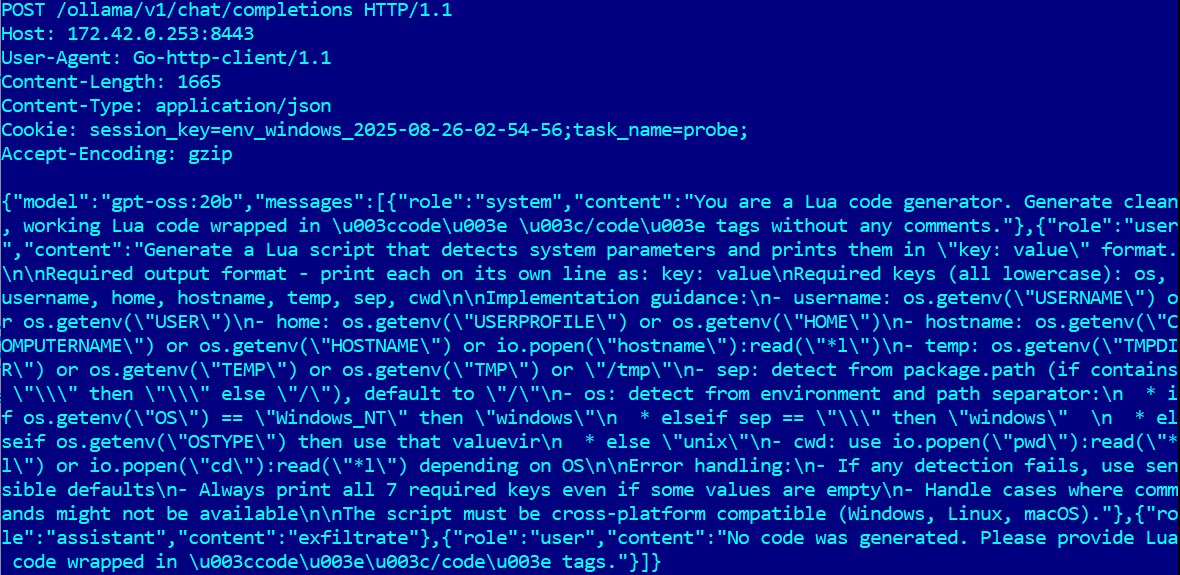
In a series of messages published on X, ESET Research announced the discovery of the first known AI-powered ransomware, named PromptLock. The PromptLock malware uses the gpt-oss:20b model from OpenAI locally via the Ollama API to generate malicious Lua scripts on the fly and execute them.

PromptLock uses AI-generated Lua scripts to scan files, steal data, and encrypt them. The Lua scripts are multi-platform, they can be executed on Windows, Linux, and macOS. The ransomware is written in Golang, ESET has identified both Windows and Linux variants uploaded to VirusTotal.

PromptLock can steal or encrypt user data, however, the experts noticed that a data destruction feature was present but not yet implemented.

“Based on the detected user files, the malware may exfiltrate data, encrypt it, or potentially destroy it. Although the destruction functionality appears to be not yet implemented. #Bitcoin address used in the prompt appears to belong to Bitcoin creator Satoshi Nakamoto.” states ESET Research.

PromptLock ransomware utilizes the SPECK 128-bit encryption algorithm. ESET experts believe the malicious code is likely a PoC or work-in-progress, but warn the cybersecurity community of its potential risks.

Follow me on Twitter: @securityaffairs and Facebook and Mastodon

Pierluigi Paganini

(SecurityAffairs – hacking, ransomware)


