
Security Affairs
Cyberattack Hits French Blood Banks as Hackers Target Refrigeration Systems Across Europe|CVE-2026-58868: Critical Android Bug Could Let Attackers Run Remote Code|U.S. CISA adds WordPress flaw to its Known Exploited Vulnerabilities catalog|Binance Hack: How Fake Job Interviews and AI Abuse Led to a $6.34 Billion Attack|Synology Warns of Ransomware Attacks Targeting NAS Devices Running Outdated DSM Versions|Inside XCPE, the botnet that turned 1.3M set-top boxes into proxy servers|NIS2 Makes Board Members Personally Liable for Access Control Decisions|Apple’s spyware notifications reach the Bundestag: what the BSI says to do now|VOLTA, the infostealer that asks an AI which victims are worth the effort|New wave of fridge cyberattacks hits European supermarkets, this time in Belgium, Luxembourg, Sweden and Estonia|Hackers Send Fake Nuclear Threat Alerts to Ukrainian and Russian Citizens|Chainalysis Investigates Security Incident Involving AI-Driven Attack Techniques|Cyberattack Hits French Blood Banks as Hackers Target Refrigeration Systems Across Europe|CVE-2026-58868: Critical Android Bug Could Let Attackers Run Remote Code|U.S. CISA adds WordPress flaw to its Known Exploited Vulnerabilities catalog|Binance Hack: How Fake Job Interviews and AI Abuse Led to a $6.34 Billion Attack|Synology Warns of Ransomware Attacks Targeting NAS Devices Running Outdated DSM Versions|Inside XCPE, the botnet that turned 1.3M set-top boxes into proxy servers|NIS2 Makes Board Members Personally Liable for Access Control Decisions|Apple’s spyware notifications reach the Bundestag: what the BSI says to do now|VOLTA, the infostealer that asks an AI which victims are worth the effort|New wave of fridge cyberattacks hits European supermarkets, this time in Belgium, Luxembourg, Sweden and Estonia|Hackers Send Fake Nuclear Threat Alerts to Ukrainian and Russian Citizens|Chainalysis Investigates Security Incident Involving AI-Driven Attack Techniques|
Advertisement

Ad Placeholder

Full Width × 90

Breaking News

Europol arrested cryptocurrency scammers that stole millions from victims

An international police operation led by Europol led to the arrest of cryptocurrency scammers targeting users all over the world. An international law enforcement operation conducted by authorities from Bulgaria, Cyprus, Germany and Serbia, supported by Europol and Eurojust, has dismantled a cybercrime ring involved in online investment fraud. The European police have supported this […]

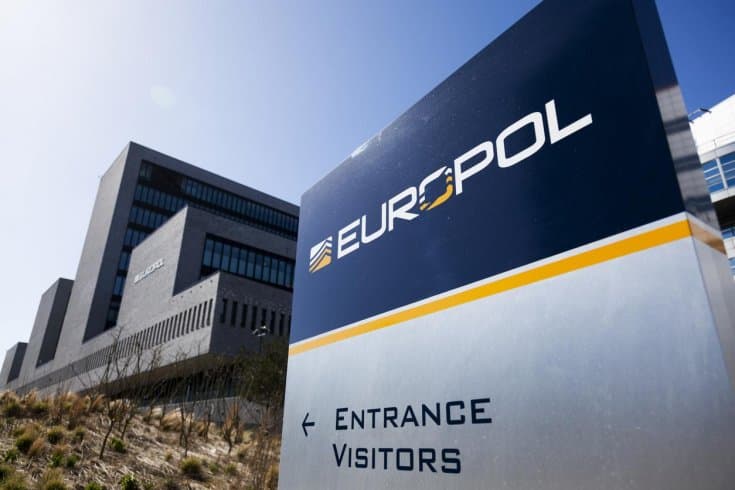
Europol Archetyp Market

An international police operation led by Europol led to the arrest of cryptocurrency scammers targeting users all over the world.

An international law enforcement operation conducted by authorities from Bulgaria, Cyprus, Germany and Serbia, supported by Europol and Eurojust, has dismantled a cybercrime ring involved in online investment fraud. The European police have supported this investigation since June 2022 following an initial request from German authorities.

“The suspects used advertisements on social networks to lure victims to websites covertly operated by the criminals, which offered seemingly exceptional investment opportunities in cryptocurrencies.” reads the press release published by Europol.

The gang was using call centres to lure victims into investing large amounts of money into fake cryptocurrency schemes. The suspects used advertisements on social networks to lure victims to websites covertly operated by the criminals, which offered seemingly exceptional investment opportunities in cryptocurrencies.

According to the press release published by Europol, 261 individuals have been questioned, some of whom are awaiting prosecution (42 in Bulgaria, 2 in Cyprus, 3 in Germany and 214 in Serbia);    

The police searched 22 locations (5 in Bulgaria, 2 in Cyprus, 15 in Serbia) including: 4 call centres and 11 residences in Serbia; 2 residences in Cyprus; 2 companies and 3 residences in Bulgaria.

The police also seized three digital wallets containing about $1 million worth of cryptocurrencies, about €50,000 ($54,000) in cash, three cars, computers and backups, and documents.

“Seizures include 3 hardware wallets with about USD 1 million in cryptocurrencies on it and about EUR 50 000 in cash, 3 vehicles, electronic equipment and data back-ups, documents.” continues the press release.

Most victims, mainly from Germany, were initially lured into investing low sums, then they were persuaded to make transfers of higher amounts.
The financial damage to German victims is over two million euros. The bad news is that this is the tip of the iceberg because a large number of frauds were unreported by the victims, for this reason, overall financial damage could be in the hundreds of millions of euros.

Follow me on Twitter: @securityaffairs and Facebook and Mastodon

[adrotate banner=”9″][adrotate banner=”12″]

Pierluigi Paganini

(SecurityAffairs – hacking, cryptocurrency)

[adrotate banner=”5″]

[adrotate banner=”13″]


