
Ransomware operators use fake Microsoft Teams updates to deploy Cobalt Strike and compromise the target networks.
Ransomware operators are using malicious fake Microsoft Teams updates to deliver backdoors that lead the installation of the Cobalt Strike post-exploitation tool and compromise the target network.
The ongoing COVID-19 pandemic is forcing a growing number of organizations and businesses in using videoconferencing solutions, and threat actors are attempting to exploit this scenario.
BleepingComputer has seen a non-public security advisory issued by Microsoft that is warning its customers of malware campaigns using fake Microsoft Teams updates.
The technique is not new and threat actors already exploited it in attacks in the wild. In 2019, DoppelPaymer ransomware operators used this trick to target Microsoft users in 2019, this year WastedLocker operators evolved the technique by using a multi-state attack chain and employing signed binaries to evade the detection.
Recently threat actors carried out black SEO campaigns to trick Internet users into visiting compromised websites hosting fake ads that lure users into clicking it to install an update.
“In at least one attack Microsoft detected, the crooks purchased a search engine ad that caused top results for Teams software to point to a domain under their control.” reported Bleeping Computer.
“Clicking on the link downloaded a payload that executed a PowerShell script to retrieve more malicious content. It also installed a legitimate copy of Microsoft Teams on the system to keep victims unaware of the attack.”
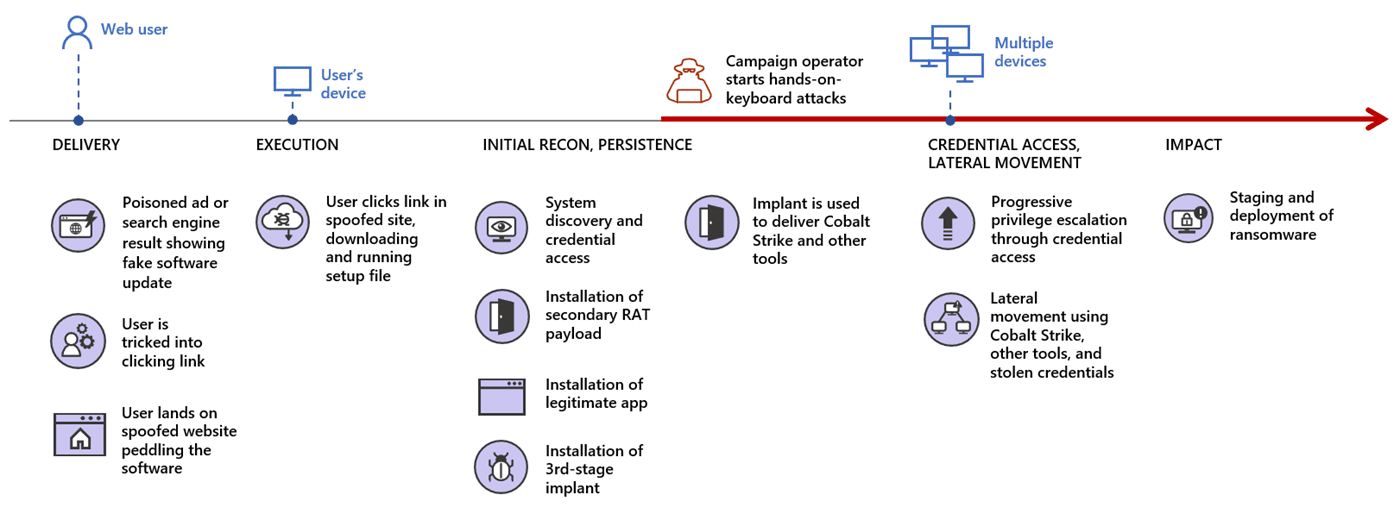
In one of the attacks spotted by Microsoft, threat actors were spreading a tainted copy of Microsoft Teams. In the early stage of the attack chain, hackers used the Predator the Thief infostealer to gather sensitive information on the target, including credentials and payment data. Threat actors also distributed other malware, like the Bladabindi (NJRat) backdoor and ZLoader info-stealer, and of course Cobalt Strike.
Cobalt Strike was employed by ransomware operators to move laterally across the target network, below an attack chain shared by Microsoft with Bleeping Computer.

Experts from Microsoft observed multiple campaigns using fake Microsoft Teams updates as a lure, the attacks were likely conducted by the same threat actor.
The security advisory includes a series of recommendations such as:
- using web browsers that can filter and block malicious websites;
- using strong, random passwords for local administrators;
- limiting admin privileges to essential users;
- blocking executable files that do not meet specific criteria;
- blocking JavaScript and VBScript code from downloading executable content.
| [adrotate banner=”9″] | [adrotate banner=”12″] |
(SecurityAffairs – hacking, Microsoft Teams)
[adrotate banner=”5″]
[adrotate banner=”13″]


