
Security Affairs
Two Barracuda ESG Flaws Could Be Combined for Full Root Access; Patches Released|Cyberattack Hits French Blood Banks as Hackers Target Refrigeration Systems Across Europe|CVE-2026-58868: Critical Android Bug Could Let Attackers Run Remote Code|U.S. CISA adds WordPress flaw to its Known Exploited Vulnerabilities catalog|Binance Hack: How Fake Job Interviews and AI Abuse Led to a $6.34 Billion Attack|Synology Warns of Ransomware Attacks Targeting NAS Devices Running Outdated DSM Versions|Inside XCPE, the botnet that turned 1.3M set-top boxes into proxy servers|NIS2 Makes Board Members Personally Liable for Access Control Decisions|Apple’s spyware notifications reach the Bundestag: what the BSI says to do now|VOLTA, the infostealer that asks an AI which victims are worth the effort|New wave of fridge cyberattacks hits European supermarkets, this time in Belgium, Luxembourg, Sweden and Estonia|Hackers Send Fake Nuclear Threat Alerts to Ukrainian and Russian Citizens|Two Barracuda ESG Flaws Could Be Combined for Full Root Access; Patches Released|Cyberattack Hits French Blood Banks as Hackers Target Refrigeration Systems Across Europe|CVE-2026-58868: Critical Android Bug Could Let Attackers Run Remote Code|U.S. CISA adds WordPress flaw to its Known Exploited Vulnerabilities catalog|Binance Hack: How Fake Job Interviews and AI Abuse Led to a $6.34 Billion Attack|Synology Warns of Ransomware Attacks Targeting NAS Devices Running Outdated DSM Versions|Inside XCPE, the botnet that turned 1.3M set-top boxes into proxy servers|NIS2 Makes Board Members Personally Liable for Access Control Decisions|Apple’s spyware notifications reach the Bundestag: what the BSI says to do now|VOLTA, the infostealer that asks an AI which victims are worth the effort|New wave of fridge cyberattacks hits European supermarkets, this time in Belgium, Luxembourg, Sweden and Estonia|Hackers Send Fake Nuclear Threat Alerts to Ukrainian and Russian Citizens|
Advertisement

Ad Placeholder

Full Width × 90

APT

Avast released a free decryptor for the HermeticRansom that hit Ukraine

Avast released a decryptor for the HermeticRansom ransomware used in recent targeted attacks against Ukrainian entities. Avast has released a free decryptor for the HermeticRansom ransomware employed in targeted attacks against Ukrainian systems since February 23. The security firms aim at helping Ukrainians victims in recovering their file for free. The HermeticRansomware was one of […]

hermeticransom

Avast released a decryptor for the HermeticRansom ransomware used in recent targeted attacks against Ukrainian entities.

Avast has released a free decryptor for the HermeticRansom ransomware employed in targeted attacks against Ukrainian systems since February 23.

The security firms aim at helping Ukrainians victims in recovering their file for free.

The HermeticRansomware was one of the three components involved in disruptive attacks detailed by ESET researchers:

  • HermeticWiper: makes a system inoperable by corrupting its data
  • HermeticWizard: spreads HermeticWiper across a local network via WMI and SMB
  • HermeticRansom: ransomware written in Go

Researchers from Crowdstrike discovered a logic flaw in the encryption process that can allow researchers to break the encryption. The experts speculate the developers invested limited efforts in testing the ransomware, likely because the encryption was not the end goal of the threat.

“According to analysis done by Crowdstrike’s Intelligence Team, the ransomware contains a weakness in the crypto schema and can be decrypted for free.” reported Avast. “If your device has been infected with HermeticRansom and you’d like to decrypt your files, click here to skip to the How to use the Avast decryptor to recover files.”

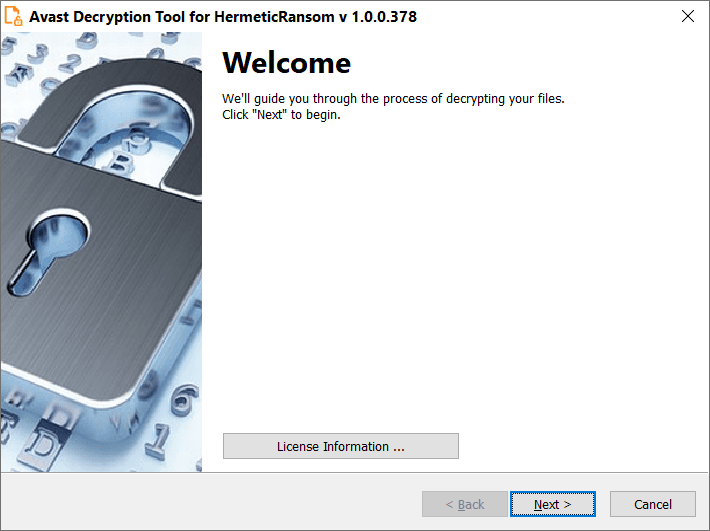
Crowdstrike also released a script to recover encrypted files that was used by Avast as part of more friendly tool with an easy-to-use GUI.

hermeticransom

The post published by Avast includes detailed instructions to recover the encrypted data.

Follow me on Twitter: @securityaffairs and Facebook

[adrotate banner=”9″][adrotate banner=”12″]

Pierluigi Paganini

(SecurityAffairs – hacking, ransomware)

[adrotate banner=”5″]

[adrotate banner=”13″]


