
Security Affairs
Cyberattack Hits French Blood Banks as Hackers Target Refrigeration Systems Across Europe|CVE-2026-58868: Critical Android Bug Could Let Attackers Run Remote Code|U.S. CISA adds WordPress flaw to its Known Exploited Vulnerabilities catalog|Binance Hack: How Fake Job Interviews and AI Abuse Led to a $6.34 Billion Attack|Synology Warns of Ransomware Attacks Targeting NAS Devices Running Outdated DSM Versions|Inside XCPE, the botnet that turned 1.3M set-top boxes into proxy servers|NIS2 Makes Board Members Personally Liable for Access Control Decisions|Apple’s spyware notifications reach the Bundestag: what the BSI says to do now|VOLTA, the infostealer that asks an AI which victims are worth the effort|New wave of fridge cyberattacks hits European supermarkets, this time in Belgium, Luxembourg, Sweden and Estonia|Hackers Send Fake Nuclear Threat Alerts to Ukrainian and Russian Citizens|Chainalysis Investigates Security Incident Involving AI-Driven Attack Techniques|Cyberattack Hits French Blood Banks as Hackers Target Refrigeration Systems Across Europe|CVE-2026-58868: Critical Android Bug Could Let Attackers Run Remote Code|U.S. CISA adds WordPress flaw to its Known Exploited Vulnerabilities catalog|Binance Hack: How Fake Job Interviews and AI Abuse Led to a $6.34 Billion Attack|Synology Warns of Ransomware Attacks Targeting NAS Devices Running Outdated DSM Versions|Inside XCPE, the botnet that turned 1.3M set-top boxes into proxy servers|NIS2 Makes Board Members Personally Liable for Access Control Decisions|Apple’s spyware notifications reach the Bundestag: what the BSI says to do now|VOLTA, the infostealer that asks an AI which victims are worth the effort|New wave of fridge cyberattacks hits European supermarkets, this time in Belgium, Luxembourg, Sweden and Estonia|Hackers Send Fake Nuclear Threat Alerts to Ukrainian and Russian Citizens|Chainalysis Investigates Security Incident Involving AI-Driven Attack Techniques|
Advertisement

Ad Placeholder

Full Width × 90

Hacking

GCHQ used fake LinkedIn and Slashdot to hack GRX providers and OPEC

The GCHQ (British Government Communications Headquarters) used fake LinkedIn and Slashdot to hack Belgacom, OPEC & others GRX providers. According to the German weekly news magazine Der Spiegel the British signals intelligence spy agency has again adopted a “quantum insert” technique to target employees of two companies that are GRX (Global Roaming Exchange) providers. The […]

GCHQ used fake LinkedIn and Slashdot to hack GRX providers and OPEC

The GCHQ (British Government Communications Headquarters) used fake LinkedIn and Slashdot to hack Belgacom, OPEC & others GRX providers.

According to the German weekly news magazine Der Spiegel the British signals intelligence spy agency has again adopted a “quantum insert” technique to target employees of two companies that are GRX (Global Roaming Exchange) providers. The companies attacked by intelligence agents are Comfone and Mach, this second one was recently acquired over by Syniverse, consider that the number of GRX providers globally is nearly two dozen.

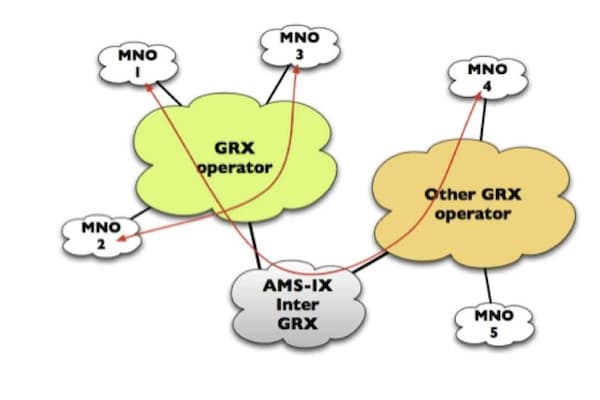
A GPRS roaming exchange (GRX) operates as a hub for GPRS connections from roaming users, it was mainly designed to facilitate a more efficient way for operators to interconnect networks while users roam around the globe.

There are only around two dozen such GRX providers globally. This new attack specifically targeted administrators and engineers of Comfone and Mach (which was acquired over the summer by Syniverse), two GRX providers.

GCHQ quantum insert GRX

The revelation was made by the journalist Laura Poitras accredited as one of the professionals that have access to the documents leaked by former National Security Agency contractor Edward Snowden, intelligence experts do not exclude a link to the attack against another GRX provider, the Belgacom International Carrier Services that is a subsidiary of Belgacom.

The German magazine Der Spiegel reported in September the responsibility of  GCHQ for the malware based attack against the major Belgian Telco, the new magazine cited top secret documents from the Government Communications Headquarters (GCHQ) that explicitly refers the operation codenamed “Operation Socialist”.

 GCHQ quantum insert GRX 2


The British Government Communications Headquarters (GCHQ) used spoofed versions of LinkedIn and Slashdot pages to serve malware and infect victims, a similar attack was conducted against nine employees of the Organization of Petroleum Exporting Countries (OPEC). Just a few days ago I remarked the strategic importance of social media for intelligence analysis and to arrange targeted attacks.

Similarly to NSA, also GCHQ may have compromised Internet Infrastructure relying on secret partnerships with European telecoms companies.
Last June The Guardian revealed the name of a surveillance program conducted by GCHQ. Operation Tempora is the massive tapping program conducted by Britain’s Government Communications Headquarters (GCHQ).

Operation Tempora has been going on for at least 18 months, British intelligence adopted “intercept probes” to intercept a huge volume of data from transatlantic fiber-optic cables

“The GCHQ mass tapping operation has been built up over five years by attaching intercept probes to transatlantic fibre-optic cables where they land on British shores carrying data to western Europe from telephone exchanges and internet servers in north America.”

To better understand how it is possible to exploit the vulnerabilities of GRX give a look to the following presentation made by Phillippe Langlois, the founder of P1 Security.

Pierluigi Paganini

(Security Affairs – GCHQ, Surveillance)


