
Security Affairs
Two Barracuda ESG Flaws Could Be Combined for Full Root Access; Patches Released|Cyberattack Hits French Blood Banks as Hackers Target Refrigeration Systems Across Europe|CVE-2026-58868: Critical Android Bug Could Let Attackers Run Remote Code|U.S. CISA adds WordPress flaw to its Known Exploited Vulnerabilities catalog|Binance Hack: How Fake Job Interviews and AI Abuse Led to a $6.34 Billion Attack|Synology Warns of Ransomware Attacks Targeting NAS Devices Running Outdated DSM Versions|Inside XCPE, the botnet that turned 1.3M set-top boxes into proxy servers|NIS2 Makes Board Members Personally Liable for Access Control Decisions|Apple’s spyware notifications reach the Bundestag: what the BSI says to do now|VOLTA, the infostealer that asks an AI which victims are worth the effort|New wave of fridge cyberattacks hits European supermarkets, this time in Belgium, Luxembourg, Sweden and Estonia|Hackers Send Fake Nuclear Threat Alerts to Ukrainian and Russian Citizens|Two Barracuda ESG Flaws Could Be Combined for Full Root Access; Patches Released|Cyberattack Hits French Blood Banks as Hackers Target Refrigeration Systems Across Europe|CVE-2026-58868: Critical Android Bug Could Let Attackers Run Remote Code|U.S. CISA adds WordPress flaw to its Known Exploited Vulnerabilities catalog|Binance Hack: How Fake Job Interviews and AI Abuse Led to a $6.34 Billion Attack|Synology Warns of Ransomware Attacks Targeting NAS Devices Running Outdated DSM Versions|Inside XCPE, the botnet that turned 1.3M set-top boxes into proxy servers|NIS2 Makes Board Members Personally Liable for Access Control Decisions|Apple’s spyware notifications reach the Bundestag: what the BSI says to do now|VOLTA, the infostealer that asks an AI which victims are worth the effort|New wave of fridge cyberattacks hits European supermarkets, this time in Belgium, Luxembourg, Sweden and Estonia|Hackers Send Fake Nuclear Threat Alerts to Ukrainian and Russian Citizens|
Advertisement

Ad Placeholder

Full Width × 90

Breaking News

Using 99 mobile phones to create a fake traffic jam in Google Maps

A German artist demonstrated how using a simple trick it is possible to deceive Google Maps and create a virtual traffic jam. The German artist Simon Weckert conducted a simple experiment to demonstrate how to deceive Google Maps and create a virtual traffic jam. The man put 99 cell mobile phones using Google Maps in a […]

Google Maps

A German artist demonstrated how using a simple trick it is possible to deceive Google Maps and create a virtual traffic jam.

The German artist Simon Weckert conducted a simple experiment to demonstrate how to deceive Google Maps and create a virtual traffic jam.

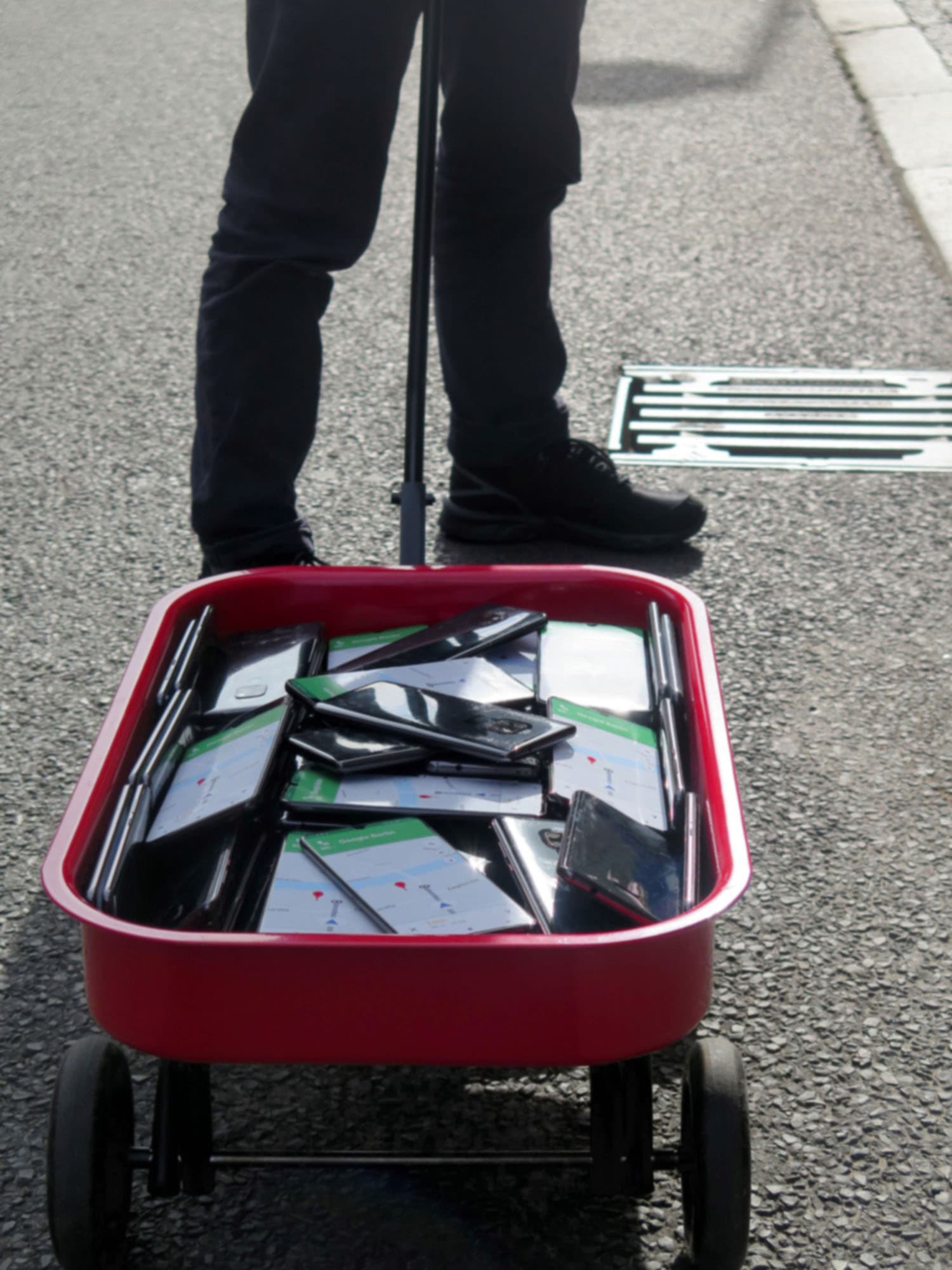
The man put 99 cell mobile phones using Google Maps in a hand cart and started walking around the streets of Berlin.

Google Maps
Google Maps

The popular Maps service leverages users’ GPS and location data sent by the from mobile devices to determine the routes for its users and avoid traffic congestion on a particular point of the path. Using data sent by the mobile devices Google Maps detects traffic jams and suggests alternative routes to the destination.

In Weckert’s test, the man was walking with 99 active phones simulating the presence of traffic on his route that was interpreted by the service as 99 cars going slow due to the traffic jam.

This simple test demonstrates that is is quite simple to interfere with the map service. Such kind of attack could have serious effects on traffic and could be used by attackers to reroute vehicles through specifically chosen routes.

“99 second hand smartphones are transported in a handcart to generate virtual traffic jam in Google Maps. Through this activity, it is possible to turn a green street red which has an impact in the physical world by navigating cars on another route to avoid being stuck in traffic,” Weckert wrote on his web site.

[adrotate banner=”9″] [adrotate banner=”12″]

Pierluigi Paganini

(SecurityAffairs – Google, hacking)

[adrotate banner=”5″]

[adrotate banner=”13″]


