
Security Affairs
Two Barracuda ESG Flaws Could Be Combined for Full Root Access; Patches Released|Cyberattack Hits French Blood Banks as Hackers Target Refrigeration Systems Across Europe|CVE-2026-58868: Critical Android Bug Could Let Attackers Run Remote Code|U.S. CISA adds WordPress flaw to its Known Exploited Vulnerabilities catalog|Binance Hack: How Fake Job Interviews and AI Abuse Led to a $6.34 Billion Attack|Synology Warns of Ransomware Attacks Targeting NAS Devices Running Outdated DSM Versions|Inside XCPE, the botnet that turned 1.3M set-top boxes into proxy servers|NIS2 Makes Board Members Personally Liable for Access Control Decisions|Apple’s spyware notifications reach the Bundestag: what the BSI says to do now|VOLTA, the infostealer that asks an AI which victims are worth the effort|New wave of fridge cyberattacks hits European supermarkets, this time in Belgium, Luxembourg, Sweden and Estonia|Hackers Send Fake Nuclear Threat Alerts to Ukrainian and Russian Citizens|Two Barracuda ESG Flaws Could Be Combined for Full Root Access; Patches Released|Cyberattack Hits French Blood Banks as Hackers Target Refrigeration Systems Across Europe|CVE-2026-58868: Critical Android Bug Could Let Attackers Run Remote Code|U.S. CISA adds WordPress flaw to its Known Exploited Vulnerabilities catalog|Binance Hack: How Fake Job Interviews and AI Abuse Led to a $6.34 Billion Attack|Synology Warns of Ransomware Attacks Targeting NAS Devices Running Outdated DSM Versions|Inside XCPE, the botnet that turned 1.3M set-top boxes into proxy servers|NIS2 Makes Board Members Personally Liable for Access Control Decisions|Apple’s spyware notifications reach the Bundestag: what the BSI says to do now|VOLTA, the infostealer that asks an AI which victims are worth the effort|New wave of fridge cyberattacks hits European supermarkets, this time in Belgium, Luxembourg, Sweden and Estonia|Hackers Send Fake Nuclear Threat Alerts to Ukrainian and Russian Citizens|
Advertisement

Ad Placeholder

Full Width × 90

Breaking News

Closure JavaScript Library introduced XSS issue in Google Search and potentially other services

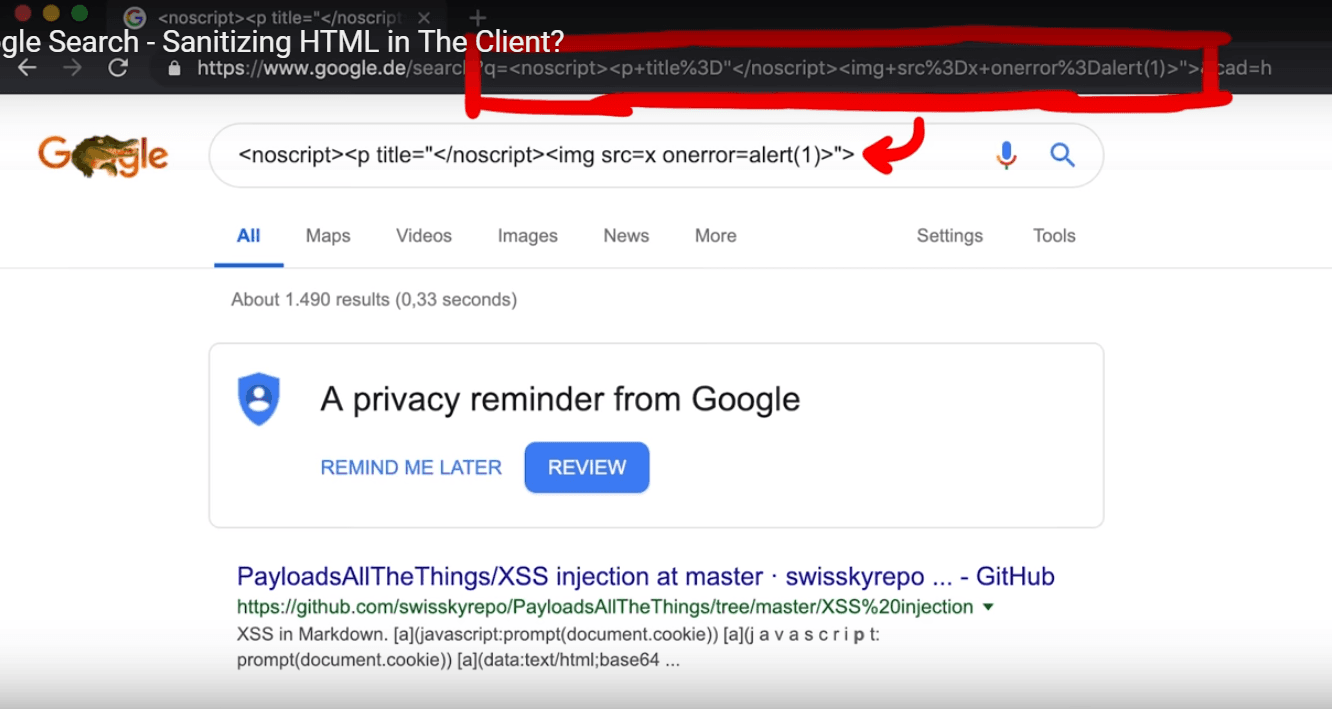
A change made months ago in an open-source JavaScript library introduced a cross-site scripting (XSS) vulnerability in Google Search. The Japanese security researcher Masato Kinugawa discovered an XSS vulnerability in Google Search that was introduced with a change made months ago in an open-source JavaScript library. The library is named Closure and according to the […]

Google Search xss

A change made months ago in an open-source JavaScript library introduced a cross-site scripting (XSS) vulnerability in Google Search.

The Japanese security researcher Masato Kinugawa discovered an XSS vulnerability in Google Search that was introduced with a change made months ago in an open-source JavaScript library.

The library is named Closure and according to the expert it fails to properly sanitize user input. Closure Library is a powerful, low-level JavaScript library designed for building complex and scalable web applications. It is used by many Google web applications, such as Google Search, Gmail, Google Docs, Google+, Google Maps, and others.

The flaw could be potentially exploited by threat actors to carry out phishing attacks and other malicious activities.

According to an analysis conducted by LiveOverflow, the XSS vulnerability was apparently introduced on September 26, 2018, when a sanitization mechanism was removed after the review of the user interface design.

Google Search xss

The design change was reverted on February 22, 2019, Google confirmed to have quickly addressed the vulnerability shortly after learning of its existence.

The analysis of the comments posted by developers when the change was reverted revealed that the bug was related to an HTML sanitizer. The issue was the root cause of the introduction of an XSS flaw in the Google Web Server (GWS) software.

Experts at LiveOverflow speculated the vulnerability likely affected other Google products that use the Closure library.

LiveOverflow has published a video PoC for the vulnerability:

[adrotate banner=”9″] [adrotate banner=”12″]

Pierluigi Paganini

(SecurityAffairs – XSS, hacking)

[adrotate banner=”5″]

[adrotate banner=”13″]


