
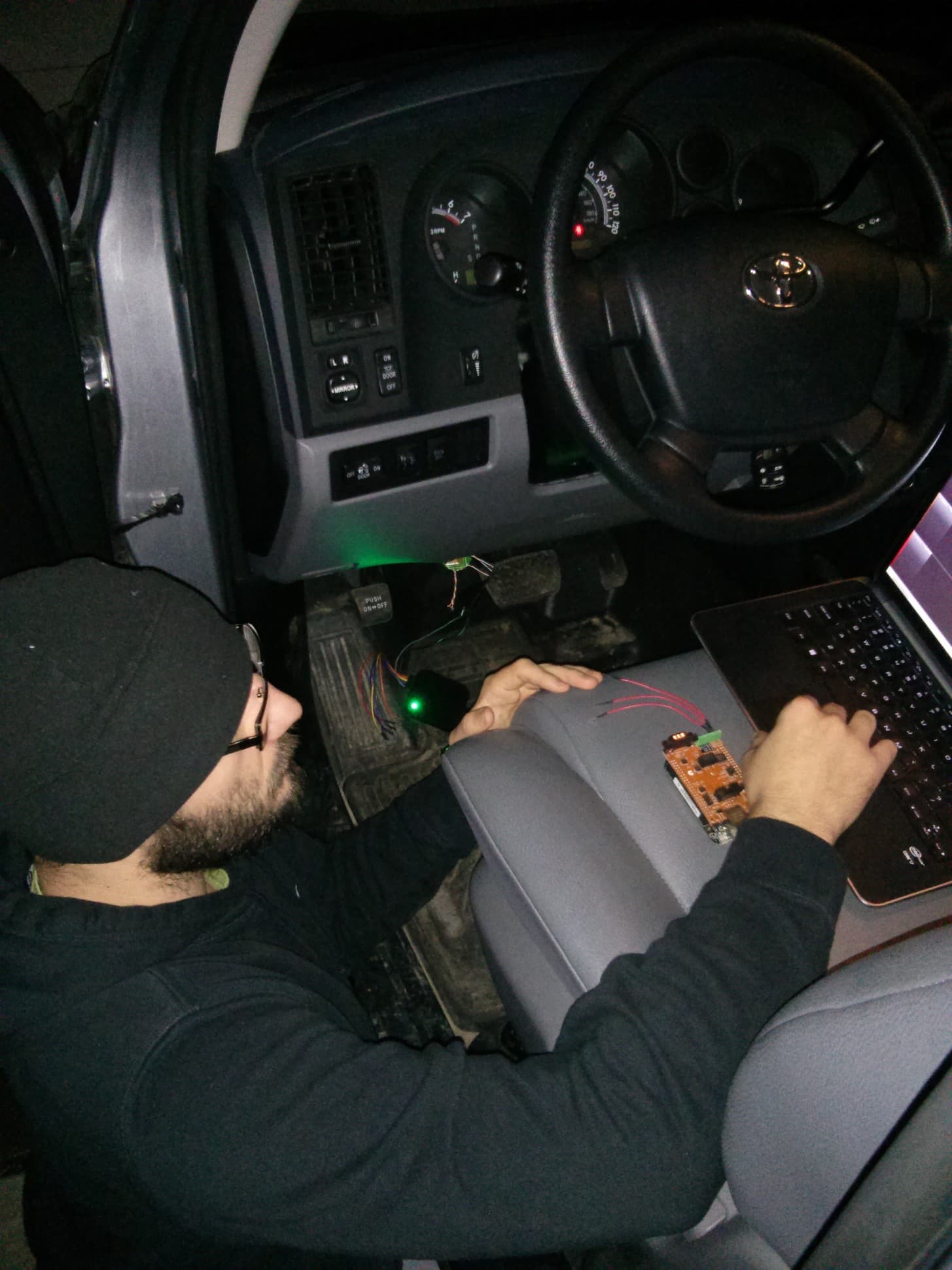
Autonomous and connected vehicles, self-driving cars, are exposed to numerous cyber threats and the risk of hacking is concrete.
After Security expert and hacker, Chris Roberts announced the possibility of hacking into aircrafts, more tension about the security of autonomous and connected vehicles has come to the fore. These cars are expected to be on the roads by 2020 and even earlier. A lot of manufacturers such as Volvo have been working on this project and illustrated great advances in safe driving, but security risks and vulnerabilities are vital needs to be addressed.
Self-driving vehicles are heavily dependent on high-tech components such as electronic sensors, cameras, radar, sonar and LiDAR (light detection and ranging). Recently, the possibility of tampering with them has been shown by Mission Secure Inc (MSi) and Perrone Robotics Inc . It’s completely obvious that systems controlled by software are exposed to hacking and considering security in all phases of production is a precursor to have a trustworthy product.
Hacking of controlling software elements can cause improper reaction to situations and finally leads to drastic problems such as injury and death. Take sending the wrong instruction to brake system while an obstacle is observed as an example. It is foreseen that in the future, criminals and terrorist might target self-driving cars vulnerabilities to disturb normal life and create chaos in order to carrying out their devilish plans. These risks must be fully addressed before self-driving cars become ubiquitous and commonly used by people.
The notion of taking hands off the steering wheel is so appealing to the consumers and based on recent survey of Harris Poll, 22% of Americans said if reliability and safety issues are addressed properly, they would consider buying self-driving vehicles. According to Business Insider, at the moment, the self-driving car market is in its infancy and over the following five to ten years, necessary legislation will be enacted and also consumers adapt to these high-tech cars. Therefore, as this chart depicts, it is anticipated much more fully autonomous car be seen and used by 2020.

Computer and information companies such as Google and Apple also have started working on this project for some years and last month Google announced that prototypes of its pod-shaped self-driving cars will hit Mountain view, California’s public roads this summer.

It is worth noting that the presence of computer companies in automotive industry can be considered as a positive act based on their security expertise and history in software development and they can fill the security gap in car manufacturing industry. This cooperation could prevent hackers and give consumers peace of mind and safe roads.
About the Author
Ali Taherian (@ali_taherian) is an enthusiastic information security Officer. He’s finished his education in information security and has recently been involved in banking software and payment security industry. Taherian is proud to be certified IBM Cloud Computing Solution Advisor and ECSA and enjoys sharing and tweeting about security advances and news.
Edited by Pierluigi Paganini
(Security Affairs – Car hacking, Self-driving cars)


