
White Hackers from Positive Technologies demonstrate how to exploit SS7 protocol to impersonate WhatsApp and Telegram users and act on their behalf.
Both WhatsApp and Telegram messaging services have implemented the end-to-end encryption for chats in order to protect the privacy of their users and improve their security.
Is it enough to keep prying eyes far from them?
No, according to a recent research conducted by Positive Technologies, hackers can impersonate victims and reply to both WhatsApp and Telegram chat messages.
Hackers can exploit the Signaling System 7, aka SS7, which is a set of protocols developed in 1975 that allows the connections of one mobile phone network to another. The information passed from a network to another are needed for routing calls and text messages between several networks.
The SS7 performs out-of-band signaling in support of the call establishment, billing, routing, and information exchange functions of the public switched telephone network (PSTN).
Experts from Positive Technologies discovered that hackers can exploit a flaw in the SS7 protocol to steal the victim’s identity on the messaging services with just basic skills.
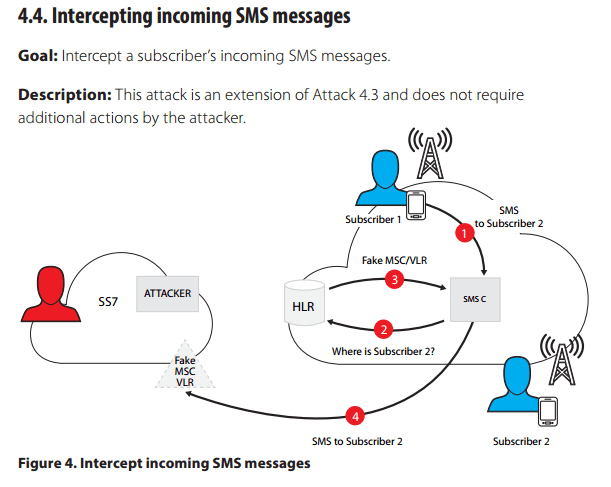
The principal instant messaging services, including WhatsApp and Telegram, rely on the SMS authentication as the primary security verification mechanism, which is routed through SS7 signalling. This means that hackers exploit the SS7 to compromise the verification mechanism and take over the victim’s account and impersonate him.
As explained by the experts, the most worrisome aspect of the story is that hacker does not need high-skills or a sophisticated equipment for such attack.

The hackers from the Positive Technologies used a common Linux distro and a publicly available SDK for their tests.
“An intruder doesn’t need sophisticated equipment. Positive Technologies used a popular Linux based computer and a publicly available SDK for generating SS7 packets. + After performing an initial attack using SS7 commands, the intruder is able to execute additional attacks using the same methods.” states the paper from Positive Technologies. “For instance, if an intruder manages to determine a subscriber’s location, only one further step is required to intercept SMS messages, commit fraud, etc. + Attacks are based on legitimate SS7 messages. Therefore, you cannot simply filter messages as it may have a negative impact on the overall quality of service”
Attacks relying on SS7 vulnerabilities could have serious consequences, many threat actors could exploit flaws in the signalling protocol to determining subscriber location, tapping calls, intercepting SMS, disrupt communication services … and takeover instant messaging accounts.
“If telecom and network operators protect their core telecom networks, it will improve the security of customers, but that’s not going to happen over night. Service providers such as WhatsApp need to consider introducing additional mechanisms to verify the identity of users to stay secure,” said Alex Mathews, technical manager EMEA of Positive Technologies.
| [adrotate banner=”9″] | [adrotate banner=”12″] |
(Security Affairs – SS7, instant messaging Hacking)
[adrotate banner=”5″]
[adrotate banner=”13″]


