
Security Affairs
Two Barracuda ESG Flaws Could Be Combined for Full Root Access; Patches Released|Cyberattack Hits French Blood Banks as Hackers Target Refrigeration Systems Across Europe|CVE-2026-58868: Critical Android Bug Could Let Attackers Run Remote Code|U.S. CISA adds WordPress flaw to its Known Exploited Vulnerabilities catalog|Binance Hack: How Fake Job Interviews and AI Abuse Led to a $6.34 Billion Attack|Synology Warns of Ransomware Attacks Targeting NAS Devices Running Outdated DSM Versions|Inside XCPE, the botnet that turned 1.3M set-top boxes into proxy servers|NIS2 Makes Board Members Personally Liable for Access Control Decisions|Apple’s spyware notifications reach the Bundestag: what the BSI says to do now|VOLTA, the infostealer that asks an AI which victims are worth the effort|New wave of fridge cyberattacks hits European supermarkets, this time in Belgium, Luxembourg, Sweden and Estonia|Hackers Send Fake Nuclear Threat Alerts to Ukrainian and Russian Citizens|Two Barracuda ESG Flaws Could Be Combined for Full Root Access; Patches Released|Cyberattack Hits French Blood Banks as Hackers Target Refrigeration Systems Across Europe|CVE-2026-58868: Critical Android Bug Could Let Attackers Run Remote Code|U.S. CISA adds WordPress flaw to its Known Exploited Vulnerabilities catalog|Binance Hack: How Fake Job Interviews and AI Abuse Led to a $6.34 Billion Attack|Synology Warns of Ransomware Attacks Targeting NAS Devices Running Outdated DSM Versions|Inside XCPE, the botnet that turned 1.3M set-top boxes into proxy servers|NIS2 Makes Board Members Personally Liable for Access Control Decisions|Apple’s spyware notifications reach the Bundestag: what the BSI says to do now|VOLTA, the infostealer that asks an AI which victims are worth the effort|New wave of fridge cyberattacks hits European supermarkets, this time in Belgium, Luxembourg, Sweden and Estonia|Hackers Send Fake Nuclear Threat Alerts to Ukrainian and Russian Citizens|
Advertisement

Ad Placeholder

Full Width × 90

Breaking News

Conexant audio driver works as Built-in Keylogger feature in dozens HP devices

A Security researcher discovered that a Conexant audio driver shipped dozens HP laptops and tablet PCs logs keystrokes. Security researcher Thorsten Schroeder of security firm Modzero discovered that a Conexant audio driver shipped with many HP laptops and tablet PCs logs keystrokes. The expert discovered that MicTray64.exe application, which is installed with the Conexant audio driver package, is […]

Conexant audio driver keylogger

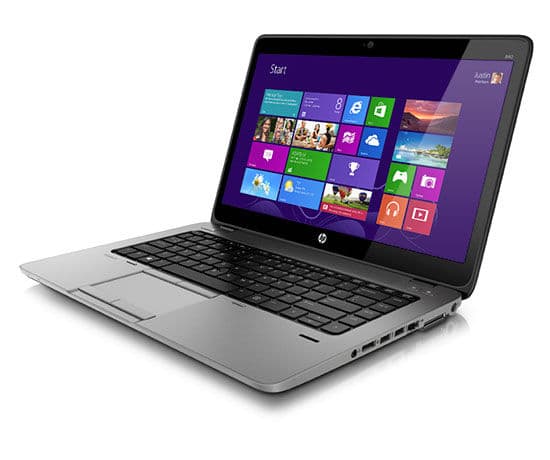
A Security researcher discovered that a Conexant audio driver shipped dozens HP laptops and tablet PCs logs keystrokes.

Security researcher Thorsten Schroeder of security firm Modzero discovered that a Conexant audio driver shipped with many HP laptops and tablet PCs logs keystrokes. The expert discovered that MicTray64.exe application, which is installed with the Conexant audio driver package, is registered as a scheduled task in Windows systems and is able to monitor keystrokes to determine if the user has pressed any audio-related keys (e.g. mute/unmute).

The keystrokes are logged to a file in the Users/Public folder Furthermore and are passed on to the OutputDebugString debugging API, allowing a process to access the data via the MapViewOfFile function.

Unfortunately, this feature can be abused to steal user data such as login credentials, a malware could access keystrokes without triggering security solutions monitoring for suspicious activities.

Conexant audio driver keylogger

The researcher observed that an earlier version of the MicTray64 app released in December 2015 did not log keystrokes to a file, the dangerous feature was implemented starting from the version 1.0.0.46 released in October 2016.

“Actually, the purpose of the software is to recognize whether a special key has been pressed or released. Instead, however, the developer has introduced a number of diagnostic and debugging features to ensure that all keystrokes are either broadcasted through a debugging interface or written to a log file in a public directory on the hard-drive. This type of debugging turns the audio driver effectively into a keylogging spyware. On the basis of meta-information of the files, this keylogger has already existed on HP computers since at least Christmas 2015.” Schroeder wrote in a blog post.

“There is no evidence that this keylogger has been intentionally implemented. Obviously, it is a negligence of the developers – which makes the software no less harmful,” 

The flaw, tracked as CVE-2017-8360, affects 28 HP laptops and tablet PCs, including EliteBook, Elite X2, ProBook, and ZBook models. The experts at Modzero speculate other devices manufactured by other vendors that use Conexant hardware and drivers could be affected.

Users are invited to delete the MicTray64 from \Windows\System32 and the MicTray.log log file from \Users\Public.

HP plans to fix the issue as soon as possible.

[adrotate banner=”9″] [adrotate banner=”12″]

Pierluigi Paganini

(Security Affairs – HP keylogger, Conexant audio driver)

[adrotate banner=”5″]

[adrotate banner=”13″]


