
Security Affairs
Cyberattack Hits French Blood Banks as Hackers Target Refrigeration Systems Across Europe|CVE-2026-58868: Critical Android Bug Could Let Attackers Run Remote Code|U.S. CISA adds WordPress flaw to its Known Exploited Vulnerabilities catalog|Binance Hack: How Fake Job Interviews and AI Abuse Led to a $6.34 Billion Attack|Synology Warns of Ransomware Attacks Targeting NAS Devices Running Outdated DSM Versions|Inside XCPE, the botnet that turned 1.3M set-top boxes into proxy servers|NIS2 Makes Board Members Personally Liable for Access Control Decisions|Apple’s spyware notifications reach the Bundestag: what the BSI says to do now|VOLTA, the infostealer that asks an AI which victims are worth the effort|New wave of fridge cyberattacks hits European supermarkets, this time in Belgium, Luxembourg, Sweden and Estonia|Hackers Send Fake Nuclear Threat Alerts to Ukrainian and Russian Citizens|Chainalysis Investigates Security Incident Involving AI-Driven Attack Techniques|Cyberattack Hits French Blood Banks as Hackers Target Refrigeration Systems Across Europe|CVE-2026-58868: Critical Android Bug Could Let Attackers Run Remote Code|U.S. CISA adds WordPress flaw to its Known Exploited Vulnerabilities catalog|Binance Hack: How Fake Job Interviews and AI Abuse Led to a $6.34 Billion Attack|Synology Warns of Ransomware Attacks Targeting NAS Devices Running Outdated DSM Versions|Inside XCPE, the botnet that turned 1.3M set-top boxes into proxy servers|NIS2 Makes Board Members Personally Liable for Access Control Decisions|Apple’s spyware notifications reach the Bundestag: what the BSI says to do now|VOLTA, the infostealer that asks an AI which victims are worth the effort|New wave of fridge cyberattacks hits European supermarkets, this time in Belgium, Luxembourg, Sweden and Estonia|Hackers Send Fake Nuclear Threat Alerts to Ukrainian and Russian Citizens|Chainalysis Investigates Security Incident Involving AI-Driven Attack Techniques|
Advertisement

Ad Placeholder

Full Width × 90

Breaking News

Malware experts at ESET released a free tool for ICS Malware analysis

Security experts from ESET that spotted the Industroyer malware used against Ukraine’s power grid released a free tool for ICS Malware analysis ESET researchers Robert Lipovsky and Anton Cherepanov have released a free tool for the analysis of ICS malware. The security duo is the same that discovered the CrashOverride/Industroyer malware that targeted the Ukraine’s power […]

Nova Scotia Power

Security experts from ESET that spotted the Industroyer malware used against Ukraine’s power grid released a free tool for ICS Malware analysis

ESET researchers Robert Lipovsky and Anton Cherepanov have released a free tool for the analysis of ICS malware.

The security duo is the same that discovered the CrashOverride/Industroyer malware that targeted the Ukraine’s power grid,
CrashOverride/Industroyer is the fourth publicly known piece of malware, a detailed description of remaining threats was available in my article “Which Malware are Specifically Designed to Target ISC Systems?.“
Industroyer ICS malware
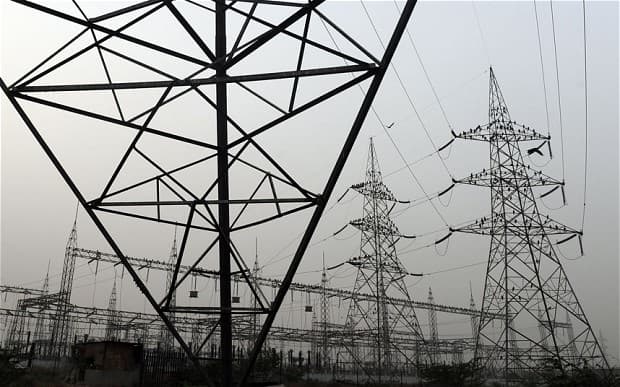
The development of the tool was inspired by their investigation, the expert analyzed the ICS malware involved in the attack against Ukraine’s power grid in 2016 that caused a huge power outage in the city of Kiev and neighboring regions.

The researchers developed an IDAPython script for IDA Pro that could be used by malware researchers and cyber security experts to reverse-engineer binaries that employ the OPC Data Access industrial communications protocol.

“An IDAPython script for IDA Pro that helps reverse engineer binaries that are using the OPC Data Access protocol.” reads the description published on GitHub.

“It can be used to analyse such malware families as Havex RAT and Win32/Industroyer.

The script identifies CLSID, IID, and LIBID constants and creates structures and enumerations. Afterwards, these structures can be used to annotate COM method call parameters.”

Havex is a general purpose Remote Access Trojan (RAT) discovered in June 2015 when malware researchers at F-Secure spotted a cyber espionage campaign based on the Havex malware targeting ICS/SCADA systems and vendors.

The Havex malware has been used in several targeted attacks in the previous months; threat actors used it against different industry sectors.

“If there are other future malware [families] like Industroyer or Havex, [investigators] will have an easier time” finding and analyzing them, Lipovsky says.

“This tool helps you understand what the threat was designed to do,” he says. Detection is important, he says, “but if you want to understand what the attackers are up to, you need to dig in deeply.”

The availability of such kind of open-source tools allows experts to rapidly analyze ICS malware and implement automate defense systems.

Lipovsky and Cherepanov highlighted the importance for ICS/SCADA operators of early detection of the threats.

“A lot of people are downplaying these sorts of things as ‘not an attack.’ Spying is an attack,” said the expert. “These things are detectable.”

Lipovsky announced the tool during a session at the Black Hat hacking conference.

[adrotate banner=”9″]

Pierluigi Paganini

(Security Affairs –  (ICS malware, power outage)

[adrotate banner=”13″]


