
A previously unknown rootkit, dubbed iLOBleed, was used in attacks aimed at HP Enterprise servers that wiped data off the infected systems.
iLOBleed, is a previously undetected rootkit that was spotted targeting the HP Enterprise’s Integrated Lights-Out (iLO) server management technology to tamper with the firmware modules and wipe data off the infected systems.
The Integrated Lights-Out is a proprietary embedded server management technology from Hewlett-Packard Enterprise which provides out-of-band management facilities. The module has full access to all the firmware, hardware, software, and operating system installed on the server.
The attacks were spotted by Iranian cybersecurity firm Amnpardaz, this is the first time ever that malware targets iLO firmware.
The experts explained that malware targeting iLO could be very insidious because it runs with high privileges (above any level of access in the operating system), very low-level access to the hardware, and it cannot be detected by admins and security software that doesn’t inspect iLO. The persistence achieved by tampering this module allows the malware to survive to the re-installation of the operating system.

The rootkit was employed in attacks since 2020, threat actors could use the iLOBleed rootkit to compromise organizations using HP servers.
“we analyze a rootkit discovered in-the-wild that hides inside the iLO, cannot be removed by firmware upgrades and can be hidden from the sight for a long time. This malware has been used by hackers for some time and we have been monitoring its performance. As far as we know, this is the first report of the discovery of real-world malware in iLO firmware in the world.” reads the report published by the expers.
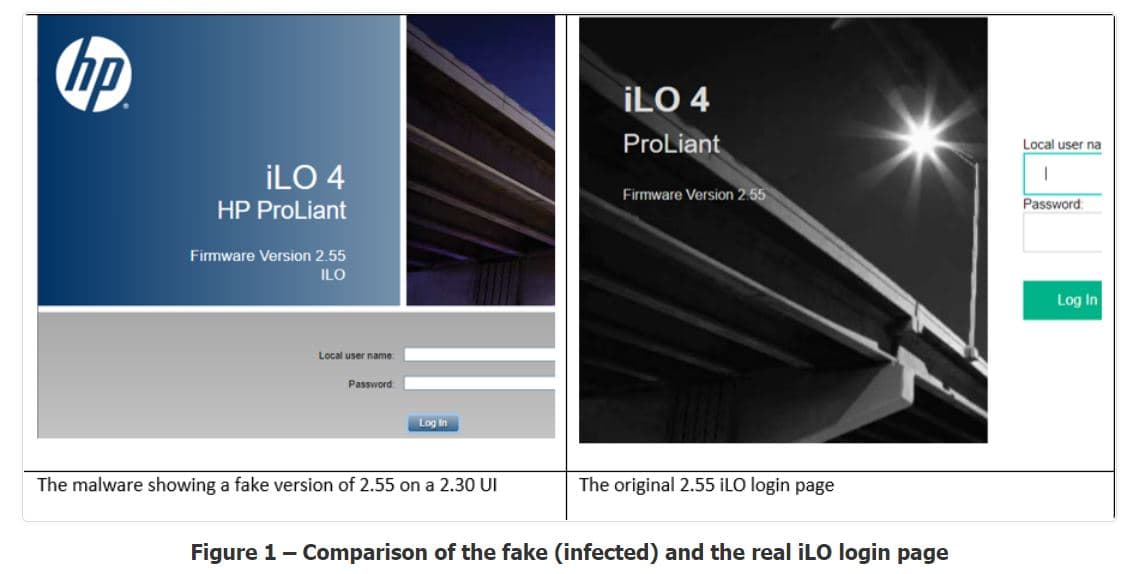
According to the researchers, unlike other wiper, this one is designed to conduct stealthy operations for extended periods. One of the most outstanding capabilities of iLOBleed is the manipulation of the iLO firmware upgrade routine, when the system administrator tries to upgrade the iLO firmware, the malware simulates the version change while preventing the upgrade routine.
The level of sophistication of these attacks suggests the involvement of an APT group.
“This alone shows that the purpose of this malware is to be a rootkit with maximum stealth and to hide from all security inspections,” the researchers said. “A malware that, by hiding in one of the most powerful processing resources (which is always on), is able to execute any commands received from an attacker, without ever being detected.” continues the report. “Naturally, the cost of performing such an attack puts it in the category of APTs.”
Experts concluded that the attackers could infect iLO both through the network and through the host operating system.
“This means that even if the iLO network cable is completely disconnected, there is still the possibility of infection with the malware. Interestingly, there is no way to turn off or disable iLO completely in case it is not needed.” concludes the report.
Follow me on Twitter: @securityaffairs and Facebook
| [adrotate banner=”9″] | [adrotate banner=”12″] |
(SecurityAffairs – hacking, iLOBleed)
[adrotate banner=”5″]
[adrotate banner=”13″]


