
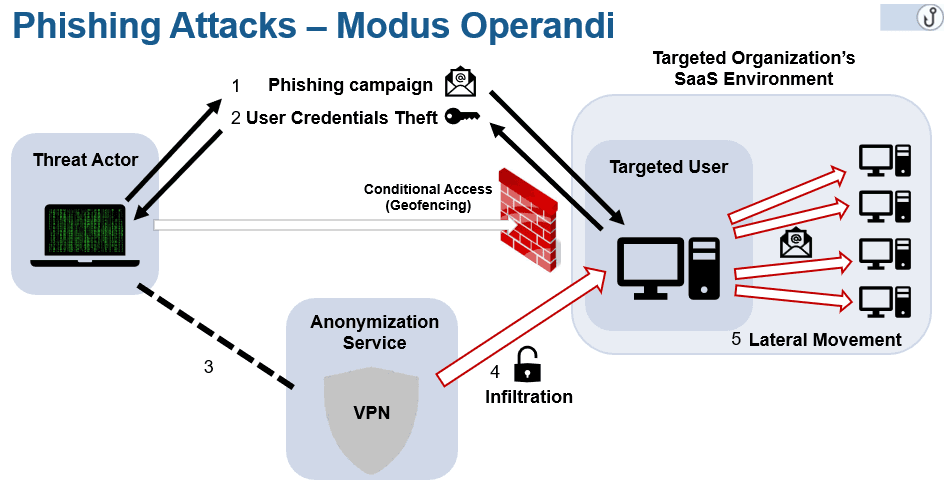
Threat actors targeted Office 365 and G Suite cloud accounts using the IMAP protocol to bypass multi-factor authentication (MFA).
Over the past months, threat actors have targeted Office 365 and G Suite cloud accounts using the IMAP protocol to bypass multi-factor authentication (MFA).
Experts at Proofpoint conducted an interesting study of massive attacks against accounts of major cloud services, The experts noticed that attackers leverage legacy protocols and credential
“Attacks against Office 365 and G Suite cloud accounts using IMAP are difficult to protect against with multi-factor authentication, where service accounts and shared mailboxes are notably vulnerable.” reads the study published by Proofpoint. “At the same time, targeted, intelligent brute force attacks brought a new approach to traditional password-spraying, employing common variations of the usernames and passwords exposed in large credential dumps to compromise accounts.”
The experts analyzed over one hundred thousand unauthorized logins across millions of monitored cloud user-accounts, below key findings from the study
- 72% of tenants were targeted at least once by threat actors
- 40% of tenants had at least one compromised account in their environment
- Over 2% of active user-accounts were targeted by malicious actors
- 15 out of every 10,000 active user-accounts were successfully breached by attackers
The attacker’s primary goal is to carry out internal phishing, especially when the initial target does not have the access needed to transfer money or data. The access to a cloud account could be exploited by attackers for lateral movements and to expand footholds within an organization via internal phishing and internal BEC. Experts observed that compromised accounts are also used to launch external attacks.
Giving a look at the sources of the attacks, most of them come from Nigerian IP addresses (40%), followed by Chinese IP addresses (26%).
According to the study, IMAP was the most abused legacy
Below other data provided by the experts:
- Approximately 60% of Microsoft Office 365 and G Suite tenants were targeted with IMAP-based password-spraying attacks
- Roughly 25% of Office 365 and G Suite tenants experienced a successful breach as a result
- Threat actors achieved a 44% success rate breaching an account at a targeted organization
The experts observed a large number of IMAP-based password-spraying campaigns between September 2018 and February 2019. Proofpoint reported that 10% of active user accounts in targeted tenants were hit and 1% of targeted user accounts were successfully breached.

The attackers leveraged a botnet composed of thousands of hijacked network devices (i.e. routers, servers) to launch the attacks.
“These hijacked devices gained access to a new tenant every 2.5 days on average during a 50-day period,” continues Proofpoint.
China was the source for the
Most of the attacks (63%) originated from Nigerian IP addresses, followed by South African infrastructure (21%), and the United States via VPNs (11%).
“This study demonstrates the increasing sophistication of threat actors around the world who are leveraging brute force methods, massive credential dumps, and successful phishing attacks to compromise cloud accounts at unprecedented scale. Service accounts and shared mailboxes are particularly vulnerable while multifactor authentication has proven vulnerable.” concludes the study.
“Attackers parlay successful compromises into internal phishing attacks, lateral movement in organizations, and additional compromises at trusted external organizations.”
| [adrotate banner=”9″] | [adrotate banner=”12″] |
(
[adrotate banner=”5″]
[adrotate banner=”13″]


