
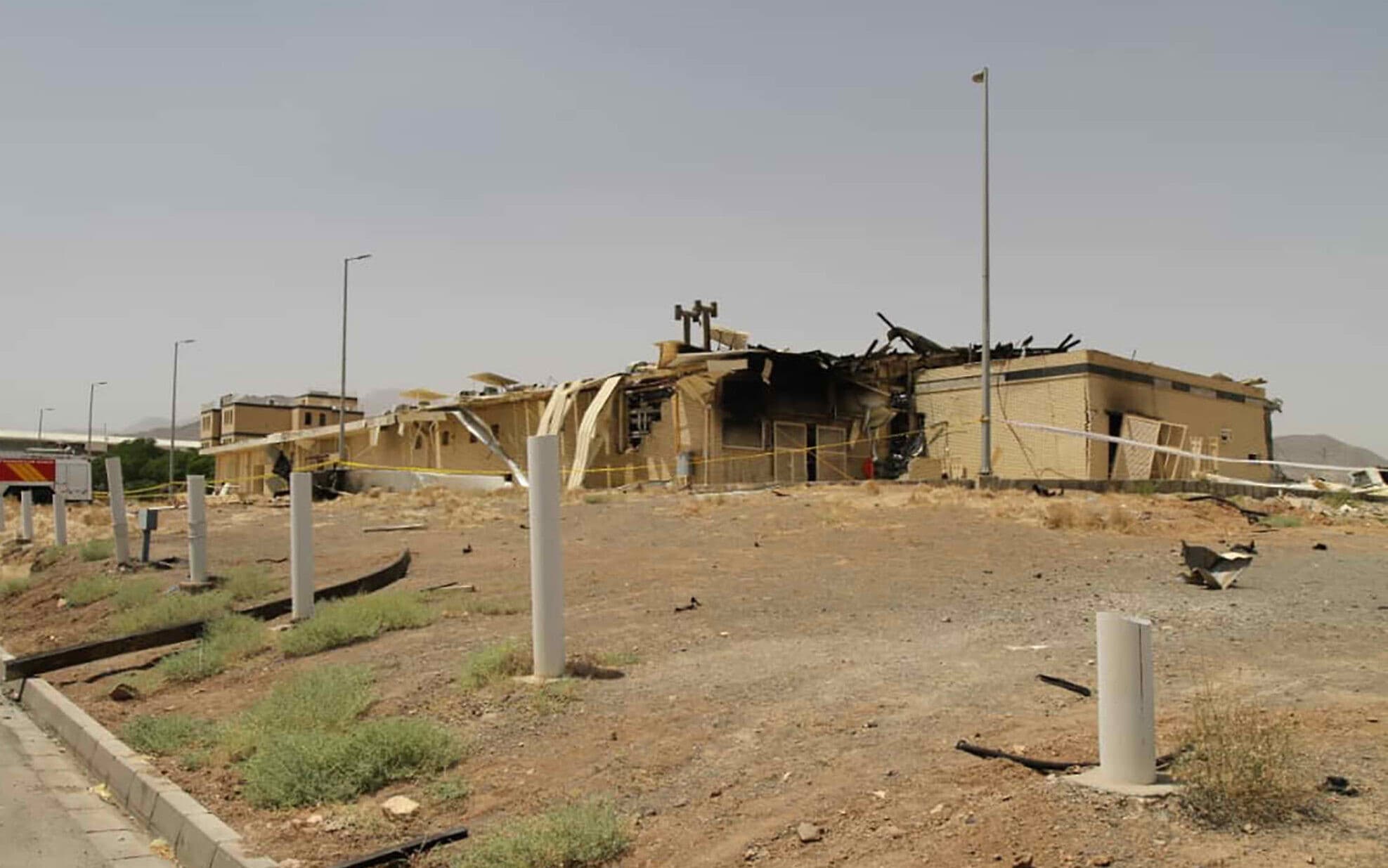
This photo released on July 2, 2020, by the Atomic Energy Organization of Iran, shows a building after it was damaged by a fire, at the Natanz uranium enrichment facility some 200 miles (322 kilometers) south of the capital Tehran, Iran. (Atomic Energy Organization of Iran via AP)
On Sunday, an “accident” occurred in the electricity distribution network at Iran’s Natanz nuclear facility, experts speculate it was caused by a cyberattack.
A mysterious incident occurred on Sunday at the Natanz nuclear enrichment site and the media speculate it was caused by a cyber attack.
The “accident” impacted the electricity distribution network at Iran’s Natanz nuclear facility, Atomic Energy Organization of Iran spokesman Behrouz Kamalvandi told the Iranian Fars News Agency.
According to The Jerusalem Post, the extent of the incident and damages caused are much graver than what Iran is publicly disclosed.
“A so-called “accident” at Iran’s Natanz nuclear facility on Sunday was the result of a “terrorist” act, the country’s nuclear chief Ali Akbar Salehi said, according to state TV.” reads the post published by Jerusalem Post.
“Based on reports, it seems that the so-called accident was caused by a cyberattack, possibly by Israel.”
Reports claim that the attack was launched by Israel-linked hackers, the same state is suspected to have had a main role in the Stuxnet attack that hit the same nuclear plant back in 2010.
In 2010, threat actors hit the Natanz plant to destroy the Iranian nuclear enrichment program, they developed the Stuxnet virus that destroyed over 1,000 centrifuges in the nuclear utility.
Back to the present, the Iranian authorities are still investigating the accident, they only revealed that no injuries or pollution were caused by the attack.
“Malek Shariati Niasar, an Iranian MP and spokesman for a parliamentary energy commission, wrote that the incident is highly suspected as “sabotage,” as it occurred on Iran’s National Nuclear Technology Day and amid the renewal of talks between the Islamic Republic and Western nations on the JCPOA nuclear deal.” continues the JP.
The Iranian parliament is closely following the evolution of the investigation and will provide a public opinion on the matter, meantime Iranian MP Ali Haddady blamed Israel for the incident.
The incident took place, a day after Iranian President Hassan Rouhani announced that Iran had begun injecting uranium hexaflouride gas into advanced IR-6 and IR-5 centrifuges at Natanz.
In March, Iran announced that it has yet to recover from an explosion at its Natanz nuclear facility last July, but according to IAEA reports, Iran has started enriching uranium at its new underground Natanz facility using advanced IR-4 centrifuges.
Last week, a spokesman for the Iranian military blamed Israel and the US for an explosion on the Islamic Revolutionary Guards Corps’ Saviz vessel in the Red Sea.
If you want to receive the weekly Security Affairs Newsletter for free subscribe here.
Follow me on Twitter: @securityaffairs and Facebook
| [adrotate banner=”9″] | [adrotate banner=”12″] |
(SecurityAffairs – hacking, Iran)
[adrotate banner=”5″]
[adrotate banner=”13″]


