
Iran-linked ATP group carried out a ransomware operation through a contracting company based in the country, Flashpoint researchers warn.
Researchers from Flashpoint have uncovered a state-sponsored ransomware campaign conducted by Iran’s Islamic Revolutionary Guard Corps (IRGC) through an Iranian contracting company called “Emen Net Pasargard” (ENP) (aka “Imannet Pasargad,” “Iliant Gostar Iranian,” “Eeleyanet Gostar Iraniyan”).
The ENP is controlled by Iran’s intelligence services and supports Iran’s Islamic Revolutionary Guard Corps (IRGC), the IRGC Quds Force (IRGC-QF), and Iran’s Ministry of Intelligence and Security (MOIS).
Flashpoint has analyzed three leaked documents leaked between March 19 and April 1, 2021, by the Iranian dissident group “Lab Dookhtegan.” The group is known for providing highly reputable intelligence on Iranian nation-state cyber activities.
The state-sponsored ransomware campaign was tracked as “Project Signal” and started between late July 2020 and early September 2020. The project began with ENP’s research organization “Studies Center” putting together a list of around twenty target websites.
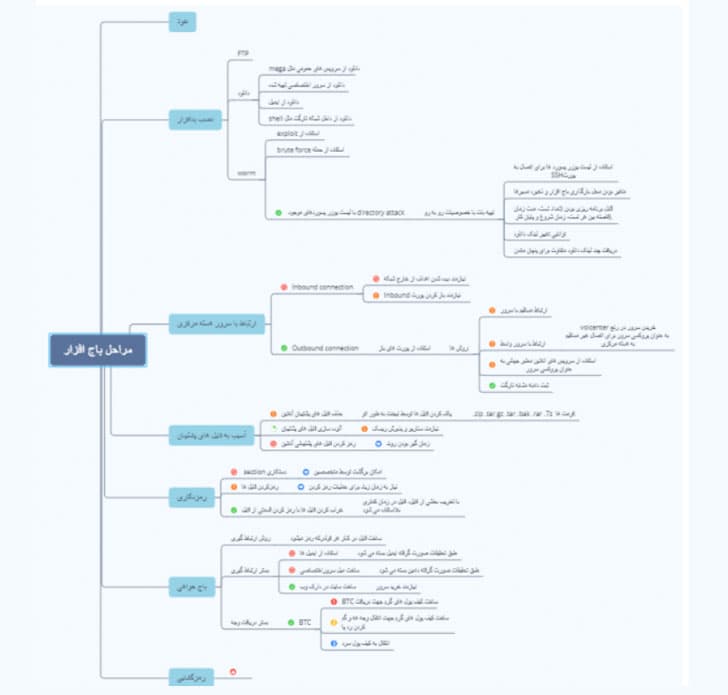
Another spreadsheet analyzed by Flashpoint confirmed that the project was conducted with financial motivations, it revealed that the attacks were planned to launch between Oct. 18 and 21. Experts also analyzed a document containing details about workflows, such as the ransom payment process.
“Project Signal was also referenced in another spreadsheet showing that the project had been assigned to ENP’s “Cyber Directorate,” responsible for carrying out ENP’s offensive cyber operations. The transfer of the Signal project from the Studies Center to the Cyber Directorate demonstrated that the ransomware project had progressed from the research and planning phase to the operational phase.” reads the analysis published by ProofPoint. “In the spreadsheet, the word “ransom” was listed as the goal for the Signal project and the project was slated to take place between October 18 to 21, 2020, with a listed completion date of October 21, 2020.”

Experts don’t exclude that the choice to carry out a ransomware operation could be a “subterfuge technique” to mimic the tactics, techniques, and procedures (TTPs) of other ransomware gangs.
The timing of ENP’s Project Signal also coincided with the Iranian ransomware campaign “Pay2Key,” exclusively aimed at Israeli organizations at the end of 2021. Pay2Key ransomware operations were attributed by ClearSky researchers to to the Iran-linked APT group Fox Kitten.
“As is true for ENP’s Project Signal, if Pay2Key is sponsored by Iran, it’s possible the appearance of financial motivation could have been an obfuscation technique designed to mimic a cybercriminal group. At this point in time, Flashpoint can neither confirm any attributes of Project Signal targets nor if there is any link between ENP’s Project Signal and Pay2Key.” concludes the report.
If you want to receive the weekly Security Affairs Newsletter for free subscribe here.
Follow me on Twitter: @securityaffairs and Facebook
| [adrotate banner=”9″] | [adrotate banner=”12″] |
(SecurityAffairs – hacking, Project Signal)
[adrotate banner=”5″]
[adrotate banner=”13″]


