
Security Affairs
Cyberattack Hits French Blood Banks as Hackers Target Refrigeration Systems Across Europe|CVE-2026-58868: Critical Android Bug Could Let Attackers Run Remote Code|U.S. CISA adds WordPress flaw to its Known Exploited Vulnerabilities catalog|Binance Hack: How Fake Job Interviews and AI Abuse Led to a $6.34 Billion Attack|Synology Warns of Ransomware Attacks Targeting NAS Devices Running Outdated DSM Versions|Inside XCPE, the botnet that turned 1.3M set-top boxes into proxy servers|NIS2 Makes Board Members Personally Liable for Access Control Decisions|Apple’s spyware notifications reach the Bundestag: what the BSI says to do now|VOLTA, the infostealer that asks an AI which victims are worth the effort|New wave of fridge cyberattacks hits European supermarkets, this time in Belgium, Luxembourg, Sweden and Estonia|Hackers Send Fake Nuclear Threat Alerts to Ukrainian and Russian Citizens|Chainalysis Investigates Security Incident Involving AI-Driven Attack Techniques|Cyberattack Hits French Blood Banks as Hackers Target Refrigeration Systems Across Europe|CVE-2026-58868: Critical Android Bug Could Let Attackers Run Remote Code|U.S. CISA adds WordPress flaw to its Known Exploited Vulnerabilities catalog|Binance Hack: How Fake Job Interviews and AI Abuse Led to a $6.34 Billion Attack|Synology Warns of Ransomware Attacks Targeting NAS Devices Running Outdated DSM Versions|Inside XCPE, the botnet that turned 1.3M set-top boxes into proxy servers|NIS2 Makes Board Members Personally Liable for Access Control Decisions|Apple’s spyware notifications reach the Bundestag: what the BSI says to do now|VOLTA, the infostealer that asks an AI which victims are worth the effort|New wave of fridge cyberattacks hits European supermarkets, this time in Belgium, Luxembourg, Sweden and Estonia|Hackers Send Fake Nuclear Threat Alerts to Ukrainian and Russian Citizens|Chainalysis Investigates Security Incident Involving AI-Driven Attack Techniques|
Advertisement

Ad Placeholder

Full Width × 90

Breaking News

Pro-Russia group Killnet targets US healthcare with DDoS attacks

The Pro-Russia group Killnet is launching a series of DDoS attacks against the websites of US healthcare organizations and hospitals. The Pro-Russia group Killnet launched a series of DDoS attacks against US healthcare organizations and hospitals. The group announced the attacks on its Telegram channel, calling for action against the US government healthcare. The list of targets […]

Killnet healthcare

The Pro-Russia group Killnet is launching a series of DDoS attacks against the websites of US healthcare organizations and hospitals.

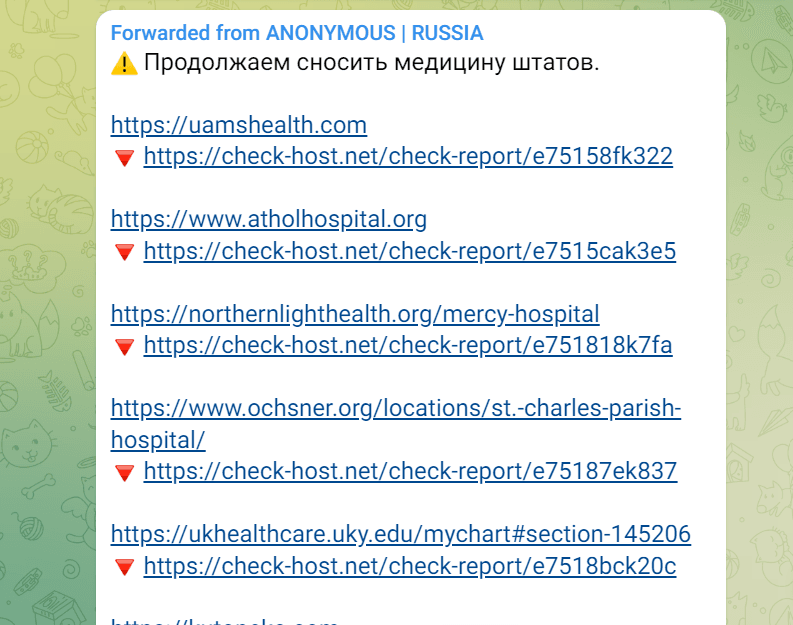
The Pro-Russia group Killnet launched a series of DDoS attacks against US healthcare organizations and hospitals. The group announced the attacks on its Telegram channel, calling for action against the US government healthcare.

Killnet healthcare

The list of targets includes:

At the time of this writing, many of the above websites are not reachable.

Healthcare organizations are critical infrastructure and cyber attacks represent a serious threat to them. Even if DDoS attacks are considered low-level offensives, we cannot exclude that pro-Russia groups in the future could launch more sophisticated attacks that can cause serious damage.

We have also to consider that the group could extend its current offensive to healthcare of western countries that are supporting Ukraine.

In the last week, the pro-Russia group intensified its activity. Recently the group launched a series of DDoS attacks against the websites of German airports, administration bodies, and banks. The attacks are the hacktivists’ response to the German government’s decision to send Leopard 2 tanks to Ukraine.

Follow me on Twitter: @securityaffairs and Facebook and Mastodon

Pierluigi Paganini

(SecurityAffairs – hacking, Killnet)


