
Security Affairs
Cyberattack Hits French Blood Banks as Hackers Target Refrigeration Systems Across Europe|CVE-2026-58868: Critical Android Bug Could Let Attackers Run Remote Code|U.S. CISA adds WordPress flaw to its Known Exploited Vulnerabilities catalog|Binance Hack: How Fake Job Interviews and AI Abuse Led to a $6.34 Billion Attack|Synology Warns of Ransomware Attacks Targeting NAS Devices Running Outdated DSM Versions|Inside XCPE, the botnet that turned 1.3M set-top boxes into proxy servers|NIS2 Makes Board Members Personally Liable for Access Control Decisions|Apple’s spyware notifications reach the Bundestag: what the BSI says to do now|VOLTA, the infostealer that asks an AI which victims are worth the effort|New wave of fridge cyberattacks hits European supermarkets, this time in Belgium, Luxembourg, Sweden and Estonia|Hackers Send Fake Nuclear Threat Alerts to Ukrainian and Russian Citizens|Chainalysis Investigates Security Incident Involving AI-Driven Attack Techniques|Cyberattack Hits French Blood Banks as Hackers Target Refrigeration Systems Across Europe|CVE-2026-58868: Critical Android Bug Could Let Attackers Run Remote Code|U.S. CISA adds WordPress flaw to its Known Exploited Vulnerabilities catalog|Binance Hack: How Fake Job Interviews and AI Abuse Led to a $6.34 Billion Attack|Synology Warns of Ransomware Attacks Targeting NAS Devices Running Outdated DSM Versions|Inside XCPE, the botnet that turned 1.3M set-top boxes into proxy servers|NIS2 Makes Board Members Personally Liable for Access Control Decisions|Apple’s spyware notifications reach the Bundestag: what the BSI says to do now|VOLTA, the infostealer that asks an AI which victims are worth the effort|New wave of fridge cyberattacks hits European supermarkets, this time in Belgium, Luxembourg, Sweden and Estonia|Hackers Send Fake Nuclear Threat Alerts to Ukrainian and Russian Citizens|Chainalysis Investigates Security Incident Involving AI-Driven Attack Techniques|
Advertisement

Ad Placeholder

Full Width × 90

Breaking News

LockBit 3.0 affiliate sideloads Cobalt Strike through Windows Defender

An affiliate of the LockBit 3.0 RaaS operation has been abusing the Windows Defender command-line tool to deploy Cobalt Strike payloads. During a recent investigation, SentinelOne researchers observed threat actors associated with the LockBit 3.0 ransomware-as-a-service (RaaS) operation abusing the Windows Defender command line tool MpCmdRun.exe to decrypt and load Cobalt Strike payloads. The attackers initially compromise the target […]

LockBit 3.0

An affiliate of the LockBit 3.0 RaaS operation has been abusing the Windows Defender command-line tool to deploy Cobalt Strike payloads.

During a recent investigation, SentinelOne researchers observed threat actors associated with the LockBit 3.0 ransomware-as-a-service (RaaS) operation abusing the Windows Defender command line tool MpCmdRun.exe to decrypt and load Cobalt Strike payloads.

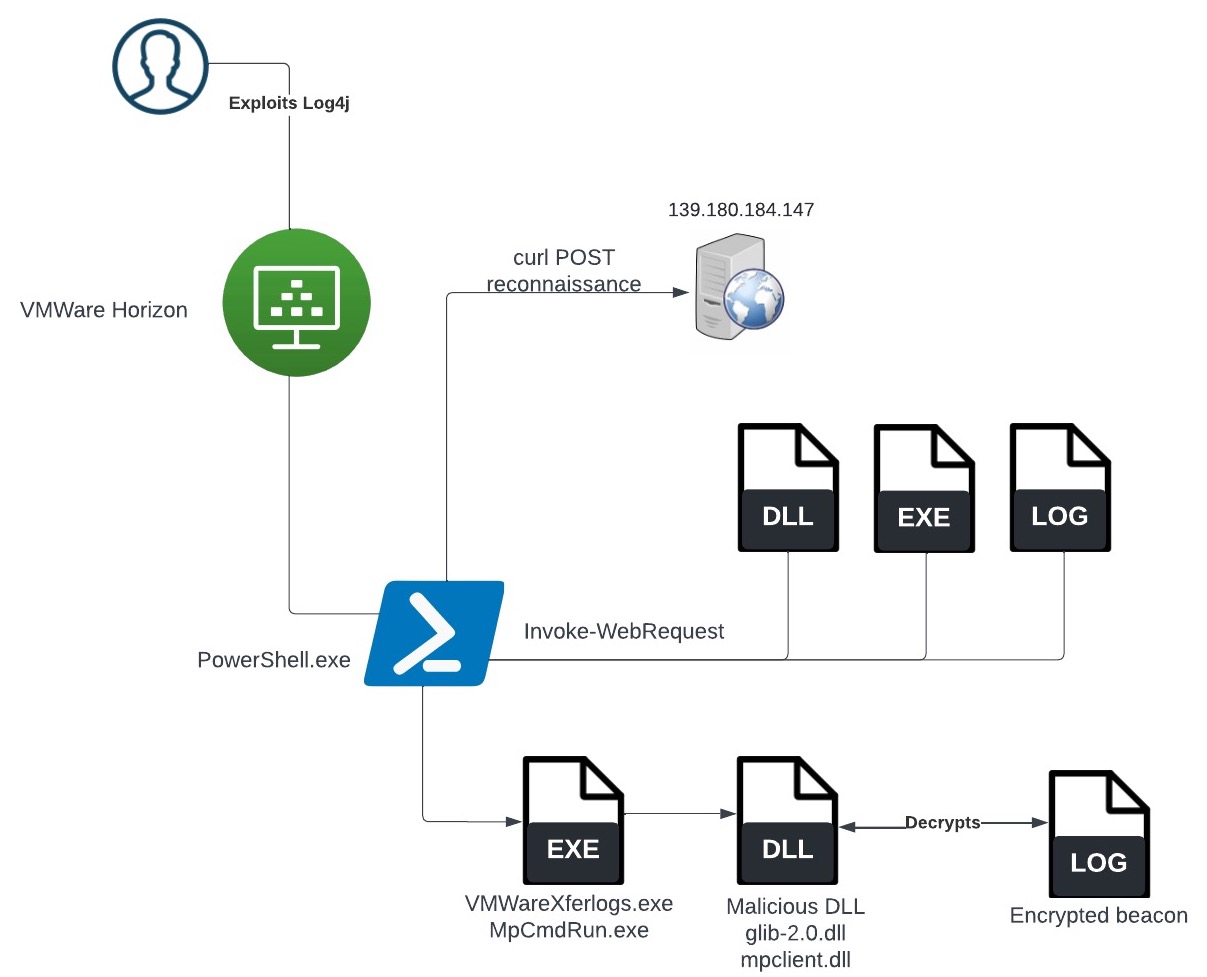
The attackers initially compromise the target networks by exploiting the Log4j vulnerability affecting an unpatched VMWare Horizon Server. The attackers modified the Blast Secure Gateway component of the application by installing a web shell using PowerShell code that is detailed here.

Once gained a foothold in the target system, the attackers performed a series of enumeration commands and attempted to run multiple post-exploitation tools, including Meterpreter, PowerShell Empire and used a new technique to side-load Cobalt Strike.
LockBit 3.0

“In particular, when attempting to execute Cobalt Strike we observed a new legitimate tool used for side-loading a malicious DLL, that decrypts the payload.” reads the analysis published by SentinelOne. “Previously observed techniques to evade defenses by removing EDR/EPP’s userland hooks, Event Tracing for Windows and Antimalware Scan Interface were also observed.”

SentinelOne highlights the importance of sharing information on the exploitation of novel “living off the land” tools to drop Cobalt Strike beacons and evade detection of common security solutions.

MpCmdRun.exe is a command-line tool for carrying out various functions in Microsoft Defender Antivirus, including scanning for malicious software, collecting diagnostic data, and restoring the service to a previous version, among others.

“Importantly, tools that should receive careful scrutiny are any that either the organization or the organization’s security software have made exceptions for. Products like VMware and Windows Defender have a high prevalence in the enterprise and a high utility to threat actors if they are allowed to operate outside of the installed security controls.” concludes the analysis.

Follow me on Twitter: @securityaffairs and Facebook

[adrotate banner=”9″][adrotate banner=”12″]

Pierluigi Paganini

(SecurityAffairs – hacking, LockBit 3.0)

[adrotate banner=”5″]

[adrotate banner=”13″]


