
Security Affairs
Two Barracuda ESG Flaws Could Be Combined for Full Root Access; Patches Released|Cyberattack Hits French Blood Banks as Hackers Target Refrigeration Systems Across Europe|CVE-2026-58868: Critical Android Bug Could Let Attackers Run Remote Code|U.S. CISA adds WordPress flaw to its Known Exploited Vulnerabilities catalog|Binance Hack: How Fake Job Interviews and AI Abuse Led to a $6.34 Billion Attack|Synology Warns of Ransomware Attacks Targeting NAS Devices Running Outdated DSM Versions|Inside XCPE, the botnet that turned 1.3M set-top boxes into proxy servers|NIS2 Makes Board Members Personally Liable for Access Control Decisions|Apple’s spyware notifications reach the Bundestag: what the BSI says to do now|VOLTA, the infostealer that asks an AI which victims are worth the effort|New wave of fridge cyberattacks hits European supermarkets, this time in Belgium, Luxembourg, Sweden and Estonia|Hackers Send Fake Nuclear Threat Alerts to Ukrainian and Russian Citizens|Two Barracuda ESG Flaws Could Be Combined for Full Root Access; Patches Released|Cyberattack Hits French Blood Banks as Hackers Target Refrigeration Systems Across Europe|CVE-2026-58868: Critical Android Bug Could Let Attackers Run Remote Code|U.S. CISA adds WordPress flaw to its Known Exploited Vulnerabilities catalog|Binance Hack: How Fake Job Interviews and AI Abuse Led to a $6.34 Billion Attack|Synology Warns of Ransomware Attacks Targeting NAS Devices Running Outdated DSM Versions|Inside XCPE, the botnet that turned 1.3M set-top boxes into proxy servers|NIS2 Makes Board Members Personally Liable for Access Control Decisions|Apple’s spyware notifications reach the Bundestag: what the BSI says to do now|VOLTA, the infostealer that asks an AI which victims are worth the effort|New wave of fridge cyberattacks hits European supermarkets, this time in Belgium, Luxembourg, Sweden and Estonia|Hackers Send Fake Nuclear Threat Alerts to Ukrainian and Russian Citizens|
Advertisement

Ad Placeholder

Full Width × 90

Breaking News

Lorenz ransomware gang stolen files from defense contractor Hensoldt

German multinational defense contractor Hensoldt confirmed to that some of its systems were infected by Lorenz ransomware. Hensoldt, a multinational defense contractor, confirmed that some of its UK subsidiary’s systems were infected with Lorenz ransomware. This week a Hensholdt spokesperson confirmed the security breach to BleepingComputer explaining that a small number of mobile devices in its […]

Hensoldt Lorenz ransomware

German multinational defense contractor Hensoldt confirmed to that some of its systems were infected by Lorenz ransomware.

Hensoldt, a multinational defense contractor, confirmed that some of its UK subsidiary’s systems were infected with Lorenz ransomware. This week a Hensholdt spokesperson confirmed the security breach to BleepingComputer explaining that a small number of mobile devices in its UK subsidiary has been affected.

The Lorenz ransomware gang has been active since April and hit multiple organizations worldwide demanding hundreds of thousands of dollars in ransoms to the victims.

Like other ransomware gangs, Lorenz operators also implement double-extortion model by stealing data before encrypting it and threatening them if the victim doesn’t pay the ransom. Ransom demands have been quite high, between $500.000 and $700.000.

Hensoldt AG focuses on sensor technologies for protection and surveillance missions in the defence, security and aerospace sectors. The company is listed on the Frankfurt Stock Exchange, its main product areas are radar, optoelectronics, and avionics.

The defense multinational develops sensor solutions for defense, aerospace, and security applications, is listed on the Frankfurt Stock Exchange, its revenue was 1.2 billion euros in 2020.

The company has classified and sensitive contracts with the US government, its products include and equip tanks, helicopter platforms, submarines, Littoral Combat Ships among others.

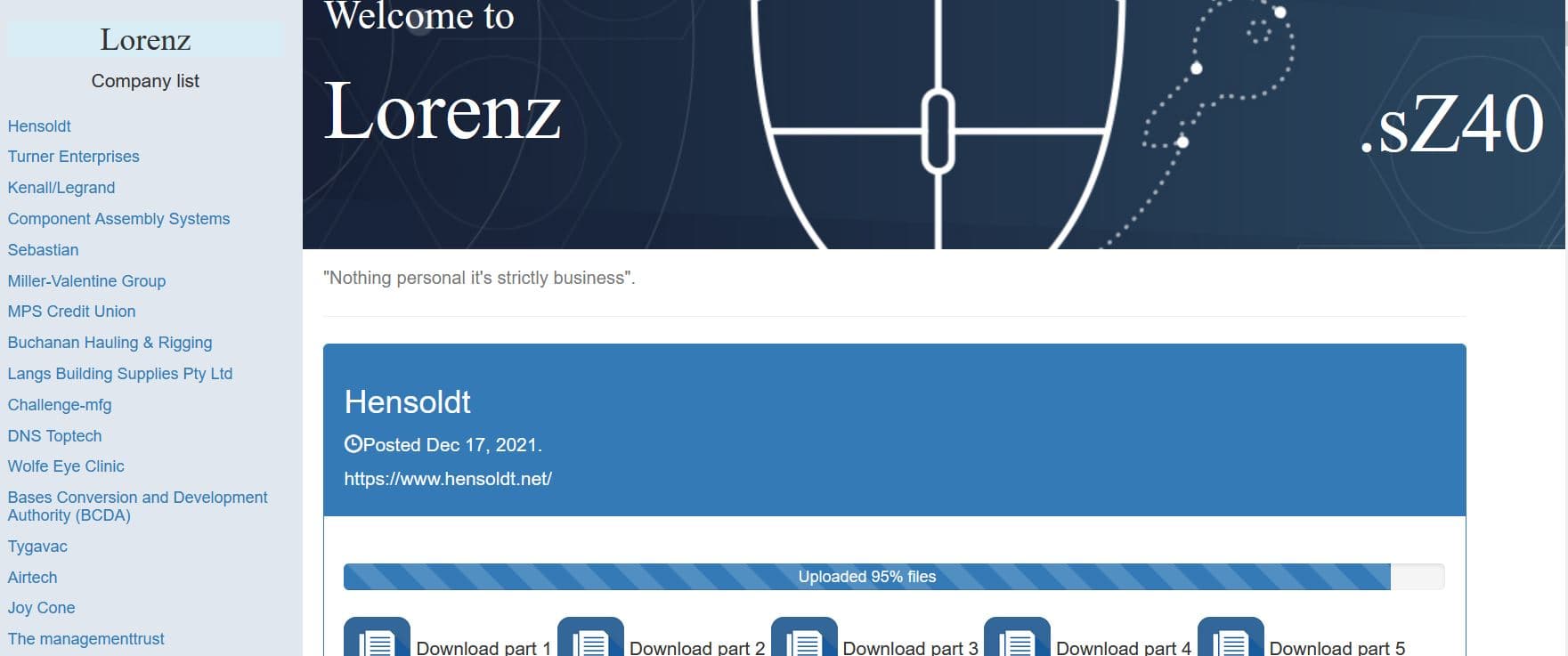
The Lorenz ransomware gang has already added the company name of the compromised organizations on its Tor leak site.

Hensoldt Lorenz ransomware

At the time of this writing, the ransomware group claims to have already uploaded 95% of all stolen files to its leak site.

The gang labeled the archive file as “Paid,” this means that the Hensoldt one someone else has paid to avoid the files being leaked.

Researchers from cybersecurity firm Tesorion analyzed the Lorenz ransomware and developed a decryptor that in some cases could allow victims to decrypt their files for free. 

Follow me on Twitter: @securityaffairs and Facebook

[adrotate banner=”9″][adrotate banner=”12″]

Pierluigi Paganini

(SecurityAffairs – hacking, Hensoldt)

[adrotate banner=”5″]

[adrotate banner=”13″]


