
Security Affairs
Two Barracuda ESG Flaws Could Be Combined for Full Root Access; Patches Released|Cyberattack Hits French Blood Banks as Hackers Target Refrigeration Systems Across Europe|CVE-2026-58868: Critical Android Bug Could Let Attackers Run Remote Code|U.S. CISA adds WordPress flaw to its Known Exploited Vulnerabilities catalog|Binance Hack: How Fake Job Interviews and AI Abuse Led to a $6.34 Billion Attack|Synology Warns of Ransomware Attacks Targeting NAS Devices Running Outdated DSM Versions|Inside XCPE, the botnet that turned 1.3M set-top boxes into proxy servers|NIS2 Makes Board Members Personally Liable for Access Control Decisions|Apple’s spyware notifications reach the Bundestag: what the BSI says to do now|VOLTA, the infostealer that asks an AI which victims are worth the effort|New wave of fridge cyberattacks hits European supermarkets, this time in Belgium, Luxembourg, Sweden and Estonia|Hackers Send Fake Nuclear Threat Alerts to Ukrainian and Russian Citizens|Two Barracuda ESG Flaws Could Be Combined for Full Root Access; Patches Released|Cyberattack Hits French Blood Banks as Hackers Target Refrigeration Systems Across Europe|CVE-2026-58868: Critical Android Bug Could Let Attackers Run Remote Code|U.S. CISA adds WordPress flaw to its Known Exploited Vulnerabilities catalog|Binance Hack: How Fake Job Interviews and AI Abuse Led to a $6.34 Billion Attack|Synology Warns of Ransomware Attacks Targeting NAS Devices Running Outdated DSM Versions|Inside XCPE, the botnet that turned 1.3M set-top boxes into proxy servers|NIS2 Makes Board Members Personally Liable for Access Control Decisions|Apple’s spyware notifications reach the Bundestag: what the BSI says to do now|VOLTA, the infostealer that asks an AI which victims are worth the effort|New wave of fridge cyberattacks hits European supermarkets, this time in Belgium, Luxembourg, Sweden and Estonia|Hackers Send Fake Nuclear Threat Alerts to Ukrainian and Russian Citizens|
Advertisement

Ad Placeholder

Full Width × 90

Breaking News

Major Browsers hacked at Pwn2Own hacking competition

At the  Pwn2Own hacking competition two researchers hacked the four major browsers, Microsoft Internet Explorer, Mozilla Firefox, Google Chrome, and Safari. Two researchers on Thursday successfully hacked the four major browsers, Microsoft Internet Explorer, Mozilla Firefox, Google Chrome, and Apple Safari, at the Pwn2Own, the annual hacking contest in Vancouver. In particular the Korean researcher […]

Major Browsers hacked at Pwn2Own hacking competition

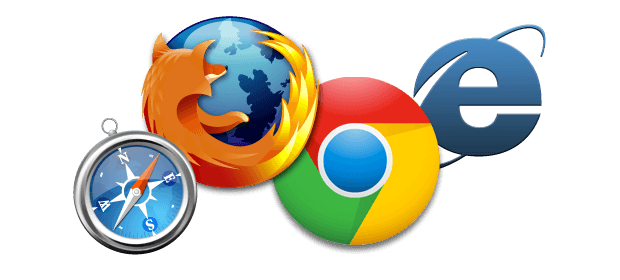
At the  Pwn2Own hacking competition two researchers hacked the four major browsers, Microsoft Internet Explorer, Mozilla Firefox, Google Chrome, and Safari.

Two researchers on Thursday successfully hacked the four major browsers, Microsoft Internet Explorer, Mozilla Firefox, Google Chrome, and Apple Safari, at the Pwn2Own, the annual hacking contest in Vancouver.

In particular the Korean researcher Jung Hoon Lee earned $110,000 in just two minutes, the man used 2000 lines of code to take down both stable and beta versions of Chrome by exploiting a buffer overflow race condition in the browser.

pwn2own internet-explorer-hack

Lee also hacked in the same day a 64-bit version of IE 11 exploiting a time-of-check to time-of-use (TOCTOU) vulnerability. The flaw exploited between the time a file property is checked and the time the file is used, allowed the research a privilege escalation. Lee awesome, because he closed the day exploiting a use-after-free vulnerability to take down Safari browser.

In just one day, Lee earned about $ 225,000 hacking the main browser. GREAT JOB!

Lee isn’t the unique expert that demonstrated the vulnerability of principal browsers. A researcher operating under the pseudonym ilxu1a hacked Mozilla browser. The researchers discovered an out-of-bounds read/write vulnerability through static analysis and by exploiting it he obtained a medium-integrity code execution. The same exploit did not work for Chrome.

In the following list are reported the list of bugs discovered in the principal browsers during the Pwn2Own hacking competition hosted by HP’s Zero Day Initiative and Google’s Project Zero:

  • Microsoft Windows: 5 bugs
  • Microsoft IE 11: 4 bugs
  • Mozilla Firefox: 3 bugs
  • Adobe Reader: 3 bugs
  • Adobe Flash: 3 bugs
  • Apple Safari: 2 bugs
  • Google Chrome: 1 bug

The total amount of money paid to the researchers is $442,500 … I love the Pwn2Own competition because gives value to the knowledge and power to the research!

Pierluigi Paganini

(Security Affairs – browser, Pwn2Own )


