
Security Affairs
Cyberattack Hits French Blood Banks as Hackers Target Refrigeration Systems Across Europe|CVE-2026-58868: Critical Android Bug Could Let Attackers Run Remote Code|U.S. CISA adds WordPress flaw to its Known Exploited Vulnerabilities catalog|Binance Hack: How Fake Job Interviews and AI Abuse Led to a $6.34 Billion Attack|Synology Warns of Ransomware Attacks Targeting NAS Devices Running Outdated DSM Versions|Inside XCPE, the botnet that turned 1.3M set-top boxes into proxy servers|NIS2 Makes Board Members Personally Liable for Access Control Decisions|Apple’s spyware notifications reach the Bundestag: what the BSI says to do now|VOLTA, the infostealer that asks an AI which victims are worth the effort|New wave of fridge cyberattacks hits European supermarkets, this time in Belgium, Luxembourg, Sweden and Estonia|Hackers Send Fake Nuclear Threat Alerts to Ukrainian and Russian Citizens|Chainalysis Investigates Security Incident Involving AI-Driven Attack Techniques|Cyberattack Hits French Blood Banks as Hackers Target Refrigeration Systems Across Europe|CVE-2026-58868: Critical Android Bug Could Let Attackers Run Remote Code|U.S. CISA adds WordPress flaw to its Known Exploited Vulnerabilities catalog|Binance Hack: How Fake Job Interviews and AI Abuse Led to a $6.34 Billion Attack|Synology Warns of Ransomware Attacks Targeting NAS Devices Running Outdated DSM Versions|Inside XCPE, the botnet that turned 1.3M set-top boxes into proxy servers|NIS2 Makes Board Members Personally Liable for Access Control Decisions|Apple’s spyware notifications reach the Bundestag: what the BSI says to do now|VOLTA, the infostealer that asks an AI which victims are worth the effort|New wave of fridge cyberattacks hits European supermarkets, this time in Belgium, Luxembourg, Sweden and Estonia|Hackers Send Fake Nuclear Threat Alerts to Ukrainian and Russian Citizens|Chainalysis Investigates Security Incident Involving AI-Driven Attack Techniques|
Advertisement

Ad Placeholder

Full Width × 90

Breaking News

Researcher found a severe flaw in the MONyog monitoring tool

A security expert discovered a vulnerability in the MONyog tool that could be exploited by a normal user to elevate his privilege access. The security researcher and penetration tester Mutail Mohamed (@muleyl) discovered a vulnerability in the MONyog, the most secure and scalable MySQL monitoring tool of the server monitoring tool. The application URL is https://www.webyog.com/product/monyog and the affected version is MONyog […]

Researcher found a severe flaw in the MONyog monitoring tool

A security expert discovered a vulnerability in the MONyog tool that could be exploited by a normal user to elevate his privilege access.

The security researcher and penetration tester Mutail Mohamed (@muleyl) discovered a vulnerability in the MONyog, the most secure and scalable MySQL monitoring tool of the server monitoring tool.

The application URL is https://www.webyog.com/product/monyog and the affected version is MONyog Ultimate 6.63.

The flaw resides in the session management on Monyog application, it could be exploited by a normal user to elevate his privilege access by altering the session.

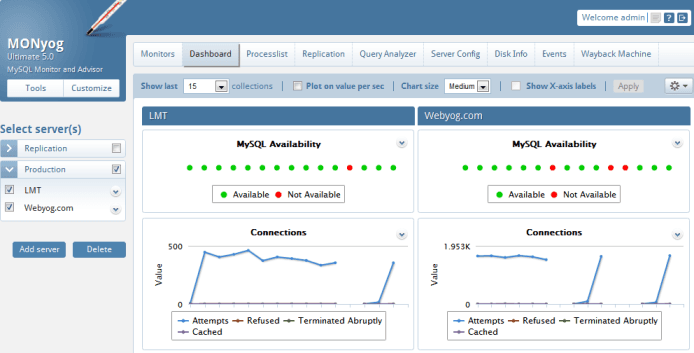
MONyog flaw

The exploitation of the flaw is very simple, the user just has to change the perimeters in the cookie store at that session.

The value associated with a normal user is 0, attackers can change it to 1 to gain admin privileges.

The researcher demonstrated that is to elevate privileges by manipulating the value of the following Cookie parameters;

  • HasServerEdit
  • IsAdmin

The hack will allow the user to create roles, view the passwords stored in the setup and change other settings via the admin section.

Below a video PoC of the exploitation of the flaw.

I reached the researcher for a comment:
“Since this is a commercial application and organizations pay for this, they At least need something secure and worth that price. ” explained Mutail.
“The organization could have a huge impact on this, because if let’s say a normal user goes rogue, he could get admin level access to organizations network. Since this application does use LDAP authentication. “

[adrotate banner=”9″]

Pierluigi Paganini

(Security Affairs – MONyog, hacking)

