
Security Affairs
Two Barracuda ESG Flaws Could Be Combined for Full Root Access; Patches Released|Cyberattack Hits French Blood Banks as Hackers Target Refrigeration Systems Across Europe|CVE-2026-58868: Critical Android Bug Could Let Attackers Run Remote Code|U.S. CISA adds WordPress flaw to its Known Exploited Vulnerabilities catalog|Binance Hack: How Fake Job Interviews and AI Abuse Led to a $6.34 Billion Attack|Synology Warns of Ransomware Attacks Targeting NAS Devices Running Outdated DSM Versions|Inside XCPE, the botnet that turned 1.3M set-top boxes into proxy servers|NIS2 Makes Board Members Personally Liable for Access Control Decisions|Apple’s spyware notifications reach the Bundestag: what the BSI says to do now|VOLTA, the infostealer that asks an AI which victims are worth the effort|New wave of fridge cyberattacks hits European supermarkets, this time in Belgium, Luxembourg, Sweden and Estonia|Hackers Send Fake Nuclear Threat Alerts to Ukrainian and Russian Citizens|Two Barracuda ESG Flaws Could Be Combined for Full Root Access; Patches Released|Cyberattack Hits French Blood Banks as Hackers Target Refrigeration Systems Across Europe|CVE-2026-58868: Critical Android Bug Could Let Attackers Run Remote Code|U.S. CISA adds WordPress flaw to its Known Exploited Vulnerabilities catalog|Binance Hack: How Fake Job Interviews and AI Abuse Led to a $6.34 Billion Attack|Synology Warns of Ransomware Attacks Targeting NAS Devices Running Outdated DSM Versions|Inside XCPE, the botnet that turned 1.3M set-top boxes into proxy servers|NIS2 Makes Board Members Personally Liable for Access Control Decisions|Apple’s spyware notifications reach the Bundestag: what the BSI says to do now|VOLTA, the infostealer that asks an AI which victims are worth the effort|New wave of fridge cyberattacks hits European supermarkets, this time in Belgium, Luxembourg, Sweden and Estonia|Hackers Send Fake Nuclear Threat Alerts to Ukrainian and Russian Citizens|
Advertisement

Ad Placeholder

Full Width × 90

Breaking News

Operation North Star – North-Korea hackers targeted US defense and aerospace companies

North Korea-linked hackers continue to be very active in this period, researchers reported a campaign aimed at the US defense and aerospace sectors. Security experts from McAfee uncovered a new cyber-espionage campaign carried out by North Korean hackers that targeted the US defense and aerospace sectors. Threat actors used fake job offers to deceive employees […]

North Korea Operation North Star

North Korea-linked hackers continue to be very active in this period, researchers reported a campaign aimed at the US defense and aerospace sectors.

Security experts from McAfee uncovered a new cyber-espionage campaign carried out by North Korean hackers that targeted the US defense and aerospace sectors. Threat actors used fake job offers to deceive employees looking for new job opportunities and compromise the network of their organizations.

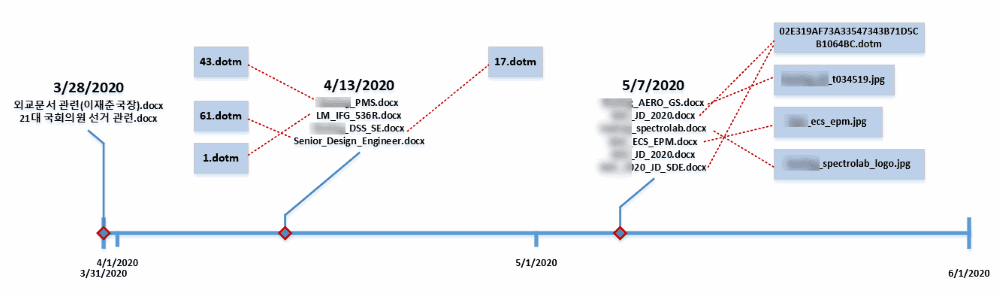
The campaign tracked ‘Operation North Star,’ was active between late March and May 2020.

The threat actors’ job postings messages were crafted to target the following specific US defense programs and groups:

  • F-22 Fighter Jet Program
  • Defense, Space and Security (DSS)
  • Photovoltaics for space solar cells
  • Aeronautics Integrated Fighter Group
  • Military aircraft modernization programs

The researchers noticed that the infrastructure and TTPs (Techniques, Tactics, and Procedures) used in this campaign overlaps with the ones previously associated with Hidden Cobra.

The attackers sent out spear-phishing emails using boobytrapped documents leveraging the fake job offer as bait.

Threat actors behind this campaign are utilizing compromised infrastructure from multiple European countries to host their C2 infrastructure and distribute the malware to the targets.

The Techniques, Tactics, and Procedures (TTPs) of the Operation North Star operations are very similar to those observed in 2017 and 2019 campaigns that targeted key military and defense technologies.

operation north star North Korea

“Our analysis indicates that one of the purposes of the activity in 2020 was to install data gathering implants on victims’ machines. These DLL implants were intended to gather basic information from the victims’ machines with the purpose of victim identification.” states the report published by the experts. “The data collected from the target machine could be useful in classifying the value of the target. McAfee ATR noticed several different types of implants were used by the adversary in the 2020 campaigns.”

It is not clear how efficient was a “new job” theme campaign due to the ongoing Coronavirus pandemic.

Recently, security experts from Kaspersky Lab reported that North Korea-linked hackers are attempting to spread a new ransomware strain known as VHD.

In a separate report, Kaspersky also reported that Lazarus APT Group has used a new multi-platform malware framework, dubbed MATA, to target entities worldwide,

[adrotate banner=”9″][adrotate banner=”12″]

Pierluigi Paganini

(SecurityAffairs – hacking, North Korea)

[adrotate banner=”5″]

[adrotate banner=”13″]


