
Security Affairs
Cyberattack Hits French Blood Banks as Hackers Target Refrigeration Systems Across Europe|CVE-2026-58868: Critical Android Bug Could Let Attackers Run Remote Code|U.S. CISA adds WordPress flaw to its Known Exploited Vulnerabilities catalog|Binance Hack: How Fake Job Interviews and AI Abuse Led to a $6.34 Billion Attack|Synology Warns of Ransomware Attacks Targeting NAS Devices Running Outdated DSM Versions|Inside XCPE, the botnet that turned 1.3M set-top boxes into proxy servers|NIS2 Makes Board Members Personally Liable for Access Control Decisions|Apple’s spyware notifications reach the Bundestag: what the BSI says to do now|VOLTA, the infostealer that asks an AI which victims are worth the effort|New wave of fridge cyberattacks hits European supermarkets, this time in Belgium, Luxembourg, Sweden and Estonia|Hackers Send Fake Nuclear Threat Alerts to Ukrainian and Russian Citizens|Chainalysis Investigates Security Incident Involving AI-Driven Attack Techniques|Cyberattack Hits French Blood Banks as Hackers Target Refrigeration Systems Across Europe|CVE-2026-58868: Critical Android Bug Could Let Attackers Run Remote Code|U.S. CISA adds WordPress flaw to its Known Exploited Vulnerabilities catalog|Binance Hack: How Fake Job Interviews and AI Abuse Led to a $6.34 Billion Attack|Synology Warns of Ransomware Attacks Targeting NAS Devices Running Outdated DSM Versions|Inside XCPE, the botnet that turned 1.3M set-top boxes into proxy servers|NIS2 Makes Board Members Personally Liable for Access Control Decisions|Apple’s spyware notifications reach the Bundestag: what the BSI says to do now|VOLTA, the infostealer that asks an AI which victims are worth the effort|New wave of fridge cyberattacks hits European supermarkets, this time in Belgium, Luxembourg, Sweden and Estonia|Hackers Send Fake Nuclear Threat Alerts to Ukrainian and Russian Citizens|Chainalysis Investigates Security Incident Involving AI-Driven Attack Techniques|
Advertisement

Ad Placeholder

Full Width × 90

Breaking News

Major Europol’s operation against online terrorist propaganda

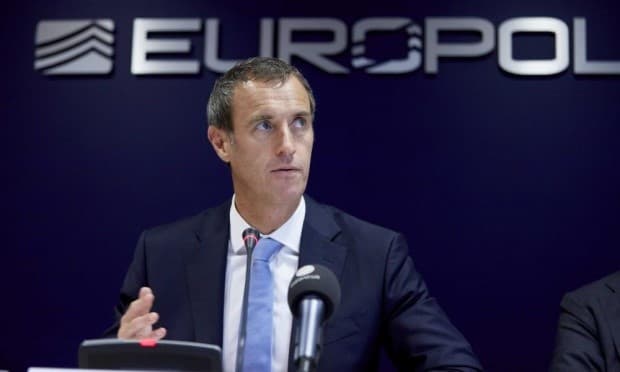
The Europol processed 1 677 media content and social media accounts in six languages containing violent online terrorist propaganda. Recently the European law enforcement agency EUROPOL announced the constitution of a cyber unit focused on fighting the online terrorist propaganda. The Agency now announced to have processed 1677 media content and social media accounts in […]

Major Europol’s operation against online terrorist propaganda

The Europol processed 1 677 media content and social media accounts in six languages containing violent online terrorist propaganda.

Recently the European law enforcement agency EUROPOL announced the constitution of a cyber unit focused on fighting the online terrorist propaganda. The Agency now announced to have processed 1677 media content and social media accounts in 6 languages  because containing terrorist and violent extremist propaganda.

“1 677 media content and social media accounts in 6 languages containing terrorist and violent extremist propaganda have been processed for the purpose of referral. The content was hosted by 35 social media and online service providers,” Europol statement reads.

The online terrorist propaganda was hosted by 35 social media and online service providers.

online terrorist propaganda ISIS

This is a very important operation against the online terrorist propaganda coordinated by the Europol, which involved experts from the Internet Referral Units (IRUs) from France, Germany, Slovenia and the United Kingdom.

This is the first operation conducted by the Europol Internet Referral Unit that coordinated the efforts of IRUs to remove the online terrorist propaganda shared radical groups and sympathizers.

The Europol Internet Referral Unit included cyber security specialists, analysts, translators and of course

The operation lasted 48-hours, the groups targeted accounts used by terrorist groups to “radicalise, recruit, direct terrorist activity and glorify their atrocities”.

The announcement published by the Europol highlights that the removal of the extremist online content was a voluntary activity by the service providers, which were concerned by the threat represented by terrorist organizations. The service providers involved in the operation taken in reference to their own terms and conditions that were clearly violated by the online terrorist propaganda.

The EU IRU was launched in July 2015, below the main tasks carried on by its experts:

  • Coordinates and shares the identification tasks (flagging) of terrorist and violent extremist online content with relevant partners;
  • Carries out and supports referrals quickly, efficiently and effectively, in close cooperation with the industry;
  • Supports competent authorities, by providing strategic analysis and operational analysis;
  • Acts as a European Centre of Excellence for the above tasks.
[adrotate banner=”9″] [adrotate banner=”12″]

Pierluigi Paganini

(Security Affairs – Europol, online terrorist propaganda)

[adrotate banner=”5″]

[adrotate banner=”13″]


