
Security Affairs
U.S. Charges Canadian Man in Alleged Hack of University Supercomputers|Two Barracuda ESG Flaws Could Be Combined for Full Root Access; Patches Released|Cyberattack Hits French Blood Banks as Hackers Target Refrigeration Systems Across Europe|CVE-2026-58868: Critical Android Bug Could Let Attackers Run Remote Code|U.S. CISA adds WordPress flaw to its Known Exploited Vulnerabilities catalog|Binance Hack: How Fake Job Interviews and AI Abuse Led to a $6.34 Billion Attack|Synology Warns of Ransomware Attacks Targeting NAS Devices Running Outdated DSM Versions|Inside XCPE, the botnet that turned 1.3M set-top boxes into proxy servers|NIS2 Makes Board Members Personally Liable for Access Control Decisions|Apple’s spyware notifications reach the Bundestag: what the BSI says to do now|VOLTA, the infostealer that asks an AI which victims are worth the effort|New wave of fridge cyberattacks hits European supermarkets, this time in Belgium, Luxembourg, Sweden and Estonia|U.S. Charges Canadian Man in Alleged Hack of University Supercomputers|Two Barracuda ESG Flaws Could Be Combined for Full Root Access; Patches Released|Cyberattack Hits French Blood Banks as Hackers Target Refrigeration Systems Across Europe|CVE-2026-58868: Critical Android Bug Could Let Attackers Run Remote Code|U.S. CISA adds WordPress flaw to its Known Exploited Vulnerabilities catalog|Binance Hack: How Fake Job Interviews and AI Abuse Led to a $6.34 Billion Attack|Synology Warns of Ransomware Attacks Targeting NAS Devices Running Outdated DSM Versions|Inside XCPE, the botnet that turned 1.3M set-top boxes into proxy servers|NIS2 Makes Board Members Personally Liable for Access Control Decisions|Apple’s spyware notifications reach the Bundestag: what the BSI says to do now|VOLTA, the infostealer that asks an AI which victims are worth the effort|New wave of fridge cyberattacks hits European supermarkets, this time in Belgium, Luxembourg, Sweden and Estonia|
Advertisement

Ad Placeholder

Full Width × 90

Breaking News

A new phishing scam targets American Express cardholders

Cybersecurity firm Armorblox discovered a new phishing campaign aimed at American Express customers. Armorblox researchers uncovered a new phishing campaign that is targeting American Express customers. The messages use a malicious attachment and their content attempt to trick cardholders into opening it. The subject of the emails reads “Important Notification About Your Account” in an attempt to urge recipients […]

America Express 2

Cybersecurity firm Armorblox discovered a new phishing campaign aimed at American Express customers.

Armorblox researchers uncovered a new phishing campaign that is targeting American Express customers.

The messages use a malicious attachment and their content attempt to trick cardholders into opening it.

The subject of the emails reads “Important Notification About Your Account” in an attempt to urge recipients to open it. Once opened, the email appears as a legitimate email communication from American Express, while the content instructs the cardholder on how to view the secure, encrypted message attached.

America Express

“Upon opening the attachment, victims were greeted with a message announcing additional verification requirements for the associated account. Urgency was instilled within the victims through the inclusion of the language, “This is your last chance to confirm it before we suspend it”, and a prompt for victims to complete a one-time verification process that was needed as part of a global update from the American Express team.” reads the analysis published by the Armorblox.

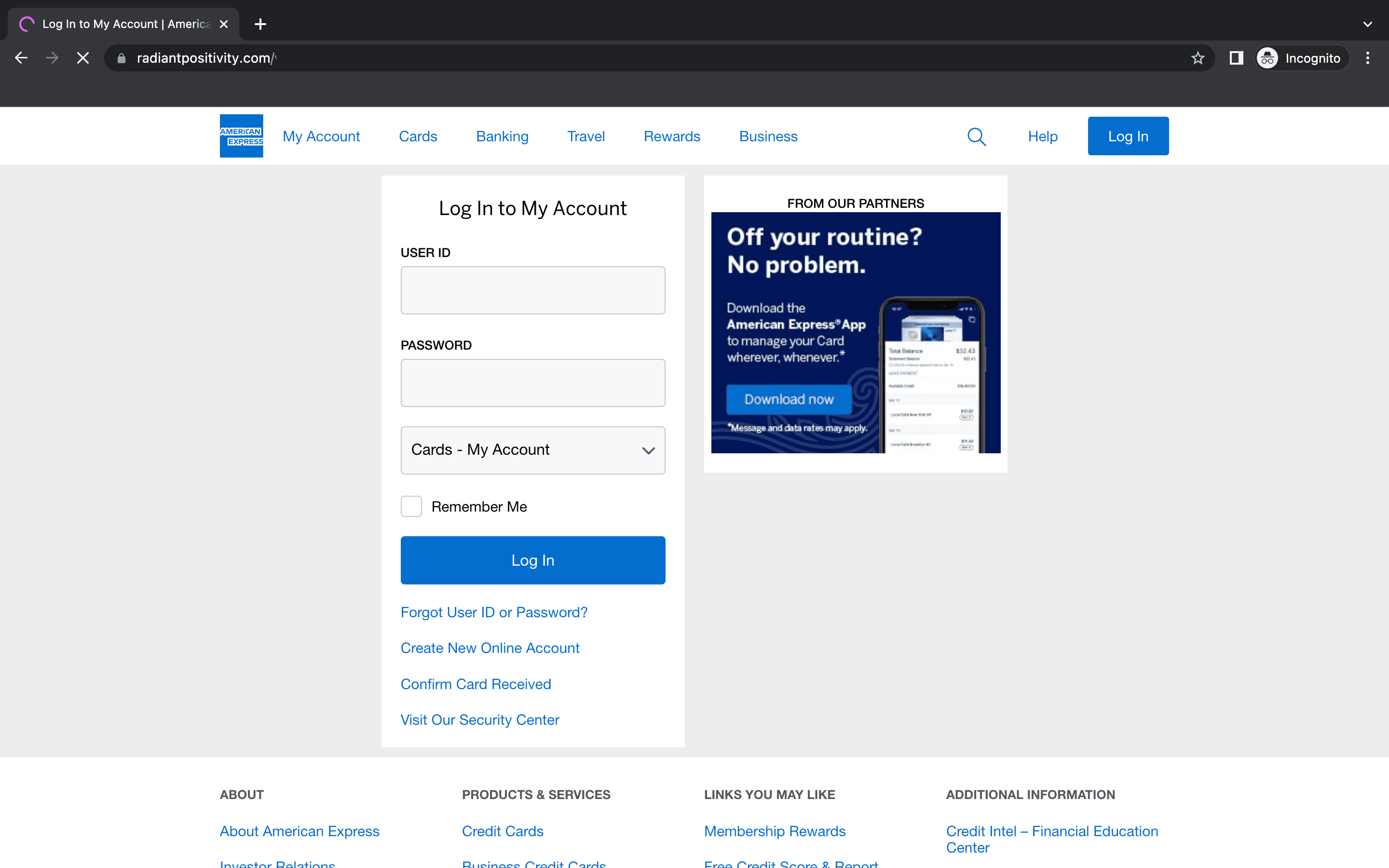
Upon clicking on the link in the message, victims are redirected to a fake American Express login page, which includes the company’s logo and a link to download the American Express app.

America Express 2

The page was crafted to request the victims to enter their user ID and password.

The phishing campaign bypassed native Google Workspace email security controls because it passed both DKIM and SPF email authentication.

Threat actors behind the campaign used a valid domain to send this malicious email, the domain used by the sender received a reputation score of trustworthy and global threat history of zero security events. The phishing email, marked by Google as safe, was delivered to more than 16,000 users’ addresses. 

Below are the recommendations provided by Armorblox to identify phishing messages:

  • Augment native email security with additional controls;
  • Watch out for social engineering cues;
  • Follow multi-factor authentication and password management best practices;

Follow me on Twitter: @securityaffairs and Facebook

[adrotate banner=”9″][adrotate banner=”12″]

Pierluigi Paganini

(SecurityAffairs – hacking, American Express)

[adrotate banner=”5″]

[adrotate banner=”13″]


