
Security Affairs
U.S. Charges Canadian Man in Alleged Hack of University Supercomputers|Two Barracuda ESG Flaws Could Be Combined for Full Root Access; Patches Released|Cyberattack Hits French Blood Banks as Hackers Target Refrigeration Systems Across Europe|CVE-2026-58868: Critical Android Bug Could Let Attackers Run Remote Code|U.S. CISA adds WordPress flaw to its Known Exploited Vulnerabilities catalog|Binance Hack: How Fake Job Interviews and AI Abuse Led to a $6.34 Billion Attack|Synology Warns of Ransomware Attacks Targeting NAS Devices Running Outdated DSM Versions|Inside XCPE, the botnet that turned 1.3M set-top boxes into proxy servers|NIS2 Makes Board Members Personally Liable for Access Control Decisions|Apple’s spyware notifications reach the Bundestag: what the BSI says to do now|VOLTA, the infostealer that asks an AI which victims are worth the effort|New wave of fridge cyberattacks hits European supermarkets, this time in Belgium, Luxembourg, Sweden and Estonia|U.S. Charges Canadian Man in Alleged Hack of University Supercomputers|Two Barracuda ESG Flaws Could Be Combined for Full Root Access; Patches Released|Cyberattack Hits French Blood Banks as Hackers Target Refrigeration Systems Across Europe|CVE-2026-58868: Critical Android Bug Could Let Attackers Run Remote Code|U.S. CISA adds WordPress flaw to its Known Exploited Vulnerabilities catalog|Binance Hack: How Fake Job Interviews and AI Abuse Led to a $6.34 Billion Attack|Synology Warns of Ransomware Attacks Targeting NAS Devices Running Outdated DSM Versions|Inside XCPE, the botnet that turned 1.3M set-top boxes into proxy servers|NIS2 Makes Board Members Personally Liable for Access Control Decisions|Apple’s spyware notifications reach the Bundestag: what the BSI says to do now|VOLTA, the infostealer that asks an AI which victims are worth the effort|New wave of fridge cyberattacks hits European supermarkets, this time in Belgium, Luxembourg, Sweden and Estonia|
Advertisement

Ad Placeholder

Full Width × 90

Breaking News

The Port of Nagoya, the largest Japanese port, suffered a ransomware attack

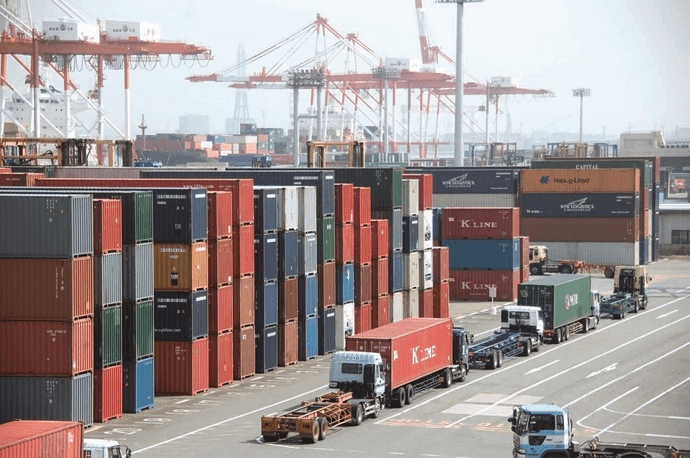
The Port of Nagoya, the largest port in Japan, suffered a ransomware attack that severely impacted its operations. The Port of Nagoya, in the Ise Bay, is the largest and busiest trading port in Japan, accounting for about 10% of the total trade value of Japan. Notably, this port is the largest exporter of cars […]

Port of Nagoya

Source https://www.port-of-nagoya.jp/shokai/kohoshiryo/photogallery/photogallery/1001056.html

The Port of Nagoya, the largest port in Japan, suffered a ransomware attack that severely impacted its operations.

The Port of Nagoya, in the Ise Bay, is the largest and busiest trading port in Japan, accounting for about 10% of the total trade value of Japan. Notably, this port is the largest exporter of cars in Japan and where the Toyota Motor Corporation exports most of its cars.

The Port suffered a ransomware attack that is impacting the operation of container terminals.

The Nagoya Harbor Transportation Association confirmed that the cyber attack is disrupting work to move containers in and out of the port.

“According to the Nagoya Port Management Association, a system failure occurred at the container terminal from around 6:30 am on the 4th. In addition to loading and unloading containers on trailers, it is said that loading and unloading work has stopped.” reported the Japanese website FNN.

The association reported that the system failure occurred at the container terminal from around 6:30 am on the 4th.

Port of Nagoya
Source https://www.port-of-nagoya.jp/shokai/kohoshiryo/photogallery/photogallery/1001056.html

At this time, the attack has yet to be claimed by any ransomware group and the family of ransomware that infected the systems at the post is still unknown.

BleepingComputer shared a notice published by the authority of the Port of Nagoya related to problems with the operations at the “Nagoya Port Unified Terminal System” (NUTS), which is the central system controlling all container terminals in the infrastructure.

“Upon investigating the cause, we held a meeting with the Nagoya Port Operation Association Terminal Committee, who operates the system, and the Aichi Prefectural Police Headquarters [and] it was discovered that the issue was a ransomware infection.” states the notice.

The security incident is going to have a huge financial impact on the port. The experts estimate that the incident can also impact the transportation of goods across the country.

This isn’t the first time that the Japanese port is a victim of a cyberattack, on September 2022, a massive DDoS attack carried out by the pro-Russia group Killnet shut down the website of the port.

Follow me on Twitter: @securityaffairs and Facebook and Mastodon

Pierluigi Paganini

(SecurityAffairs – hacking, Port of Nagoya)


