
Security Affairs
Two Barracuda ESG Flaws Could Be Combined for Full Root Access; Patches Released|Cyberattack Hits French Blood Banks as Hackers Target Refrigeration Systems Across Europe|CVE-2026-58868: Critical Android Bug Could Let Attackers Run Remote Code|U.S. CISA adds WordPress flaw to its Known Exploited Vulnerabilities catalog|Binance Hack: How Fake Job Interviews and AI Abuse Led to a $6.34 Billion Attack|Synology Warns of Ransomware Attacks Targeting NAS Devices Running Outdated DSM Versions|Inside XCPE, the botnet that turned 1.3M set-top boxes into proxy servers|NIS2 Makes Board Members Personally Liable for Access Control Decisions|Apple’s spyware notifications reach the Bundestag: what the BSI says to do now|VOLTA, the infostealer that asks an AI which victims are worth the effort|New wave of fridge cyberattacks hits European supermarkets, this time in Belgium, Luxembourg, Sweden and Estonia|Hackers Send Fake Nuclear Threat Alerts to Ukrainian and Russian Citizens|Two Barracuda ESG Flaws Could Be Combined for Full Root Access; Patches Released|Cyberattack Hits French Blood Banks as Hackers Target Refrigeration Systems Across Europe|CVE-2026-58868: Critical Android Bug Could Let Attackers Run Remote Code|U.S. CISA adds WordPress flaw to its Known Exploited Vulnerabilities catalog|Binance Hack: How Fake Job Interviews and AI Abuse Led to a $6.34 Billion Attack|Synology Warns of Ransomware Attacks Targeting NAS Devices Running Outdated DSM Versions|Inside XCPE, the botnet that turned 1.3M set-top boxes into proxy servers|NIS2 Makes Board Members Personally Liable for Access Control Decisions|Apple’s spyware notifications reach the Bundestag: what the BSI says to do now|VOLTA, the infostealer that asks an AI which victims are worth the effort|New wave of fridge cyberattacks hits European supermarkets, this time in Belgium, Luxembourg, Sweden and Estonia|Hackers Send Fake Nuclear Threat Alerts to Ukrainian and Russian Citizens|
Advertisement

Ad Placeholder

Full Width × 90

Breaking News

Portugal is the 21st country to join the NATO Cyber-Defence Centre

Welcome Portugal, on Tuesday the state joined the NATO Cyber-Defence Centre. The centre has the mission to enhance the capability, cooperation and information sharing among NATO, its member nations and partners in cyber defence. The NATO Cyber-Defence Centre has a new member, on Tuesday Portugal joined the organization. The NATO Cyber-Defence Centre is a multinational and interdisciplinary hub of cyber […]

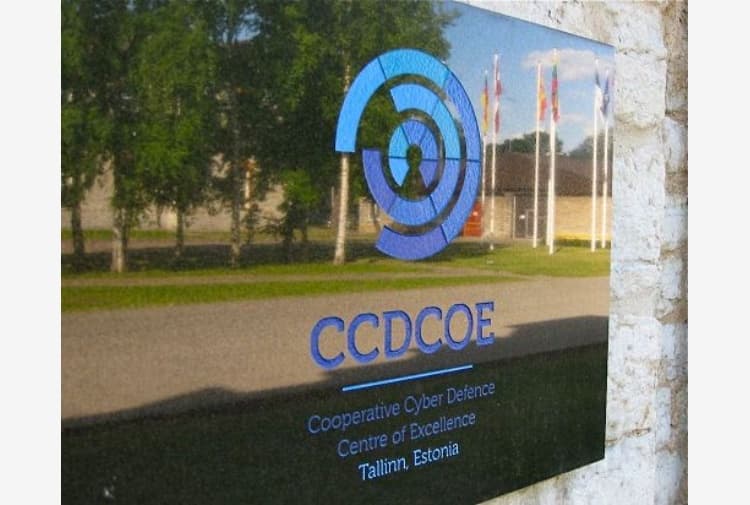
NATO-Cyber-Defence-Centre

Welcome Portugal, on Tuesday the state joined the NATO Cyber-Defence Centre. The centre has the mission to enhance the capability, cooperation and information sharing among NATO, its member nations and partners in cyber defence.

The NATO Cyber-Defence Centre has a new member, on Tuesday Portugal joined the organization.

The NATO Cyber-Defence Centre is a multinational and interdisciplinary hub of cyber defence expertise, it was founded in 2008 in Tallin (Estonia).

The Centre attained the status of International Military Organisation on 28 October 2008. It is an International Military Organisation with a mission to enhance the capability, cooperation and information sharing among NATO members and partners in cyber defence.

“We are facing adversaries who target our common values in cyberspace: freedom, truth, trust,” centre director Merle Maigre said at the ceremony.

“To build resilience we need to come together. That is why I am glad to welcome Portugal as together we are stronger,”

NATO Cyber-Defence CentreIn 2017, the centre was targeted by nation-state hackers, Estonia accused Russia for the cyber assault on its information networks.

Portugal is the 21st country to join NATO’s cyber defence centre, other centre members are Austria, Belgium, the Czech Republic, Estonia, Finland, France, Germany, Greece, Hungary, Italy, Latvia, Lithuania, the Netherlands, Poland, Portugal, Slovakia, Spain, Sweden, Turkey, the United Kingdom and the United States.

Australia, Norway, and Japan will join the NATO Cyber-Defence Centre in the next future.

[adrotate banner=”9″] [adrotate banner=”12″]

Pierluigi Paganini

(Security Affairs – NATO Cyber-Defence Centre, cybersecurity)

[adrotate banner=”5″]

[adrotate banner=”13″]


