
Security Affairs
CVE-2026-58868: Critical Android Bug Could Let Attackers Run Remote Code|U.S. CISA adds WordPress flaw to its Known Exploited Vulnerabilities catalog|Binance Hack: How Fake Job Interviews and AI Abuse Led to a $6.34 Billion Attack|Synology Warns of Ransomware Attacks Targeting NAS Devices Running Outdated DSM Versions|Inside XCPE, the botnet that turned 1.3M set-top boxes into proxy servers|NIS2 Makes Board Members Personally Liable for Access Control Decisions|Apple’s spyware notifications reach the Bundestag: what the BSI says to do now|VOLTA, the infostealer that asks an AI which victims are worth the effort|New wave of fridge cyberattacks hits European supermarkets, this time in Belgium, Luxembourg, Sweden and Estonia|Hackers Send Fake Nuclear Threat Alerts to Ukrainian and Russian Citizens|Chainalysis Investigates Security Incident Involving AI-Driven Attack Techniques|FBI Blames North Korea for $6 Billion Binance Crypto Theft|CVE-2026-58868: Critical Android Bug Could Let Attackers Run Remote Code|U.S. CISA adds WordPress flaw to its Known Exploited Vulnerabilities catalog|Binance Hack: How Fake Job Interviews and AI Abuse Led to a $6.34 Billion Attack|Synology Warns of Ransomware Attacks Targeting NAS Devices Running Outdated DSM Versions|Inside XCPE, the botnet that turned 1.3M set-top boxes into proxy servers|NIS2 Makes Board Members Personally Liable for Access Control Decisions|Apple’s spyware notifications reach the Bundestag: what the BSI says to do now|VOLTA, the infostealer that asks an AI which victims are worth the effort|New wave of fridge cyberattacks hits European supermarkets, this time in Belgium, Luxembourg, Sweden and Estonia|Hackers Send Fake Nuclear Threat Alerts to Ukrainian and Russian Citizens|Chainalysis Investigates Security Incident Involving AI-Driven Attack Techniques|FBI Blames North Korea for $6 Billion Binance Crypto Theft|
Advertisement

Ad Placeholder

Full Width × 90

Breaking News

Systems at a Power Company in India infected by a ransomware

A ransomware infected systems at the Uttar Haryana Bijli Vitran Nigam power company in India, crooks demanded 10 million Rupees to get the data back. The Uttar Haryana Bijli Vitran Nigam power company in India was hacked last week, attackers breached into its computer systems and stole the billing data of their customers. The hackers demanded 10 million Rupees to […]

Del Rio City

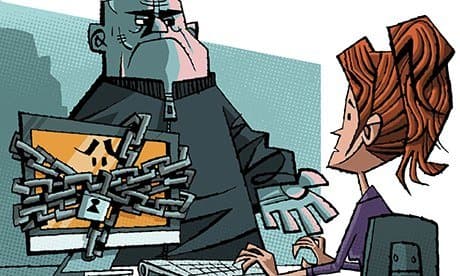
A ransomware infected systems at the Uttar Haryana Bijli Vitran Nigam power company in India, crooks demanded 10 million Rupees to get the data back.

The Uttar Haryana Bijli Vitran Nigam power company in India was hacked last week, attackers breached into its computer systems and stole the billing data of their customers.

The hackers demanded 10 million Rupees to get the data back (roughly $152,000 USD).

cerber ransomware

The intrusion occurred on March 21 night, a ransomware infected the systems and the day after the employees discovered that their data were encrypted.

“In a first of the kind of a case in the country, the hackers have stolen the billing data of the Uttar Haryana Bijli Vitran Nigam (UHBVN), one of the two power discoms of Haryana and have demanded Rs One crore in form of bitcoins from the state government to retrieve the data.” states the New Indian Express.

“Sources said that UHBVN which is monitoring electricity billings of nine districts of the state came under cyber attack at 12.17 AM after midnight on March 21 and thus the billing data of thousands of consumers had been hacked as the IT wing of the nigam was target.”

The Haryana Police launched an investigation trying to trace the IP address from where the attack was originated.

The officials at the company are uploading the billing data from the log books, anyway the incident could have a significant impact on the billing activities due to the difficulties to estimate current consumption in absence of data. The good news is that the billing of about 4,000 consumers has already started functioning normally.

“The Nigam had already taken steps much before to phase out the said system and to be replaced by latest, robust and technologically advanced system on cloud services which would be operational by the end of May 2018. The billing of about 4,000 consumers has already started functioning normally” added an official of the Nigam.

[adrotate banner=”9″] [adrotate banner=”12″]

Pierluigi Paganini

(Security Affairs – Power Company, ransomware)

[adrotate banner=”5″]

[adrotate banner=”13″]


