
Security Affairs
Two Barracuda ESG Flaws Could Be Combined for Full Root Access; Patches Released|Cyberattack Hits French Blood Banks as Hackers Target Refrigeration Systems Across Europe|CVE-2026-58868: Critical Android Bug Could Let Attackers Run Remote Code|U.S. CISA adds WordPress flaw to its Known Exploited Vulnerabilities catalog|Binance Hack: How Fake Job Interviews and AI Abuse Led to a $6.34 Billion Attack|Synology Warns of Ransomware Attacks Targeting NAS Devices Running Outdated DSM Versions|Inside XCPE, the botnet that turned 1.3M set-top boxes into proxy servers|NIS2 Makes Board Members Personally Liable for Access Control Decisions|Apple’s spyware notifications reach the Bundestag: what the BSI says to do now|VOLTA, the infostealer that asks an AI which victims are worth the effort|New wave of fridge cyberattacks hits European supermarkets, this time in Belgium, Luxembourg, Sweden and Estonia|Hackers Send Fake Nuclear Threat Alerts to Ukrainian and Russian Citizens|Two Barracuda ESG Flaws Could Be Combined for Full Root Access; Patches Released|Cyberattack Hits French Blood Banks as Hackers Target Refrigeration Systems Across Europe|CVE-2026-58868: Critical Android Bug Could Let Attackers Run Remote Code|U.S. CISA adds WordPress flaw to its Known Exploited Vulnerabilities catalog|Binance Hack: How Fake Job Interviews and AI Abuse Led to a $6.34 Billion Attack|Synology Warns of Ransomware Attacks Targeting NAS Devices Running Outdated DSM Versions|Inside XCPE, the botnet that turned 1.3M set-top boxes into proxy servers|NIS2 Makes Board Members Personally Liable for Access Control Decisions|Apple’s spyware notifications reach the Bundestag: what the BSI says to do now|VOLTA, the infostealer that asks an AI which victims are worth the effort|New wave of fridge cyberattacks hits European supermarkets, this time in Belgium, Luxembourg, Sweden and Estonia|Hackers Send Fake Nuclear Threat Alerts to Ukrainian and Russian Citizens|
Advertisement

Ad Placeholder

Full Width × 90

Breaking News

Hackers compromised Microsoft Edge is just 18 seconds

At PwnFest 2016, hackers compromised Windows 10’s Microsoft Edge web browser in just 18 seconds and devised the first attack on VMware Workstation 12.5.1. This week, at the PwnFest 2016 contest held at the Power of Community security conference in Seoul, hackers compromised Microsoft Edge operating on Windows 10 Red Stone 1 and for the first […]

Hackers compromised Microsoft Edge is just 18 seconds

At PwnFest 2016, hackers compromised Windows 10’s Microsoft Edge web browser in just 18 seconds and devised the first attack on VMware Workstation 12.5.1.

This week, at the PwnFest 2016 contest held at the Power of Community security conference in Seoul, hackers compromised Microsoft Edge operating on Windows 10 Red Stone 1 and for the first time demonstrated how to hack VMware Workstation 12.5.1. without user interaction.

The security experts will report details of the attacks to vendors avoiding to disclose them before a fix will be released.

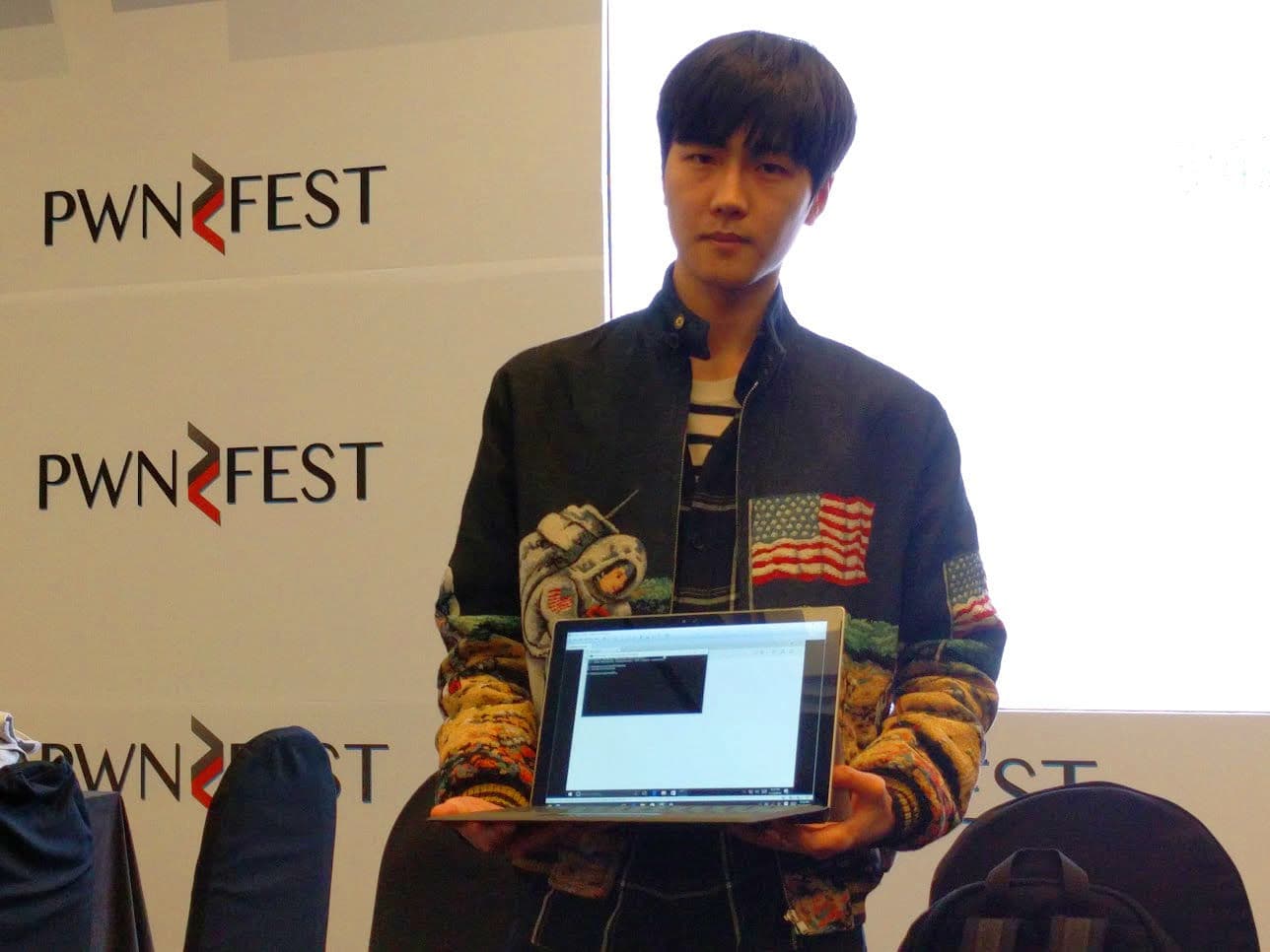
At PwnFest 2016, researchers from the Chinese security firm Qihoo 360 and South Korean security researcher JungHoon hacked in just 18 seconds the Windows 10’s Microsoft Edge web browser.

The hackers devised a method to launch system-level attacks that in the case of VMware hacks could be also performed remotely.

pawnfest-2016-seoul

Junghoon Lee, aka LokiHardt, shows his successful Edge exploit. Source Darren Pauli / The Register.

The researchers demonstrated a total of four hacks targeting the new Google Pixel running Android version 7 (Nougat), Adobe Flash via Microsoft Edge on Windows 10 Red Stone 1, and Apple Safari on MacOS Sierra.

The hackers earned $140,000 for the Windows Edge hacks, while Qihoo hacker team and Lee earned $150,000 for the hack of the VMware Workstation 12.5.1.

The Qihoo team confirmed to have spent six months to discover three vulnerabilities that were chained to hack the systems. The chained flaws including a possible use-after-free, confirmed out-of-boundary read, and out-of-boundary write exploits.

[adrotate banner=”9″]

Pierluigi Paganini

(Security Affairs – Microsoft Edge, hacking)


