
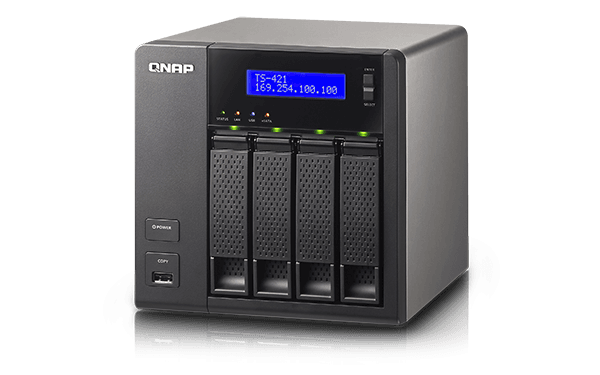
QNAP has addressed two critical security vulnerabilities in the Helpdesk app that could enable potential attackers to take over NAS devices.
QNAP has addressed two critical security vulnerabilities in the Helpdesk app that can potential allow threat actors to take over vulnerable QNAP network-attached storage (NAS) devices.
Helpdesk is a built-in app that allows owners of QNAP NAS to directly submit help requests to the vendor from their NAS, to do this, the app has specific permission.
According to a security advisory published by the company, both flaws, tracked as CVE-2020-2506 and CVE-2020-2507, are improper access control vulnerabilities.
The Taiwanese vendor confirmed that if exploited, the two improper access control vulnerabilities could allow attackers to obtain control of a QNAP device.
QNAP has addressed these issues with the release of Helpdesk 3.0.3 and later versions, below the step by step instructions to update the helpdesk:
- Log on to QTS as administrator.
- Open the App Center, and then click
 .
A search box appears. - Type “Helpdesk”, and then press ENTER.
The Helpdesk application appears in the search results. - Click Update.
A confirmation message appears.
Note: The Update button is not available if you are using the latest version. - Click OK.
The application is updated.
Recently QNAP published a security advisory urging its customers to update the firmware and apps installed on their network-attached storage (NAS) devices to prevent AgeLocker ransomware infections.
The name AgeLocker comes from the use of the Actually Good Encryption (AGE) algorithm to encrypt files, experts warn that encrypted files can’t be recovered without paying the ransom to the ransomware operators.
Security experts are observing the new strain of ransomware that is targeting QNAP devices since June.
In early August, the Taiwanese company urged its users to update the Malware Remover app to prevent NAS devices from being infected by the QSnatch malware.
At the time, the United States Cybersecurity and Infrastructure Security Agency (CISA) and the United Kingdom’s National Cyber Security Centre (NCSC) also issued a joint advisory about a massive ongoing campaign spreading the QSnatch data-stealing malware.
Earlier this year, the company issued another alert to warn its users of a wave of attacks spreading a ransomware strain tracked as eCh0raix.
| [adrotate banner=”9″] | [adrotate banner=”12″] |
(SecurityAffairs – hacking, QNAP)
[adrotate banner=”5″]
[adrotate banner=”13″]


