
INTERPOL’s Operation Red Card 2.0 led to 651 arrests across 16 African countries and recovered over $4.3 million from online scams.
INTERPOL’s Operation Red Card 2.0, a joint effort involving law enforcement agencies from 16 African countries, resulted in 651 arrests linked to online scam networks.
The operation was carried out under the African Joint Operation against Cybercrime (AFJOC), funded by the UK’s Foreign, Commonwealth & Development Office. It also received targeted support from the EU–Council of Europe’s GLACY-e (Global Action on Cybercrime Enhanced) project.
Authorities also recovered more than $4.3 million in illicit proceeds, marking a significant coordinated crackdown on cybercrime across the region.
“Law enforcement agencies from 16 African countries have made 651 arrests and recovered more than USD 4.3 million in an international cybercrime operation against online scams.” reads the press release published by INTERPOL. “Operation Red Card 2.0 (8 December 2025 to 30 January 2026) targeted the infrastructure and actors behind high-yield investment scams, mobile money fraud and fraudulent mobile loan applications.”
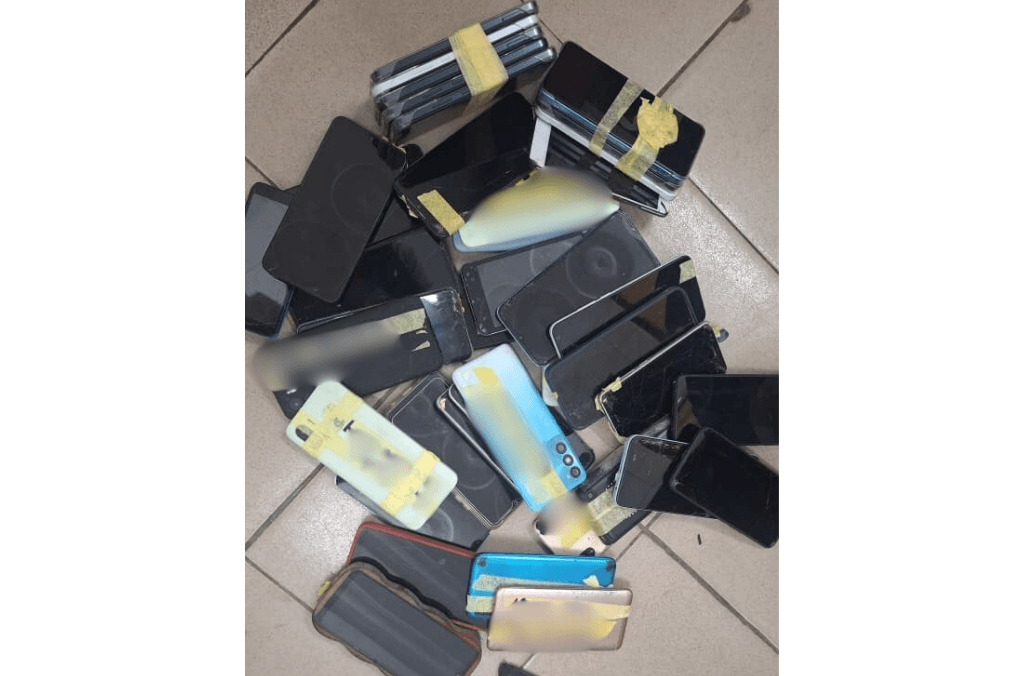
Operation Red Card 2.0, conducted from 8 December 2025 to 30 January 2026, targeted networks behind high-yield investment scams, mobile money fraud and fake loan apps. The law enforcement operation uncovered schemes tied to over $45 million in losses and 1,247 victims worldwide. Authorities seized 2,341 devices and dismantled 1,442 malicious IPs, domains and servers, with INTERPOL providing intelligence and forensic support.
Investigators exposed a wide range of scam models across Africa. In Nigeria, police dismantled a major investment fraud ring that used phishing and fake crypto schemes, shutting down over 1,000 social media accounts and raiding its operations hub. Kenya arrested 27 suspects behind fake investment offers promoted via messaging apps. Côte d’Ivoire detained 58 people tied to abusive mobile loan scams. Nigerian authorities also arrested six hackers who breached a telecom provider to resell stolen airtime. INTERPOL supported the crackdown with key intelligence from global cybersecurity partners.
“These organized cybercriminal syndicates inflict devastating financial and psychological harm on individuals, businesses and entire communities with their false promises. Operation Red Card highlights the importance of collaboration when combatting transnational cybercrime. I encourage all victims of cybercrime to reach out to law enforcement for help.” Neal Jetton, INTERPOL’s Director of the Cybercrime Directorate, said.
Follow me on Twitter: @securityaffairs and Facebook and Mastodon
(SecurityAffairs – hacking, INTERPOL)


