
Security Affairs
Two Barracuda ESG Flaws Could Be Combined for Full Root Access; Patches Released|Cyberattack Hits French Blood Banks as Hackers Target Refrigeration Systems Across Europe|CVE-2026-58868: Critical Android Bug Could Let Attackers Run Remote Code|U.S. CISA adds WordPress flaw to its Known Exploited Vulnerabilities catalog|Binance Hack: How Fake Job Interviews and AI Abuse Led to a $6.34 Billion Attack|Synology Warns of Ransomware Attacks Targeting NAS Devices Running Outdated DSM Versions|Inside XCPE, the botnet that turned 1.3M set-top boxes into proxy servers|NIS2 Makes Board Members Personally Liable for Access Control Decisions|Apple’s spyware notifications reach the Bundestag: what the BSI says to do now|VOLTA, the infostealer that asks an AI which victims are worth the effort|New wave of fridge cyberattacks hits European supermarkets, this time in Belgium, Luxembourg, Sweden and Estonia|Hackers Send Fake Nuclear Threat Alerts to Ukrainian and Russian Citizens|Two Barracuda ESG Flaws Could Be Combined for Full Root Access; Patches Released|Cyberattack Hits French Blood Banks as Hackers Target Refrigeration Systems Across Europe|CVE-2026-58868: Critical Android Bug Could Let Attackers Run Remote Code|U.S. CISA adds WordPress flaw to its Known Exploited Vulnerabilities catalog|Binance Hack: How Fake Job Interviews and AI Abuse Led to a $6.34 Billion Attack|Synology Warns of Ransomware Attacks Targeting NAS Devices Running Outdated DSM Versions|Inside XCPE, the botnet that turned 1.3M set-top boxes into proxy servers|NIS2 Makes Board Members Personally Liable for Access Control Decisions|Apple’s spyware notifications reach the Bundestag: what the BSI says to do now|VOLTA, the infostealer that asks an AI which victims are worth the effort|New wave of fridge cyberattacks hits European supermarkets, this time in Belgium, Luxembourg, Sweden and Estonia|Hackers Send Fake Nuclear Threat Alerts to Ukrainian and Russian Citizens|
Advertisement

Ad Placeholder

Full Width × 90

Breaking News

Unknown hackers have stolen €4.6m from Ryanair bank accounts

The Dublin’s Criminal Assets Bureau discovered that unknown hackers have stolen €4.6m from Ryanair bank accounts transferring them to a Chinese bank. Airline company Ryanair suffered a cyber attack that allowed hackers to steal millions of dollars from its business bank account. According to reports, the hackers have stolen €4.6 million (US $5 million), investigators discovered that the […]

Unknown hackers have stolen €4.6m from Ryanair bank accounts

The Dublin’s Criminal Assets Bureau discovered that unknown hackers have stolen €4.6m from Ryanair bank accounts transferring them to a Chinese bank.

Airline company Ryanair suffered a cyber attack that allowed hackers to steal millions of dollars from its business bank account.

According to reports, the hackers have stolen €4.6 million (US $5 million), investigators discovered that the money was transferred to a Chinese bank.

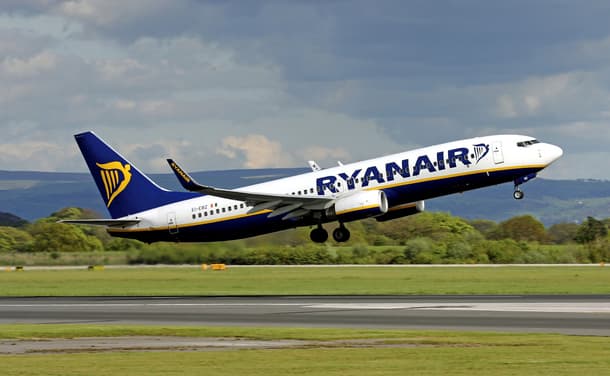
ryanair

Ryanair became aware of the online fraud on Friday, according to the revelation made by the Irish Times, the hackers accessed the funds used by the company for ordinary management (ie buying parts, buy fuel, etc.).

“It is not clear precisely how the hacking scam was operated or who was behind it. Ryanair uses dollars to buy fuel for its 400-plus Boeing 737-800 aircraft. It is these funds that are believed to have been tapped in this illegal transfer.” reported the Irish Times.

The news website hasn’t published details related to the online fraud, but experts speculate that cyber criminals spent large sums of money purchasing fuel using the Ryanair accounts, for this reason, the transactions haven’t aroused suspicions neither have triggered any alarm.

At the moment I’m writing there are no news regarding the attackers, despite numerous rumors regarding the involvement of Chinese hackers, the unique certainly is the involvement of a Chinese bank, a circumstance quite normal when we approach businesses that operate worldwide like Ryanair.

“The fraud came to light on Friday and the Criminal Assets Bureau in Dublin was asked to assist in its recovery via counterpart agencies in Asia. Ryanair confirms that it has investigated a fraudulent electronic transfer via a Chinese bank last week,” states the official statement issued by Ryanair. “The airline expects these funds to be repaid shortly, and has taken steps to ensure that this type of transfer cannot recur.”

Online frauds like the one occurred at Ryanair are very common, criminal crews worldwide are  targeting more and more frequently the online bank accounts used by large organizations.

Actually the Dublin’s Criminal Assets Bureau has been working with its counterparts in Asia to try to identify the author of the crime and recover the money.

Pierluigi Paganini

(Security Affairs – Ryanair, online fraud)


