
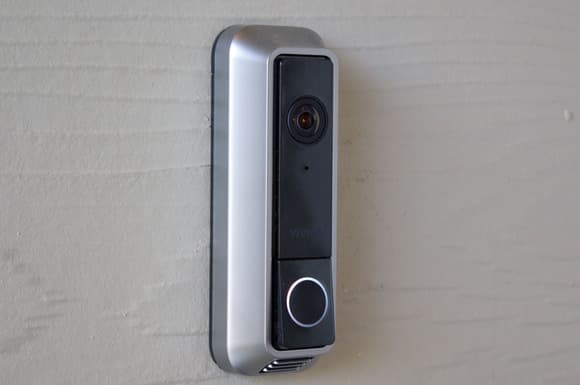
An estimated 175,000 Internet of Things (IoT) connected security cameras manufactured by Shenzhen Neo Electronics are vulnerable to cyber attacks.
According to a new report from security provider Bitdefender, roughly 175,000 connected security cameras are vulnerable to cyber attacks.
The vulnerable cameras are manufactured by the Chinese company Shenzhen Neo Electronics that offers surveillance and security solutions, including IP cameras, sensors and alarms.
The experts discovered several buffer overflow vulnerabilities in two models of cameras manufactured by the company, the iDoorbell and the NIP-22 models.

The researchers believe that other models commercialized by the Chinese company are vulnerable because they use the same firmware.
“Several buffer overflow vulnerabilities (some before authentication) are present in the two cameras studied, the iDoorbell model and NIP-22 model, but we suspect that all cameras sold by the company use the same software and are thus vulnerable.” reads the report published by BitDefender. “These vulnerabilities could allow, under certain conditions, remote code execution on the device. This type of
vulnerabilities is also present on the gateway which controls the sensors and alarms.”
The security cameras use UPnP (Universal Plug and Play) to automatically open ports in the router’s firewall to allow the access from the Internet. Querying the Shodan search engine for vulnerable devices the researchers discovered between 100,000 and 140,000 vulnerable devices worldwide.
“Internet. We found between 100,000 and 140,000 devices when searching for the HTTP web server, and a similar number when searching for the RTSP server (both vulnerable). These are not necessarily the same devices, as some have only one service forwarded. We estimate that the real number of unique devices is around 175,000.” continues the report.
The experts noticed that both security camera models are vulnerable to two different cyber attacks, one that affects the web server service running on cameras and another that affects the RSTP (Real Time Streaming Protocol) server.
Researchers demomstrated that was quite easy to exploit the flaws in the security cameras, anyone can hack access the livestream by simply logging in with default credentials (i.e. “user,” “user,” and “guest,” “guest”).
The researchers also discovered a buffer overflow vulnerability that could be exploited to take control of the cameras remotely.
Shenzhen Neo did not comment the discovery.
| [adrotate banner=”9″] | [adrotate banner=”12″] |
(Security Affairs – security cameras, IoT)
[adrotate banner=”13″]


