
Security Affairs
Two Barracuda ESG Flaws Could Be Combined for Full Root Access; Patches Released|Cyberattack Hits French Blood Banks as Hackers Target Refrigeration Systems Across Europe|CVE-2026-58868: Critical Android Bug Could Let Attackers Run Remote Code|U.S. CISA adds WordPress flaw to its Known Exploited Vulnerabilities catalog|Binance Hack: How Fake Job Interviews and AI Abuse Led to a $6.34 Billion Attack|Synology Warns of Ransomware Attacks Targeting NAS Devices Running Outdated DSM Versions|Inside XCPE, the botnet that turned 1.3M set-top boxes into proxy servers|NIS2 Makes Board Members Personally Liable for Access Control Decisions|Apple’s spyware notifications reach the Bundestag: what the BSI says to do now|VOLTA, the infostealer that asks an AI which victims are worth the effort|New wave of fridge cyberattacks hits European supermarkets, this time in Belgium, Luxembourg, Sweden and Estonia|Hackers Send Fake Nuclear Threat Alerts to Ukrainian and Russian Citizens|Two Barracuda ESG Flaws Could Be Combined for Full Root Access; Patches Released|Cyberattack Hits French Blood Banks as Hackers Target Refrigeration Systems Across Europe|CVE-2026-58868: Critical Android Bug Could Let Attackers Run Remote Code|U.S. CISA adds WordPress flaw to its Known Exploited Vulnerabilities catalog|Binance Hack: How Fake Job Interviews and AI Abuse Led to a $6.34 Billion Attack|Synology Warns of Ransomware Attacks Targeting NAS Devices Running Outdated DSM Versions|Inside XCPE, the botnet that turned 1.3M set-top boxes into proxy servers|NIS2 Makes Board Members Personally Liable for Access Control Decisions|Apple’s spyware notifications reach the Bundestag: what the BSI says to do now|VOLTA, the infostealer that asks an AI which victims are worth the effort|New wave of fridge cyberattacks hits European supermarkets, this time in Belgium, Luxembourg, Sweden and Estonia|Hackers Send Fake Nuclear Threat Alerts to Ukrainian and Russian Citizens|
Advertisement

Ad Placeholder

Full Width × 90

Breaking News

Message Decryption Key for Signal Desktop application stored in plain text

The reverse engineer researcher Nathaniel Suchy discovered that Signal Desktop application leaves message decryption key in plain text exposing them to an attacker. Signal Desktop application leaves message decryption key in plain text potentially exposing them to an attacker. The issue was discovered by the reverse engineer researcher Nathaniel Suchy The flaw affects the process implemented by the Signal Desktop […]

Signal Desktop key

The reverse engineer researcher Nathaniel Suchy discovered that Signal Desktop application leaves message decryption key in plain text exposing them to an attacker.

Signal Desktop application leaves message decryption key in plain text potentially exposing them to an attacker. The issue was discovered by the reverse engineer researcher Nathaniel Suchy

The flaw affects the process implemented by the Signal Desktop application to encrypt locally stored messages.

Signal Desktop application leverages an encrypted SQLite database called db.sqlite to store the user’s messages. The encryption key for the encrypted database is generated by the application during the installation phase.

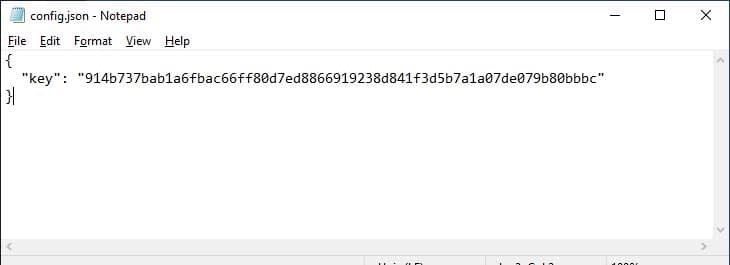
The key is stored in plain text to a local file called %AppData%\Signal\config.json on Windows PCs and on a Mac at ~/Library/Application Support/Signal/config.json.

The encryption key is used each time Signal Desktop application accessed the database.

“To illustrate this problem, BleepingComputer installed the Signal Desktop application and sent a few test messages. First we opened our config.json file to retrieve the encryption key, which is shown above.” read a blog post published by Bleeping Computer.

“We then opened the database located at %AppData%\Roaming\Signal\sql\db.sqlite using a program called SQLite Database Browser.”

By entering the key, the experts at Bleeping Computer were able to read the content of the database.

The issue could be easily addressed by requiring users to set a password that would be used to encrypt the key the database encryption key.

“This would be easily mitigated by requiring users to set a password and using that password to encrypt the key” Suchy told Bleeping Computer.

On August 2018, the Italian cybersecurity passionate Leonardo Porpora discovered that it was possible to recover the expired messages from Signal version 1.14.3,

[adrotate banner=”9″] [adrotate banner=”12″]

Pierluigi Paganini

(Security Affairs – Signal, hacking)

[adrotate banner=”5″]

[adrotate banner=”13″]


