
Security Affairs
Cyberattack Hits French Blood Banks as Hackers Target Refrigeration Systems Across Europe|CVE-2026-58868: Critical Android Bug Could Let Attackers Run Remote Code|U.S. CISA adds WordPress flaw to its Known Exploited Vulnerabilities catalog|Binance Hack: How Fake Job Interviews and AI Abuse Led to a $6.34 Billion Attack|Synology Warns of Ransomware Attacks Targeting NAS Devices Running Outdated DSM Versions|Inside XCPE, the botnet that turned 1.3M set-top boxes into proxy servers|NIS2 Makes Board Members Personally Liable for Access Control Decisions|Apple’s spyware notifications reach the Bundestag: what the BSI says to do now|VOLTA, the infostealer that asks an AI which victims are worth the effort|New wave of fridge cyberattacks hits European supermarkets, this time in Belgium, Luxembourg, Sweden and Estonia|Hackers Send Fake Nuclear Threat Alerts to Ukrainian and Russian Citizens|Chainalysis Investigates Security Incident Involving AI-Driven Attack Techniques|Cyberattack Hits French Blood Banks as Hackers Target Refrigeration Systems Across Europe|CVE-2026-58868: Critical Android Bug Could Let Attackers Run Remote Code|U.S. CISA adds WordPress flaw to its Known Exploited Vulnerabilities catalog|Binance Hack: How Fake Job Interviews and AI Abuse Led to a $6.34 Billion Attack|Synology Warns of Ransomware Attacks Targeting NAS Devices Running Outdated DSM Versions|Inside XCPE, the botnet that turned 1.3M set-top boxes into proxy servers|NIS2 Makes Board Members Personally Liable for Access Control Decisions|Apple’s spyware notifications reach the Bundestag: what the BSI says to do now|VOLTA, the infostealer that asks an AI which victims are worth the effort|New wave of fridge cyberattacks hits European supermarkets, this time in Belgium, Luxembourg, Sweden and Estonia|Hackers Send Fake Nuclear Threat Alerts to Ukrainian and Russian Citizens|Chainalysis Investigates Security Incident Involving AI-Driven Attack Techniques|
Advertisement

Ad Placeholder

Full Width × 90

Breaking News

A surge in Pro-Russia cyberattacks after decision to monitor North Korean Troops in Ukraine

South Korea claims Pro-Russia actors intensified cyberattacks on national sites after it decided to monitor North Korean troops in Ukraine. South Korea’s government blames pro-Russia threat actors for an intensification of cyberattacks on national sites after it decided to monitor North Korean troops in Ukraine. South Korea reports that over 10,000 North Korean troops are […]

South Korea North Korea Russia

South Korea claims Pro-Russia actors intensified cyberattacks on national sites after it decided to monitor North Korean troops in Ukraine.

South Korea’s government blames pro-Russia threat actors for an intensification of cyberattacks on national sites after it decided to monitor North Korean troops in Ukraine.

South Korea reports that over 10,000 North Korean troops are now deployed in Russia, including in the frontline Kursk region, to support the war in Ukraine. This development, confirmed by Ukraine and the U.S., raises concerns that North Korea’s involvement could escalate the conflict, potentially involving a third state.

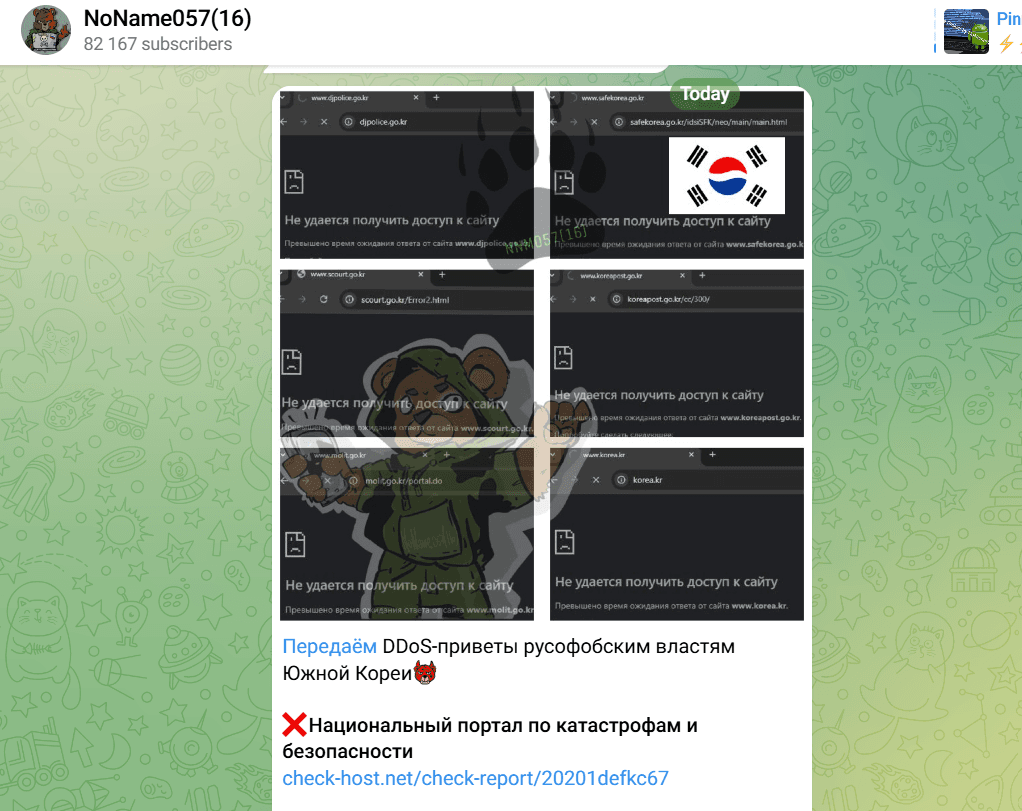
Per a South Korean president’s office statement, the government is actively countering increased DDoS attacks from pro-Russian hacktivist groups, targeting public and private websites. Seoul observed an increase in the attacks since North Korea sent troops to Russia. The DDoS attacks primarily impact civilian and government sites, with the National Intelligence Service’s Cyber Crisis Management Division monitoring and coordinating responses. Some websites experienced temporary outages, but no major damage occurred.

“The government is actively responding to distributed denial of service (DDoS) attacks targeting some public and private websites. Cyber ​​attacks by pro-Russian hacktivist groups on our country have occurred sporadically in the past, but have become more frequent since North Korea sent troops to Russia and entered the war in Ukraine.” reads the statement

“Their attacks mainly consist of hacking of civilian targets or distributed denial of service (DDoS) attacks targeting government agencies’ websites.” continues the statement.

“Access to some organizations’ websites has been temporarily delayed or disconnected, but other than that, there has been no significant damage.”

Seoul believes that the attacks will continue depending on the situation in Ukraine, for this reason, the South Korean government plans to enhance cyber threat preparedness through monitoring and ongoing collaboration among relevant agencies.

According to The Record Media, pro-Russian hacker groups behind the recent attacks on South Korea includes NoName057(16), Z Pentest, and Alligator Black Hat.

South Korea North Korea Russia

Follow me on Twitter: @securityaffairs and Facebook and Mastodon

Pierluigi Paganini

(SecurityAffairs – hacking, South Korea)


