
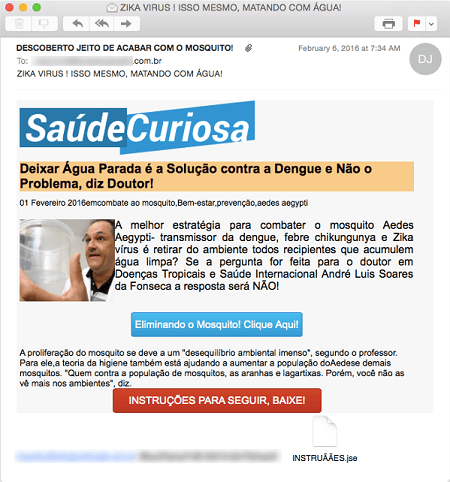
Authorities identified a man in Florida that powered spamming campaigns abusing an army of corporate servers and private email accounts.
Spam is still a profitable business for crooks and to give you an idea of how the cyber criminals work let share with you the story of the leader of a spamming gang.
Timothy Livingston (31), from Fort Lauderdale, Florida, used an army of corporate servers and private email accounts to send out spam messages. He has pled guilty to charges of computer hacking and identity theft, the man with two other accomplices was running A Whole Lot of Nothing (AWLN), LLC.
The company was used as a front for illegal activities of suspects, it earned hundreds of thousands of dollars between January 2012 and June 2015 by powering spamming campaigns for illicit drugs.

According to court documents, Livingston was charging advertisers between $5 and $9 for every spam email that resulted in a sale of an illegal product.
“Defendant TIMOTHY LIVINGSTON, a/k/a “Mark Loyd,” resided in or around Fort Lauderdale, Florida, and was the sole owner ofA Whole Lot of Nothing LLC (“AWLN”), a company that sent unsolicited emails in bulk (or “spam”) on behalf of its customers for a fee. Defendant LIVINGSTON was the organizer and leader of the computer hacking and illegal spamming schemes described herein.” reads the court documents.
Livingston confirmed to have hired the developer Tomasz Chmielarz (33) to write spamming code used in the campaign evading spam filters. Chmielarz, in reality, made much more, he also hacked into corporate servers and use them to power spamming campaigns.
“Defendant TOMASZ CHMIELARZ resided in or around Clifton, New Jersey, and was a computer programmer. Among other things, defendant CHMIELARZ authored the hacking tools and other programs used to facilitate the computer hacking and illegal spamming schemes described herein.” continues the court documents.
When law enforcement arrested Livingston found more than 50 million email addresses in a database used for spamming campaigns.
In the story, there is also a third person, Devin James McArthur, who worked for Comcast and contributed to the peopling of the spam archive with more than 24.5 million email addresses from his company.
McArthur collaborated with other two crooks to collect more data from other companies. that have pled guilty to the scam in June.
According to the Department of Justice (DoJ), Livingston has agreed to return illicit funds earned by his company in spamming campaigns.
“In connection with his plea agreement, Livingston consented to the entry of a forfeiture money judgment in the amount of $1,346,442, as well as the forfeiture of property obtained using illegal proceeds from the scheme, including a 2009 Cadillac Escalade and a 2006 Ferrari F430 Spider.” reported the DoJ.
Among the goods confiscated to Livingston, there are a 2009 Cadillac Escalade and a 2006 Ferrari F430 Spider.
Do you still think that spam is not very profitable?
[adrotate banner=”9″]
(Security Affairs – spamming campaigns , cybercrime)


