
Security Affairs
Two Barracuda ESG Flaws Could Be Combined for Full Root Access; Patches Released|Cyberattack Hits French Blood Banks as Hackers Target Refrigeration Systems Across Europe|CVE-2026-58868: Critical Android Bug Could Let Attackers Run Remote Code|U.S. CISA adds WordPress flaw to its Known Exploited Vulnerabilities catalog|Binance Hack: How Fake Job Interviews and AI Abuse Led to a $6.34 Billion Attack|Synology Warns of Ransomware Attacks Targeting NAS Devices Running Outdated DSM Versions|Inside XCPE, the botnet that turned 1.3M set-top boxes into proxy servers|NIS2 Makes Board Members Personally Liable for Access Control Decisions|Apple’s spyware notifications reach the Bundestag: what the BSI says to do now|VOLTA, the infostealer that asks an AI which victims are worth the effort|New wave of fridge cyberattacks hits European supermarkets, this time in Belgium, Luxembourg, Sweden and Estonia|Hackers Send Fake Nuclear Threat Alerts to Ukrainian and Russian Citizens|Two Barracuda ESG Flaws Could Be Combined for Full Root Access; Patches Released|Cyberattack Hits French Blood Banks as Hackers Target Refrigeration Systems Across Europe|CVE-2026-58868: Critical Android Bug Could Let Attackers Run Remote Code|U.S. CISA adds WordPress flaw to its Known Exploited Vulnerabilities catalog|Binance Hack: How Fake Job Interviews and AI Abuse Led to a $6.34 Billion Attack|Synology Warns of Ransomware Attacks Targeting NAS Devices Running Outdated DSM Versions|Inside XCPE, the botnet that turned 1.3M set-top boxes into proxy servers|NIS2 Makes Board Members Personally Liable for Access Control Decisions|Apple’s spyware notifications reach the Bundestag: what the BSI says to do now|VOLTA, the infostealer that asks an AI which victims are worth the effort|New wave of fridge cyberattacks hits European supermarkets, this time in Belgium, Luxembourg, Sweden and Estonia|Hackers Send Fake Nuclear Threat Alerts to Ukrainian and Russian Citizens|
Advertisement

Ad Placeholder

Full Width × 90

Breaking News

New TSX Speculative Attack allows stealing sensitive data from latest Intel CPUs

ZombieLoad 2, aka TSX Asynchronous Abort, is a new flaw that affects the latest Intel CPUs that could be exploited to launch TSX Speculative attack. ZombieLoad 2, aka TSX Asynchronous Abort, is a new vulnerability tracked as CVE-2019-11135 that affects the latest Intel CPUs that could be exploited to launch TSX Speculative attack. The flaw […]

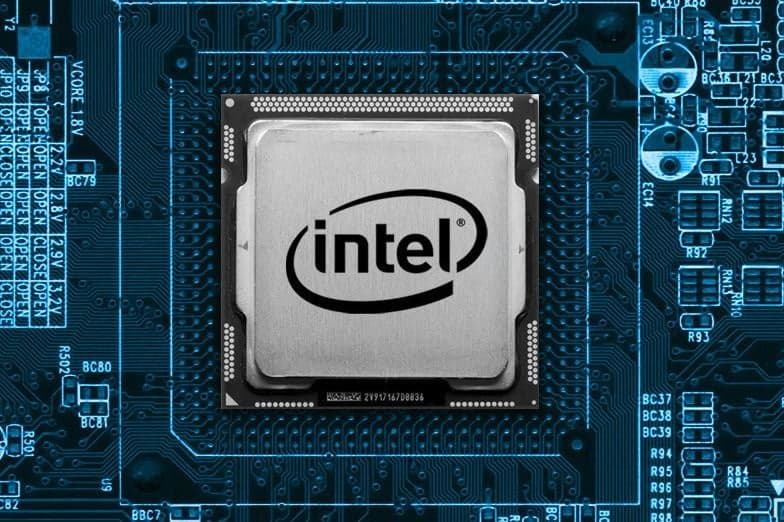
Intel CPU side-channel attack

ZombieLoad 2, aka TSX Asynchronous Abort, is a new flaw that affects the latest Intel CPUs that could be exploited to launch TSX Speculative attack.

ZombieLoad 2, aka TSX Asynchronous Abort, is a new vulnerability tracked as CVE-2019-11135 that affects the latest Intel CPUs that could be exploited to launch TSX Speculative attack.

The flaw affects the Transactional Synchronization Extensions (TSX) feature in Intel processors, it could be exploited by a local attacker or a malicious code to steal sensitive data from the underlying operating system kernel.

The ZombieLoad 2 attack also targets the speculative execution implemented in modern CPU to improve performance.

In the past months, security researchers devised several speculative -channel RIDL (Rogue In-Flight Data Load), Fallout, Microarchitectural Data Sampling (MDS attacks), and ZombieLoad.

Unlike Meltdown, Spectre, and Foreshadow attacks, MDS attacks target CPU’s microarchitectural data structures.

News of the day is that a new version of the ZombieLoad attack was devised by researchers, it also impacts processors in the Intel Cascade Lake CPU family that are not impacted by other attacks.

The Zombieload 2 attack only affects CPU supporting the Intel TSX instruction-set extension, a condition that is true in all Intel CPUs manufactured since 2013.

The TSX feature allows improving performance by leveraging a hardware transactional memory, any operation on this memory doen’t impact on the overall performance of the systems.

“The TSX Asynchronous Abort (TAA) vulnerability is similar to Microarchitectural Data Sampling (MDS) and affects the same buffers (store buffer, fill buffer, load port writeback data bus).” reads the security advisory published by Intel.

“Intel TSX supports atomic memory transactions that are either committed or aborted. When an Intel TSX memory transaction is aborted, either synchronously or asynchronously, all earlier memory writes inside the transaction are rolled back to the state before the transaction start. While an Intel TSX asynchronous abort (TAA) is pending, certain loads inside the transaction that are not yet completed may read data from microarchitectural structures and speculatively pass that data to dependent operations. This may cause microarchitectural side effects, which can later be measured to infer the value of the data in the microarchitectural structures.”

Experts discovered that aborting memory transactions may allow processes to compute the data found in other running processes, including operating system kernel data. An attacker could exploit the flaw to steal sensitive data, including passwords and encryption keys.

The following video shows a ZombieLoad MDS attack:

Additional technical details are available on the Zombieload website.

[adrotate banner=”9″] [adrotate banner=”12″]

Pierluigi Paganini

(SecurityAffairs – TSX Speculative Attack, hacking)

[adrotate banner=”5″]

[adrotate banner=”13″]


