
Security Affairs
Two Barracuda ESG Flaws Could Be Combined for Full Root Access; Patches Released|Cyberattack Hits French Blood Banks as Hackers Target Refrigeration Systems Across Europe|CVE-2026-58868: Critical Android Bug Could Let Attackers Run Remote Code|U.S. CISA adds WordPress flaw to its Known Exploited Vulnerabilities catalog|Binance Hack: How Fake Job Interviews and AI Abuse Led to a $6.34 Billion Attack|Synology Warns of Ransomware Attacks Targeting NAS Devices Running Outdated DSM Versions|Inside XCPE, the botnet that turned 1.3M set-top boxes into proxy servers|NIS2 Makes Board Members Personally Liable for Access Control Decisions|Apple’s spyware notifications reach the Bundestag: what the BSI says to do now|VOLTA, the infostealer that asks an AI which victims are worth the effort|New wave of fridge cyberattacks hits European supermarkets, this time in Belgium, Luxembourg, Sweden and Estonia|Hackers Send Fake Nuclear Threat Alerts to Ukrainian and Russian Citizens|Two Barracuda ESG Flaws Could Be Combined for Full Root Access; Patches Released|Cyberattack Hits French Blood Banks as Hackers Target Refrigeration Systems Across Europe|CVE-2026-58868: Critical Android Bug Could Let Attackers Run Remote Code|U.S. CISA adds WordPress flaw to its Known Exploited Vulnerabilities catalog|Binance Hack: How Fake Job Interviews and AI Abuse Led to a $6.34 Billion Attack|Synology Warns of Ransomware Attacks Targeting NAS Devices Running Outdated DSM Versions|Inside XCPE, the botnet that turned 1.3M set-top boxes into proxy servers|NIS2 Makes Board Members Personally Liable for Access Control Decisions|Apple’s spyware notifications reach the Bundestag: what the BSI says to do now|VOLTA, the infostealer that asks an AI which victims are worth the effort|New wave of fridge cyberattacks hits European supermarkets, this time in Belgium, Luxembourg, Sweden and Estonia|Hackers Send Fake Nuclear Threat Alerts to Ukrainian and Russian Citizens|
Advertisement

Ad Placeholder

Full Width × 90

Breaking News

Twitter bans 936 accounts that attempted to sow political discord in Hong Kong

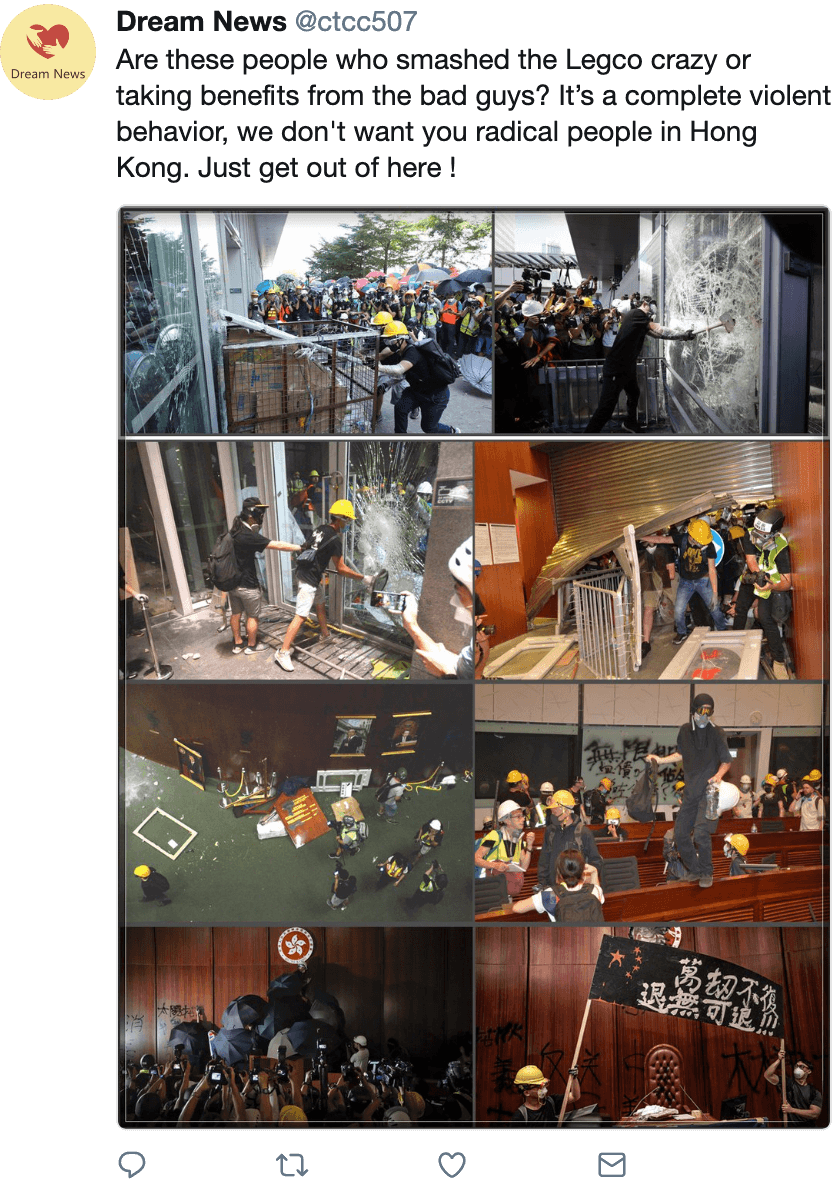
Twitter announced it has banned 936 accounts managed by China-linked actors that attempted to sow political discord in Hong Kong. Twitter has observed and banned 936 accounts managed by China-linked actors that attempted to stir up riots and sow political discord in Hong Kong. The tweets aimed at discrediting the motivation of the Hong Kong […]

Twitter ban Hong Kong

Twitter announced it has banned 936 accounts managed by China-linked actors that attempted to sow political discord in Hong Kong.

Twitter has observed and banned 936 accounts managed by China-linked actors that attempted to stir up riots and sow political discord in Hong Kong.

The tweets aimed at discrediting the motivation of the Hong Kong protesters

“We are disclosing a significant state-backed information operation focused on the situation in Hong Kong, specifically the protest movement and their calls for political change.” reads the announcement published by Twitter.

“This disclosure consists of 936 accounts originating from within the People’s Republic of China (PRC). Overall, these accounts were deliberately and specifically attempting to sow political discord in Hong Kong, including undermining the legitimacy and political positions of the protest movement on the ground.”

The 936 accounts banned by Twitter were part of a larger network of over 200,000 profiles that were already involved in spam and other coordinated activity.

Twitter ban Hong Kong

The investigation conducted by Twitter led its experts to conclude that the accounts were part of a coordinated state-backed operation.

Twitter is currently blocked in China (users can access it only via VPN), but many of these accounts blocked by the social media accessed its services from specific unblocked IP addresses originating in mainland China.

Twitter also published archives containing information on all the banned accounts and the tweets they sent:

August 2019, set 1:

August 2019, set 2:

Twitter shared its findings with Facebook that also took action to remove the rogue accounts and content from its platform.

“Covert, manipulative behaviors have no place on our service — they violate the fundamental principles on which our company is built. As we have said before, it is clear that information operations and coordinated inauthentic behavior will not cease.” continues Twitter. “These deceptive strategies have been around for far longer than Twitter has existed.”

[adrotate banner=”9″] [adrotate banner=”12″]

Pierluigi Paganini

(SecurityAffairs – Twitter, Hong Kong)

[adrotate banner=”5″]

[adrotate banner=”13″]


